


Article by Justin L Scharton, Independent Researcher
Last updated 12/19/2024
Terpenes
Terpenes are a diverse class of naturally occurring compounds responsible for many of the characteristic aromas and flavors found in plants, including cannabis. Terpenes have many different medicinal properties. Research suggests that these compounds may influence inflammation, stress, mood, and even fight against different cancers.
Understanding terpenes and their effects requires a foundation in organic chemistry. Terpenes often exist in multiple structural forms, known as isomers, that can display distinct behaviors in biological systems. Factors such as dextrorotatory (D) versus levorotatory (L) configurations, the Cahn-Ingold-Prelog (CIP) priority rules for naming stereocenters, and whether molecules exist as mirror images, or enantiomers, can all shape how a terpene interacts with receptors and enzymes in the human body. These differences are why seemingly similar compounds can produce very different physiological responses.
In this section, we will go over the basics of terpene chemistry and how to understand isomers, stereochemistry, molecular interactions, addressing online misinformation, and most importantly, their medicinal benefits. Click the terpenes below to jump to the section.
The basics of terpenes
Terpene Nomenclature and Prefixes
-alpha-Pinene.png)
Alpha-Pinene

Beta-Pinene

Dexter-Limonene
Terpenes such as alpha-pinene, beta-myrcene, and delta-3-carene use Greek letters to classify structural variations of the same chemical family. These prefixes indicate the position or configuration of certain chemical groups within the molecule that affect their chemical behavior and biological activity. For example, in the case of pinene, alpha-pinene and beta-pinene differ in the positioning of the double bond and the arrangement of their atoms. Other terpenes use a prefix that are often misinterpreted as a Greek letter, such as D-limonene often is misinterpreted as ‘Delta’ limonene, while in reality, ‘D’ stands for ‘Dexter’, indicating the direction in which the molecule rotates plane-polarized light, which is different from the structural variations denoted by Greek letters.
What is plane-polarized light?

D-Limonene (Dexter Limonene)

L-Limonene (Laevus Limonene)
Optically active compounds such as D-limonene (Dexter-limonene) and L-limonene (Laevus-limonene) will rotate the light when light passes through the compound, then into a polarimeter, and then the light exiting the polarimeter will be rotated to the right for “Dexter”, or to the left for “Laevus”. Because they interact with light, substances that can rotate plane-polarized light are said to be optically active. Those that rotate the plane clockwise (to the right) are said to be dextrorotatory (from the Latin dexter, "right"), or classified as +/- (such as +/- limonene). Limonene that rotates the plane counterclockwise (to the left) is levorotatory and is labeled as L-limonene or (-)- limonene. There is also a mix of both enantiomers called a racemic, such as combining D and L limonene that have the names Dipentene and (+/-)- limonene.
L-Limonene
D-Limonene


What are enantiomers?
D and L Limonene are enantiomers of each other. If one of the images are reversed in a mirror image, and superimposed on to each other, they will not match. With the superimposed image below, the structure does not quite match and the double bonds are in different places.
D-limonene in blue superimposed over a mirror image of L-limonene

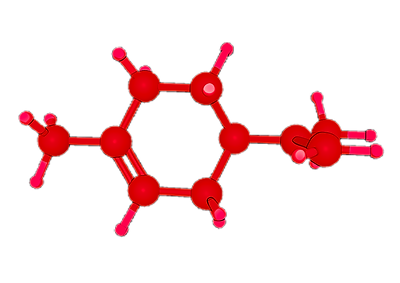
L-limonene reversed into a mirror image
Enantiomers like D and L limonene can have different pharmacological effects, a different odor, and also affect different receptors and neurotransmitters.
Limonene

D-Limonene
+/- Limonene


L or S-Limonene
-/- Limonene


Dipentene
(+/-)- Limonene

Receptor interaction
+/- Limonene interacts with the adenosine A2A receptor,(89B) and an acetylcholinesterase inhibitor with an IC(50)=390.2 ± 30.0 (37E)
D-limonene (+/-) is a natural cyclic monoterpene. It has a pleasant lemon odor, and is a major component of citrus peels. It is sometimes labeled as R or 4R-Limonene.(86B) D-limonene is optically active when the plane-polarized light rotates to the right. This terpene is the one found in cannabis strains.
L-limonene (-/-) is found in Tanyosho pine (Pinus densiflora), Minthostachys mollis, and spearmint oil. This terpene is sometimes labeled as S-limonene or 4S-limonene.(87B)
(+/-)- Limonene aka Dipentene, is naturally found in some teas (Camellia sinensis), and is often used as a solvent for rosin, waxes, rubber; as a dispersing agent for oils, resins, paints, lacquers, varnishes, and in floor waxes and furniture polishes. Dipentene is a racemic mixture of limonene,(88B) meaning it has an equal mixture of both D and L-limonene. Dipentene is not optically active, meaning it will not cause a rotational change if this compound is used in a polarimeter.
Why are there different designations with D, L, R, and S limonene?
The “D” and “L” prefixes are described in more detail above here. They refer to the rotational direction of light when using an optically active compound with a polarimeter.(85B) The “R” means Rectus (Right) with the Cahn-Ingold-Prelog priority rules, and this indicates the absolute spatial arrangement of the molecule’s atoms. The “S” in S-limonene means Sinister (left) with these same rules of molecule arrangement.(85B)
The Cahn-Ingold-Prelog (CIP) priority rules determine the spatial arrangement of atoms around a chiral center, assigning configurations as R (Rectus, right) or S (Sinister, left). Unlike optical rotation, which is measured using a polarimeter, the CIP system assigns configurations based on the priority of atoms attached to the chiral center. To determine whether the configuration is R or S, arrange the molecule so that the lowest-priority group is positioned away from the viewer. If the sequence of remaining groups (from highest to lowest priority) follows a clockwise direction, the configuration is assigned as R; if it follows a counterclockwise direction, it is assigned as S. (85B)
The CIP rules are:
1. Higher Atomic number - Atoms directly attached to the chiral center are ranked by the atomic number (number of protons). The higher the atomic number, the higher the priority is. (85B)
2. First Point of Difference - If the atoms that are directly attached to the chiral center are the same, then we must look further along at each atom of the attached groups until a difference is found. The first point where there is a difference in the atomic number will determine the priority. (85B)
3. Multiple Bonds - Double and triple bonded atoms are looked at as if they are bonded to multiple single atoms. For example, a carbon double-bonded to another carbon is treated as if it is bonded to two additional carbons. (85B)
4. Isotopes - The atoms with a higher mass (more neutrons) will have a higher priority. (85B)
The system of classifying compounds like limonene that uses D or L is an older system that uses a polarimeter to see which direction the molecules will turn plane-polarized light. The CIP method is a systematic way to designate the spatial arrangement of atoms, using R (Rectus-right) which has the priority decreasing clockwise, and S (Sinister-left) which has the priority decreasing counterclockwise. D-limonene and R-limonene refer to the same terpene, while L-limonene and S-limonene are the same terpene.
The different limonenes have the same molecular formula C10H16 that represents the basic structure. The arrangement of the atoms determine the minor differences between the compounds, and they are labeled with a R or S as the prefix (or D and L for a different and older system). The arrangement difference influences how the molecules will interact differently with biological systems and receptors.
Limonene +/- Limonene -/- Limonene (+/-)-
Optically active terpenes, like limonene, are typically labeled as limonene +/-, limonene -/-, and limonene (+/-)-. This labeling is on medical and research websites such as the NIH and NLM. This labeling is to show that these compounds are optically active, and their optical rotation. It also helps to quickly understand the properties of limonene without having to remember all the other names that each one has; for example, limonene +/- has 124 different names that are listed on the pubchem website. Limonene +/- is the preferred name of D-limonene (R-limonene). Limonene -/- is the preferred name of L-limonene (S-limonene). Limonene (+/-)- is the preferred name of Dipentene.
Adenosine A2A receptor, Anxiety, and Parkinson’s Disease
Limonene directly binds to the adenosine A2A receptor.(89B) Limonene was also found to have anti-anxiety benefits, as it increases the amount of dopamine in the brain, and releases GABA.(90B) An adenosine A2A antagonist like istradefylline is used as adjunctive therapy in Parkinson’s disease with levodopa or decarboxylase inhibitors to reduce the OFF episodes or a wearing-off phenomenon,(91B) which is described as recurrence of motor and non-motor symptoms.(92B)
Possible Medication Interactions With Limonene
Limonene could interact with medications that increase or reduce dopamine. Here are symptoms that could possibly happen with limonene taken along with certain prescriptions, or worsen side effect of those prescriptions:
Overdoses from dopamine D2 agonists include dyskinesia, dystonia, hypotension, and dysrhythmias.(93B)
The dopamine agonist Cabergoline could have the side effects of nausea, vomiting, headache and dizziness.(94B)
Bromocriptine is another D2 agonist that could have the common side effects of nausea, vomiting, dizziness, hypotension, headache, and fatigue. More serious side effects could be psychosis, fibrosis (retroperitoneal, pleural, cardiac valve), and cardiovascular incidents (valvular damage, stroke, myocardial infarction).(95B)
Levodopa has the typical side effects of nausea, dizziness, headache, and somnolence. The elderly are more prone to the side effects of confusion, hallucinations, delusions, psychosis, and agitation.(96B) Limonene could increase some of these side effects.
Limonene (A2A agonist) could reduce the effectiveness of istradefylline (A2A antagonist) since they work completely opposite of each other.
Limonene against Colorectal Cancer
+/- Limonene (d-limonene) was found to induce cell death of human colon cancer cells through the mitochondrial death pathway, and suppression of the PI3K/Akt pathway. This terpene lowered the levels of p-Akt (Ser473), p-Akt (Thr308) and p-GSK-3β (Ser9), and caspase-3 and -9 and PARP were activated. Bax protein and cytosol cytochrome c from mitochondria were increased, and bcl-2 protein was reduced.(97B)
Limonene activates Caspase-3 and Caspase-9
Caspase-3 is the executioner in the process of programmed cell death (apoptosis). This enzyme dismantles the cell during apoptosis by cutting specific proteins that hold the cell together. This leads to the breakdown of the cell’s internal structures.(98B)
Caspase-9 can initiate apoptosis in cells, especially when they are in early development. When caspase-9 is activated, it starts a chain reaction that activates other caspases, including caspase-3. Part of their role is to prevent the spread of cancerous, faulty, or damaged cells to die before they can cause harm.(99B,1C)
Limonene suppresses the P13K/Akt pathway
The PI3K/Akt pathway plays a major role in many cellular functions throughout the body, including cell growth, survival, and metabolism. It’s often overactive in several types of cancer, making it a target for cancer therapy. Side effects from chemotherapeutic medications that inhibit this pathway can cause several side effects.(2C) For example:
1. GDC-0941 (Pictilisib) often causes side effects like mild to moderate nausea, fatigue, diarrhea, vomiting, changes in taste (dysgeusia), and loss of appetite. These effects arise because the drug not only targets cancer cells but can also affect healthy cells that rely on the PI3K/Akt pathway for normal functioning.(3C)
2. BKM120, another inhibitor, has been associated with rash, elevated blood sugar (hyperglycemia), diarrhea, loss of appetite, mood changes, nausea, itching (pruritus), and inflammation of the mucous membranes (mucositis). These symptoms reflect the role of the p13K/Akt pathway in regulating skin integrity, glucose metabolism, and neurological functions.(4C)
By targeting the PI3K/Akt pathway, these inhibitors can interfere with normal and essential cellular activities, leading to side effects that impact a patient’s quality of life and their willingness to use these medications. This is the challenge in designing medications that can selectively target cancerous cells without affecting healthy tissue.
Alpha-Pinene

+/- Alpha Pinene


-/- Alpha Pinene


(+/-)- Alpha Pinene

Receptor interaction
(+)-alpha-pinene and (-)-alpha-pinene are acetylcholinesterase inhibitors with an IC(50)=524.5 ± 42.4. (5C,37E) Since the racemic mixture (+/-)-alpha-pinene consists of an equal mix of these enantiomers, it can be inferred that it is also an acetylcholinesterase inhibitor.
(+/-)- alpha-Pinene is found in Eucalyptus, Mandarin, Coriander, Juniper Berry, Cannabis, Foeniculum vulgare Fruit, Camellia sinensis, and Callistemon citrinus. (6C)
(-)-alpha-Pinene is found in Camellia sinensis, Solanum tuberosum. (7C)
(+)-alpha-Pinene is found in Artemisia xerophytica, Salvia officinalis. (8C)
A-pinene - IC(50)=524.5 ± 42.4 mM as an acetylcholinesterase inhibitor (5C)
Acetylcholinesterase inhibitors are used in treating dementia, Alzheimer’s Disease, Cholinergic poisoning, and Myasthenia Gravis. They block the normal breakdown of acetylcholine into acetate and choline and increase both the levels and duration of actions of acetylcholine found in the central and peripheral nervous system. These medications will increase the parasympathetic response from the extra acetylcholine, which affects the vagus nerve. Overstimulation of the parasympathetic nervous system, such as increased hypermotility, hypersecretion, bradycardia, miosis, diarrhea, and hypotension. They should not be used in people with certain health problems such as bradycardia, and heart conditions like AV block. (10C)
Donepezil, rivastigmine and galantamine are common prescription acetylcholinesterase inhibitors.(11C) Combining these with a-pinene can worsen the risk of a slow heart rate (bradycardia), and other side effects mentioned in the last paragraph.
Alpha-Pinene for Neurodegeneration
Alpha Pinene was found to be a possible treatment for neurodegenerative diseases. In a study, rats were given beta-amyloid (Aβ) to induce oxidative/nitrosative stress, neuroinflammation, and molecular and behavioral changes. Then 50 mg/kg of a-pinene was injected intraperitoneally to find the benefits. Alpha Pinene reduced malondialdehyde, nitric oxide.(12C) Malondialdehyde is a marker of oxidative stress and the antioxidant status in cancerous patients.(13C)
Nitric oxide (NO) has important roles in intracellular signals in neurons, and regulating the blood flow to the brain. In some disease processes and in aging people, NO can turn harmful by reacting with superoxide anion to form peroxynitrite. Peroxynitrite is a gaseous compound that easily passes throughout the neuronal membranes to damage lipids, proteins, and nucleic acids. Nitro-tyrosines form when peroxynitrite reacts with proteins (nitro tyrosination), mainly with the phenolic ring of tyrosines. The accumulation of nitro-tyrosines contribute to the onset and progression of neurodegenerative diseases like Alzheimer’s and Parkinson’s.(14C)
A-Pinene can increase glutathione, and enhance catalase activity (12C)
Decreased levels of Glutathione (GSH), or in the ratio of GSH/glutathione disulfide, often occurs from an increased susceptibility to oxidative stress. That damage is involved in many disorders including cancer, diseases of aging, cystic fibrosis, cardiovascular, inflammation, immune disorders, metabolic problems, and neurodegenerative diseases. High levels of GSH can make some cancer cells more resistant to chemotherapy treatment.(15C)
Catalase is an antioxidant enzyme that reduces oxidative stress through breaking apart cellular hydrogen peroxide into water and oxygen. A deficiency or dysfunction of catalase has a role in many disorders including: diabetes mellitus, Alzheimer's disease, and Parkinson's disease.(16C)
Genetic disorders that result in people with little or no catalase activity can make them more prone to the development of diabetes through the cumulative oxidant damage of pancreatic beta-cells.(17C)
Alpha-Pinene for Alzheimer’s Disease
Beta-amyloid peptides can bind to catalase, and deactivate it. Hydrogen peroxide levels become increased due to the inactivation of catalase.(18C) Alpha-pinene strengthens the antioxidant system and prevents neuroinflammation in the hippocampus of rats receiving Aβ. It improves spatial learning and memory and reduces anxiety-like behavior in these animals. Consequently, alpha-pinene alleviates Aβ-induced oxidative/nitrosative stress, neuroinflammation, and behavioral deficits. It is probably a suitable candidate for the treatment of neurodegenerative diseases.(12C)
Alpha-Pinene for Parkinson’s Disease
Low catalase activity and high levels of hydrogen peroxide in Parkinson’s disease could be from a mutation in a gene that produces α-synuclein, creating a mutated version of α-synuclein. This mutated protein can reduce the expression and activity of catalase. It also can cause the dopamine produced in the cytoplasm of cells to auto-oxidize into hydrogen peroxide.(16C) Alpha-Pinene enhances catalase activity,(12C) which could help with Parkinson's Disease.
Nicotinic acetylcholine receptor α7 subunit
A-Pinene reduced the effects of the Amyloid-Beta-induced reduction of nicotinic acetylcholine receptor α7 subunit and brain-derived neurotrophic factor (BDNF) expression.(12C)
The nicotinic acetylcholine receptor α7 subunit is found throughout the body, and has large concentrations in the adrenal glands and the small intestine.(19C) This receptor is also a regulator of inflammation. Activating these receptors will turn on the “cholinergic anti-inflammatory pathway” through reducing the release of macrophage TNF (Tumor-necrosis factor) from the vagus nerve, and reduce systemic inflammatory responses. As a comparison to other medical treatments, electrical stimulation of the vagus nerve inhibits TNF synthesis, while acetylcholine activation of the nicotinic acetylcholine receptor alpha7 subunit inhibits the release of macrophage TNF. Excessive inflammation and TNF can increase the death rate from endotoxemia, sepsis, rheumatoid arthritis and inflammatory bowel disease.(20C)
A-Pinene increases Brain-derived neurotrophic factor (BDNF)
Low levels of brain-derived neurotrophic factor (BDNF) is associated with neuronal loss in Parkinson’s, Alzheimer's, Multiple Sclerosis, and Huntington’s Disease. Increased levels of BDNF can protect neuronal cells and pancreatic β cells, which can be helpful with Diabetes Type 2 as well as neurodegenerative disorders.(21C) A-Pinene increases BDNF.(45E)
Other cell signals affected by alpha-pinene
In the hippocampus, a-pinene reduced messenger RNA expression of tumor necrosis factor-α, interleukin-1β, interleukin-6, nuclear factor κB, and N-methyl- d-aspartate receptor subunits 2A and 2B.(12C)
Alpha-Pinene reduces NFkb (nuclear factor κB)
High levels of NFkb is associated with depression caused by chronic stress. Stress releases NFkb which stops neurogenesis in the adult hippocampus.(22C) Alpha-Pinene reduces NFkb.(12C)
Alpha-Pinene reduces TNF-a
Low levels of TNF-A showed an accelerated maturation of the dentate gyrus, and dendritic trees in CA1 and CA3 regions in a mouse brain. Increased expression of nerve growth factor (NGF), and improved behavioral tasks related to spatial memory are associated with reduced TNF-a.(23C) The increased NGF plays a critical role in protecting the development and survival of sympathetic, sensory and forebrain cholinergic neurons. NGF helps with nerve cell recovery after ischemic, surgical or chemical injuries, and promotes neurite outgrowth.(24C) The CA1 and CA3 regions of the hippocampal rat brain are both required for getting rid of fear, while the CA1 region is needed for context-dependent retrieval.(25C) Context-dependent retrieval refers to the encoding and retrieval of memories, often seen as someone being able to remember something in the same place that it was learned; such as taking an exam in the same classroom that information was learned.(26C) Alpha-Pinene reduces TNF-a,(12C) which shows many neuroprotective benefits.
Alpha-Pinene reduces interleukin-1β
A study gave neonate mice interleukin-1β. During adolescence, they showed signs of anxiety and deficits in long term spatial memory. That supports the view that inflammation problems that release IL-1β affecting the hippocampus during pregnancy produced behavioral problems in childhood that persists into adulthood. This inflammation is often from maternal infections during pregnancy, and premature births. Depending on the severity, children can have problems with motor skills, cognitive and behavioral problems, and even smaller brain volumes.(27C) Alpha-Pinene reduces interleukin-1β.(12C)
A-Pinene reduces NDMA2A (N-methyl- d-aspartate receptor subunits 2A)
and NDMA2B (N-methyl- d-aspartate receptor subunits 2B)
Activation of both NDMA2A and NDMA2B contribute to the phosphorylation of pERK1/2.30C ERK1/2 activity in some parts of the brain is needed for the processing of memories, and may be a target for treating memory impairments from neurological disorders.(31C) Overstimulation of these NDMA receptors during pregnancy is associated with compromised brain development.(32C) If these receptors are functioning abnormally low, it can result in cognitive problems, while overstimulation can cause excitotoxicity and lead to neurodegeneration.(33C) Alpha-Pinene reduces both of these receptors.(12C)
The role of a-pinene with these specific receptors will lower NDMA activity with the subunits 2A and 2B. This may be helpful with damage from overstimulating those receptors. Since a-pinene has other neuroprotective benefits, the lowering of these receptors in a normal brain might not produce problems, but that will require more targeted research. Given the intraperitoneal administration, the effects observed in the hippocampus likely reflect broader systemic changes in cell signals, potentially affecting other organs and tissues as well.
Alpha-Pinene reduces IL-6 (interleukin-6)
High levels of IL-6 in middle aged adults is associated with a lower volume of hippocampal gray matter.(28C) Elevated levels of IL-6 are also found in autism spectrum disorder, traumatic brain injury, ischemic stroke, tonic-clonic seizures, vascular dementia, and Alzheimer’s disease.(29C) Alpha-Pinene reduces IL-6.(12C)
Medication Interactions with Alpha-Pinene
Anticholinergics
Alpha-Pinene works on the opposing system that anticholinergics do, and could reduce the effectiveness of those medications. Anticholinergics are often used for nausea, overactive bladder. Acetylcholinesterase inhibitors have neuroprotective benefits, while anticholinergics that enter the CNS can accelerate neurodegeneration in Alzheimer’s disease. Long term use of medications that block CNS muscarinic cholinergic receptors (over 2 years of use), is associated with a 2.5 times higher density of amyloid plaque.(34C)
Anticholinergic medications, and what they are used for include:
-
Parkinson disease - Benztropine and trihexyphenidyl (35C)
-
Urinary incontinence or overactive bladder - Oxybutynin and tolterodine (35C)
-
Hyperhidrosis (Excessive sweating) - Oxybutynin (35C)
-
Allergies and sleep aid - Hydroxyzine, (36C) Diphenhydramine and other antihistamines (35C)
-
Nausea, IBS - Scopolamine,(35C) Dicyclomine, Hyoscyamine (36C)
-
Reduce salivary and tracheal secretions: Glycopyrrolate (35C)
-
Pupil dilation, cholinergic toxicity treatment: Atropine (35C)
-
Neuromuscular blockade for surgeries - Vecuronium and Succinylcholine (35C)
-
Ganglionic blocker in research settings - Mecamylamine (35C)
-
Depression - Amitriptyline, Doxepin (36C)
Dementia treating medications taken with a-pinene
There are medication interactions with Donepezil, as well as health problems that could cause problems if that medication is taken with certain conditions. This could possibly relate to similar interactions with a-pinene that people will need to keep in mind if they are trying to use that terpene.
Don’t use alpha-pinene along with a medication that increases acetylcholine like Donepezil. That would increase acetylcholine levels beyond the prescription alone. This may lead to toxic levels of acetylcholine. Here is what happens with excessive Ach levels happen with Donepezil toxicity:
Donepezil toxicity can result in nausea, vomiting, confusion, somnolence, diaphoresis and bradycardia.(37C) Excessive acetylcholine accumulation at the neuromuscular junctions and synapses can cause a cholinergic crisis that can include the following signs: ramps, increased salivation, lacrimation, muscular weakness, paralysis, muscular fasciculation, diarrhea, and blurry vision.(38C)
Can a-pinene worsen medications that affect the qt-interval?
Through the cholinergic effect on vagal tone at the sinoatrial and atrioventricular nodes; Donepezil can cause a slower heart rate (bradycardia), and interfere with potassium channel trafficking. Some cases of atrioventricular block and prolonged Qt interval have been studied from 2009 to 2017 with patients taking 5-10 mg of Donepezil, and an accidental overdose with 35mg that caused QTc = 502 ms. (39C)
Taking a-pinene along with medications that increase the Qt interval could worsen the problem due to the parasympathetic response to the extra acetylcholine from a-pinene. The heart rate could become too slow, or even go into a lethal rhythm like torsades de pointes.
Medications that can increase the Qt interval include:
Antipsychotics - Haloperidol, ziprasidone, quetiapine, thioridazine, olanzapine, risperidone, droperidol (40C)
Antiarrhythmics - Amiodarone, sotalol, dofetilide, procainamide, quinidine, flecainide (40C)
Antibiotics - Macrolides, fluoroquinolones (40C)
Antidepressants - Amitriptyline, imipramine, citalopram, amitriptyline (40C)
Others - Methadone, sumatriptan, ondansetron, cisapride (40C)
Medications that lower the heart rate can result in a dangerously low rate if used with Donepezil, such as beta-blockers - carvedilol, metoprolol, atenolol, and propranolol.(41C) There is a possibility that this effect could also happen with alpha-pinene.
Beta-Pinene

-/- Beta-Pinene


+/- Beta-Pinene


(+/-)- Beta-Pinene

Receptor interaction
Beta Pinene is a 5-HT3 receptor antagonist (40D)
(+/-)- Beta Pinene is found in: Eucalyptus Oil, Mandarin oil, Juniper Berry Oil, Cannabis (46C)
+/- Beta Pinene is found in Salvia officinalis (Sage), Pinus sylvestris (Scots Pine) (47C)
-/- Beta Pinene found in Camellia sinensis (tea), and Magnolia officinalis (48C)
Beta-Pinene for irritable bowel syndrome, nausea and vomiting
Beta-Pinene is a 5-HT3 receptor antagonist.(40D) 5HT3 antagonists can be used to treat certain types of irritable bowel syndrome and relieve nausea and vomiting. It is a type of antiemetic. 5HT3 is also called 5-hydroxytryptamine 3 receptor and type 3 serotonin receptor. (41D)
Clarifying online misinformation about beta-pinene
There are not many useful studies that are specifically about beta pinene. Some sources indicate that beta pinene has similar benefits as alpha pinene for antimicrobial and anticancer.(49C) When checking the sources they cited showed that alpha pinene was used in the study for anticancer. Here is the exact wording of the conclusion from that source: "In a dose-related fashion, alpha-pinene inhibits the nuclear translocation of NF-kappa B induced by LPS in THP-1 cells, and this effect is partly due to the upregulation of I kappa B alpha expression." (50C)
The original source for the antibacterial benefits used an essential oil extracted from the gum of the pistachio tree grown in Turkey, that had the composition of: alpha-Pinene (75.6%), beta-pinene (9.5%), trans-verbenol (3.0%), camphene (1.4%), trans-pinocarveol (about 1.20%), and limonene (1.0%). (51C) So, it really cannot be said that beta-pinene has anti-bacterial properties based on that information.
Even though alpha pinene and beta pinene are structurally similar, they may not act the same therapeutic way as each other. More specific research using isolated beta-pinene would be needed to make those claims. The antibacterial benefits could be from an entourage effect of some or all the terpenes, or may just be alpha pinene. The anticancer benefits were clearly from alpha pinene, as that is what was used in the study.
Linalool

-/- Linalool


+/- Linalool


(+/-)- Linalool

Receptor interaction
Linalool inhibits the release of Acetylcholine (ACh) at the neuromuscular junction. A local anesthetic reaction occurs due to the reduction of the channel open time. (55C) Linalool is also a NMDA receptor antagonist. (12F)
-/- linalool is found in lavender oil, Camellia sinensis (a type of tea), and Solanum tuberosum (potato) (56C)
+/- linalool is found in coriander oil, Agastache rugosa (korean mint), and Eremothecium ashbyi which is a pathogen that is found on cotton and citrus; that pathogen is used is the industrial production of riboflavin. (57C,58C )
(+/-)- linalool is found in Cinnamon Leaf Oil, Cinnamon Bark Oil, Clary Sage Oil, Peumus boldus leaf, Cannabis, Paeonia lactiflora root (Peony), and Moringa oleifera leaf oil. (59C)
Is Linalool is antibacterial?
A study about the antibacterial effects of coriander essential oil and its major constituent, linalool (content of 70.11%) was found to have a synergistic effect by increasing the effectiveness of antibiotics against MRSA, gram negative, and gram positive bacteria.(60C)
Coriander oil is composed of borneol, cineole, coriandrol, cymene, dipentene, geraniol, linalool, phellandrene, terpineol, and terpinolene. All the terpenes will vary depending on which country the coriander was grown in, and there are 21 different terpenes in coriander seeds, but several are not present in different regions. The level of +/- linalool can vary from 37.7 - 78.45% depending on the country grown in. (61C)
Linalool as an anti-inflammatory
In a study using lipopolysaccharides (LPS) to induce inflammation in BV2 microglial cells, linalool was found to inhibit the production of inflammatory mediators such as TNF-α, IL-1β, NO, and PGE2, and also inhibited NF-κB activation. Additionally, linalool induced the nuclear translocation of Nrf2 and the expression of HO-1, suggesting that its anti-inflammatory effects are mediated through the activation of the Nrf2/HO-1 pathway.(62C)
Neuroprotection
It has been proposed that linalool could be a benefit for Alzheimer’s and Parkinson’s disease due the anti-inflammatory effect in the BV2 microglial cells,(63C) but linalool will inhibit the release of acetylcholine. This study did not mention which enantiomer of linalool was in the plant they were researching, but it was from Aeolanthus suaveolens, which is a Brazilian Amazon plant that is used as an anticonvulsant.(64C) In Alzheimer’s disease, ACh needs to be increased, and an acetylcholinesterase inhibitor is often prescribed to improve cognition and behavior.(65C) People afflicted with Parkinson’s are often prescribed anticholinergics along with a dopamine-increasing medication like Levodopa.(66C) Linalool could be causing more side effects with prescriptions, and be counterproductive with these neurodegenerative diseases due to the lowering of ACh.
Anti-leishmaniasis
Linalool and Eugenol both decrease the proliferation and viability of Leishmania (L.) infantum chagasi (Leishmania amazonensis) and Trypanosoma cruzi at low doses. Both terpenes increased the activity of L. infantum chagasi protein kinases PKA and PKC. Linalool also decreased the oxygen consumption of L. infantum. The lethal dose against L. infantum LD50 for eugenol was 220μg/ml, and that for linalool was 550μg/ml. (67C)
Myrcene


Receptor interaction
TRPV1 agonist, (68C) mu-opioid and alpha 2-adrenoreceptor modulation (69C)
Myrcene Relieves Pain
A 1990 study showed that myrcene released endogenous opiates that relieved pain, and that effect was reversed with Narcan (Naloxone). That effect involved alpha 2-adrenoceptor and mu-opiod receptors.(69C) A 2003 study further explained that mu-opioid receptors and alpha 2A-adrenergic receptors can physically interact and modulate each other’s signaling pathways.(70C) It is still not known if myrcene is an agonist of the alpha 2-adrenoceptor, or if myrcene indirectly modulates that receptor through interacting with a different receptor.
Other ligands, such as adrenaline (epinephrine), will interact with the alpha 2A-adrenergic receptors.(71C) Using epinephrine along with bupivacaine and fentanyl via epidural was found to decrease pain and the needs for opiates after surgery for pain relief.(72C) Epinephrine and myrcene could be helping with pain relief in similar ways from the release of endogenous opiates, but the side effects would be different between the two.
Myrcene inhibits cytochrome p450 CYP2B1
Myrcene inhibits the liver enzyme, cytochrome p450 CYP2B1. This can have a protective benefit against pro mutagenic chemical toxins. Myrcene, along with seven other terpenes, will inhibit the cytochrome p450 CYP2B1 enzyme.(73C) Inhibiting this enzyme can affect the absorption of other medications.
Myrcene blocks prostaglandin E2 (PGE2)
Myrcene can reduce pain and inflammation that is caused by prostaglandin E2 (PGE2), and does not create tolerance problems like morphine does.(74C) PGE2 is created when arachidonic acid is converted to prostaglandin H2 (PGH2) by PGE synthases (cPGES, mPGES-1, mPGES-2). Targeting the PGE synthase mPGES-1 to disrupt PGE2 formation may help alleviate inflammation, pain, fever, anorexia, atherosclerosis, stroke, and tumorigenesis.(75C) Myrcene may be able to help with these conditions by blocking PGE2 from interacting with its receptors. Myrcene does not block the mPGES-1 pathway, but indirectly reduces the effects of PGE2.
Does Myrcene cause cancer?
Studies in mice and rats showed that they get liver cancer when exposed to myrcene.(76C) Let's look at the extremely high doses in the study, and compare that to what some cannabis users get.
3-Month Study in Mice:
Doses: 0.25 to 4 g/kg body weight, administered 5 days a week for 14 weeks.
Results: High mortality and significant health issues at 1 g/kg and above.(76C)
2-Year Study in Rats:
Doses: 0.25 to 1 g/kg body weight, administered 5 days a week for 105 weeks.
Results: Significant renal toxicity and increased incidence of renal and liver neoplasms.(76C)
2-Year Study in Mice:
Doses: 0.25 to 1 g/kg body weight, administered 5 days a week for 104-105 weeks.
Results: Increased incidence of liver neoplasms and decreased survival rates.(76C)
Human doses with myrcene-rich cannabis products
Dried cannabis typically has a low terpene content of 1-3%, since most of the terpenes are lost while the plant is drying. Freshly harvested marijuana can be extracted by CO2 to retain the most terpenes. The highest amount of myrcene I have seen on a lab test for a CO2 extract is 6%. Most of them are less than 2%.
Let’s compare how the mouse study compares to doses a human would encounter with an edible with 1000 mg of cannabis oil at 6% myrcene for a 150 lbs person. (about 68 kg)
1000mg of cannabis oil is an extremely high amount, while edibles are often lower at 25-50mg per dose. If someone ate the 1000mg dose of cannabis oil at 6% myrcene, that would be 60mg of myrcene. This comes out to about 0.88mg per kg. Compared to the lowest dose in the mice study at 250mg per kg (0.25g/kg). Even at that extreme dose of cannabis oil, that is still a very low dose of myrcene compared to the mouse study. The mouse study is 284 times higher than an extreme dose for a human.
If a 150 lbs person smoked 1 gram of marijuana containing 2% myrcene, they would consume approximately 20 mg of myrcene, which equates to about 0.29 mg per kg of body weight. Most people don’t smoke 1 gram or more in a single session, making this an extreme case. Even at such a high intake, the myrcene levels are a fraction of the doses used in animal studies that showed toxic or carcinogenic effects. For example, the doses in the 3-month mouse study were as high as 1 g/kg, which is 862 times greater than the estimated dose from smoking. Similarly, in the 2-year studies, the doses were 284 times higher than what a human would ingest even with a substantial dietary intake of myrcene at 0.88 mg per kg. These comparisons highlight the significant difference between experimental doses in animal studies and realistic human exposure through cannabis use.
It looks like it is unlikely for a human to get liver cancer from myrcene with cannabis use. They would be more likely to get problems with using a large amount of isolated myrcene in a topical, and with long term use.
Myrcene as a sedative, muscle relaxer, and anti-anxiety
Myrcene has sedative and muscle relaxant properties. There may be some anxiety relief at lower doses, but may cause anxiety with larger doses.(77C) There are two different studies from 1991 and 2002 that explored different routes of administration, and different neurobehavioral effects.
The 1991 study showed no change in anxiety, or behavior change at 1g of myrcene per kilogram by mouth.(78C) The 2002 study showed sedative as well as motor relaxant effects at 100-200 mg/kg from an intraperitoneal injection. The 200 mg/kg dose of myrcene had a slight anxiety inducing effect.(77C) The difference in administration and the doses being higher in the 1991 study could be two possibilities there were no anti-anxiety benefits.
Doses for rats are not scalable to humans
Those doses mentioned in the studies are for rodents, and human doses would be very different. Human doses are often calculated from rodent doses using allometric scaling, which accounts for differences in body surface area and metabolism between species. This involves multiplying the rodent dose by a conversion factor based on the animal's weight and body surface area, typically resulting in a lower dose for humans due to their slower metabolic rates.(79C)
Delta-3 Carene


Receptor interaction
Carene is an acetylcholinesterase inhibitor (52C)
Carene is a colorless liquid with a sweet, turpentine-like odor. It is found in cannabis, Artemisia thuscula, and Cymbopogon martinii. (53C)
Carene goes by 64 different names, including: (+)-3-carene, Delta-3-Carene, and alpha-Carene. (53C)
Toxicity from occupational frequent contact with carene is allergic contact dermatitis and asthma. Poisoning from it can result in encephalopathy, that is because it is a solvent. (53C)
Delta-3 Carene for Osteoporosis Treatment
In an mouse in-vitro study with osteoblastic MC3T3-E1 subclone 4 cells, 3-carene stimulated alkaline phosphatase on the ninth day. The fifteenth day, 3-carene promoted the induction of calcium in a dose dependent manner. This early research indicates 3-carene might be useful for treating osteoporosis, but that needs further research. (54C)
Beta-caryophyllene

-/- b-caryophyllene


+/- b-caryophyllene


Isocaryophyllene

Receptor interaction
CB2 agonist (72A) and acetylcholinesterase inhibitor with an IC(50)=436.0±29.9 (37E)
(-)-beta-caryophyllene is the most common isomer of the different versions of beta-caryophyllene. It is found in clove oil and tea leaves (camellia sinensis). This terpene has the odor midway between cloves and turpentine. This isomer is the one associated with cannabis, and acts as a CB2 receptor agonist.(80C,81C)
(+)-beta-caryophyllene is the enantiomer of (-)-beta-caryophyllene. It is found in Morithamnus crassus (in the Asteraceae family), and Solanum tuberosum (potatoes). (82C)
Isocaryophyllene is another type of caryophyllene that is found in Tetradenia riparia, and Perilla frutescens that are both in the mint family Lamiaceae. (83C)
Is Caryophyllene an anti-inflammatory via PGE-1 comparable phenylbutazone?
There has been a mention in a journal that β-caryophyllene is an anti-inflammatory via PGE-1 (Prostaglandin E1) comparable phenylbutazone.(84C) The 1988 study that was referenced in that journal referred to the oleoresin from Brazilian Copaifera species that had an anti-inflammatory activity comparable to phenylbutazone.(85C) There are three main terpenes in that resin, which are β-caryophyllene, trans-α-bergamotene, and β-bisabolene.(86C) It is difficult to say if β-caryophyllene is solely the anti-inflammatory affecting PGE-1, or if that is from a combination of 2 or 3 terpenes found in that oleoresin.
Β-caryophyllene is an anti-inflammatory
β-Caryophyllene is an anti-inflammatory from activating the CB2 receptor. This acts on the MAPK pathway, through inhibiting the Erk1/2 and JNK1/2 kinases. β-Caryophyllene also reduces the proinflammatory cytokines IL-1β, IL-6, and TNFα. (81C)
Beta-Caryophyllene against MCF-7, DLD-1 and L-929 cancer cell lines
Beta-Caryophyllene enhances the anticancer effects of alpha-humulene, isocaryophyllene and paclitaxel against MCF-7, DLD-1 and L-929 cancer cell lines.(87C)
Terpenes tested against MCF-7 Breast Cancer Cell Line
Alpha-humulene inhibited MCF-7 by 50% (87C)
Isocaryophyllene inhibited MCF-7 by 69% (87C)
Beta-Caryophyllene with a-humulene inhibited MCF-7 by 75% (87C)
Beta-Caryophyllene with Isocaryophyllene inhibited MCF-7 by 90% (87C)
Beta-Caryophyllene enhances paclitaxel
Beta-Caryophyllene helped to facilitate the passage of paclitaxel through the membrane, increasing anticancer activity of paclitaxel.(87C) Paclitaxel is a chemotherapeutic drug that is used in AIDS-related Kaposi sarcoma, Breast cancer, Non-small cell lung cancer, and Ovarian cancer.(88C)
Can Caryophyllene help reduce addiction to cocaine?
CB2 receptors in the brain modulate the rewarding effect and locomotor-stimulating effects of cocaine. This is probably from a dopamine-dependent mechanism. A study showed how a CB2 agonist, JWH133, reduced cocaine self administration and cocaine enhanced locomotion. This may reduce the extracellular dopamine in the nucleus accumbens. The CB2 inverse agonist, AM630, blocked the effect of JWH133, which increased cocaine self-administration and enhanced reward. The CB2 inverse agonist increases extracellular dopamine and loco motion.(89C) CB2 agonists could use further research on how they can help with other dopamine-rewarding addictions such as alcohol, opioids, gambling, and more. Combining caryophyllene with other CB2 agonists, like CBD, may help even more.
Can β-Caryophyllene help with itching?
There has been a proposal that β-Caryophyllene may help with itching (pruritus) through the CB2 receptor.84C Contact dermatitis could be improved with cannabinoid receptor agonists, and the allergic inflammation could be worsened with cannabinoid receptor antagonists.(90C) A clinical study revealed that a CB2 agonist, JWH-133, reversed inflammation and scratching.(91C) CB1 has also been found to help with itching through neuronal mechanisms, and does not influence histamine (H1 antagonism) or mast cell deficiencies.(92C) Cannabinoids could be helpful with several types of conditions that cause itching, including atopic dermatitis, psoriasis, asteatotic eczema, prurigo nodularis, and allergic contact dermatitis, uremic pruritus and cholestatic pruritus.(93C) It does appear that caryophyllene could help with itching through CB2 agonism. Adding in CB1 agonists could further help reduce itching.
Is Caryophyllene an anti-malarial?
It has been proposed that caryophyllene could be helpful against malaria.(84C) The original study was using essential oil from the leaves and stems of Tetradenia riparia, which had 35 components including alpha-terpineol (22.6%), fenchone (13.6%), beta-fenchyl alcohol (10.7%), beta-caryophyllene (7.9%), and perillyl alcohol (6.0%).(94C) Let’s take a look at each terpene separately to see if caryophyllene is helpful against malaria. Alpha-terpineol can help prevent asthma by regulating arachidonic acid metabolism. In a study, α-terpineol reduced the leukocyte count and inflammatory cytokines in the bronchoalveolar lavage fluid of the asthmatic mice.(95C) A-terpineol can penetrate the blood brain barrier to reduce glioblastoma growth, migration, invasion, angiogenesis and temozolomide resistance. This terpene targets KDELC2 to downregulate Notch and PI3k/ mTOR/MAPK signaling pathway.(96C)
Fenchone has the properties of anti-inflammatory, antioxidant, diuretic, wound-healing, antidiarrheal, antifungal, antinociceptive, and bronchodilator.(97C) Beta-fenchyl alcohol does not have much medical research or known medical properties. Perillyl alcohol has anti-cancer properties that was shown to regress pancreatic, mammary, and liver tumors. It may be helpful with colon, skin, and lung c, neuroblastoma, prostate, and colon cancer.(98C) Beta-caryophyllene is a CB2 agonist.(81C) This may help with the immune system regulation, and possibly help with malaria. With the other terpenes found in Tetradenia riparia, it is hard to say that caryophyllene by itself would be anti-malarial, or if the combination of the terpenes are what is needed to treat malaria.
Β-caryophyllene as a gastric cytoprotective
Β-caryophyllene can reduce gastric mucosal injuries from necrotizing products like ethanol and 0.6 N HCL. This terpene was fed to rats to discover this property. It did not prevent gastric injuries from other methods like water immersion stress- and indomethacin-induced gastric lesions. It also did not change the secretion of gastric acid and pepsin,(99C) this indicates that caryophyllene’s protective effects are not due to changes in gastric secretion.
Beta-Caryophyllene Oxide


Receptor interaction
Mild effect as an acetylcholinesterase inhibitor at IC(50)=320.16 ± 13.47 (37E)
Caryophyllene Oxide is found in Cannabis, Annona squamosa, Camellia sinensis, and Artemisia thuscula.(1D)
Caryophyllene Oxide isolated from the bark of Annona squamosa showed properties of being an anti-inflammatory and produced central and peripheral analgesia.(2D) The mechanism behind those properties were not explained in the abstract part of the journal that is posted online.
Anti-Cancer
Caryophyllene Oxide showed in-vitro cytotoxic effects against the following human cancer cell lines:
Leukemia cancer cell line HepG2 IC50 = 3.95 ± 0.23 (3D)
Lung cancer cell line AGS IC50 = 12.6 ± 0.86 (3D)
Cervical adenocarcinoma cell line HeLa IC50 = 13.55 ± 0.45 (3D)
Gastric cancer cell line SNU-1 IC50 = 16.79 ± 1.2 (3D)
Stomach cancer cell line SNU-16 IC50 = 27.39 ± 1.4 (3D)
Ovarian cancer cell line A-2780 IC50 = 8.94 x 10(-3)mg/ml (4D)
Anti-Fungal
Caryophyllene oxide demonstrated antifungal properties for treating onychomycosis that were comparable to those of ciclopiroxolamine and sulconazole. (5D)
Humulene


Receptor interaction
Humulene interacts with CB1 and Adenosine A2A receptors.(6D) It is still not known if humulene is an agonist or modulator of those receptors. Humulene is an acetylcholinesterase inhibitor with an IC(50)=785.3 ± 66.0 (37E)
Humulene is also known as alpha-caryophyllene.(7D)
Humulene (and their content percentages) is found in Aframomum melegueta (alligator pepper) 60.9%, Leptospermum sp. leaves (Mt Maroon A. R. Bean 6665) 44-51%, Humulus lupulus (Chinook variety) 31.50 – 34.62%, Camponotus japonicus (insect) 35.80%, and Zingiber nimmonii 19.60%. (6D) It is also in some cannabis strains.
Humulene for allergic airway inflammation treatment
A mouse study using aerosolized humulene (1 mg/ml) in an experimental allergic model showed decreased levels of IL-5, CCL11, and LTB4 in bronchoalveolar lavage fluid (BALF). Humulene also reduced the activation of NF-κB and AP-1 transcription factors. This suggests that humulene's anti-inflammatory effects could be beneficial as a preventive or therapeutic treatment for allergic airway inflammation.(10D)
Can Humulene lower blood sugar in diabetes, and help with weight loss?
There is limited research on isolated humulene and its effects on blood sugar. It is known that a-humulene can cause weight loss (8D) that can possibly be linked to it acting as a stimulant and possibly lowering blood sugar, but that needs more targeted research. Clove essential oil was found to lower blood sugar, and is made of over 50% eugenol, while eugenyl acetate, β-caryophyllene, and α-humulene make up most of the rest of clove oil. There are many trace terpenes in about 10% of the clove oil that include cadinene, caryophyllene oxide, chavicol, diethyl phthalate, 4-(2-propenyl)-phenol, α-cubebene, and α-copaene, and more.(9D)
The many benefits of humulene
Humulene has anti-inflammatory, anticancer, antibacterial, antiparasitic, antifungal, and pain relieving effects. It is effective against many different cancers including colon, ovarian, hepatocellular, lung, breast, cervical, and kidney. (6D)
Humulene against liver cancer
α-Humulene exhibits anticancer effects against hepatocellular carcinoma (HCC) by inducing mitochondrial apoptosis, as evidenced by caspase-3 activation and PARP cleavage. HCC cells typically resist apoptosis due to abnormal Akt signaling. Humulene inhibits Akt signaling, leading to decreased GSK-3 activity and reduced phosphorylation of BAD (Bcl-2-associated agonist of cell death), thereby promoting apoptosis.(8D)
Cytotoxicity of Humulene in In Vitro Cancer Models (IC50 Values)
Human colon cancer (HT-29): IC50 = 5.2 × 10⁻⁵ mol/L (6D)
Human hepatocellular carcinoma (J5): IC50 = 1.8 × 10⁻⁴ mol/L (6D)
Human pulmonary adenocarcinoma (A549): IC50 = 1.3 × 10⁻⁴ mol/L (6D)
Human colon adenocarcinoma (HCT-116): IC50 = 3.1 × 10⁻⁴ mol/L (6D)
Human breast cancer (MCF-7): IC50 = 4.2 × 10⁻⁴ mol/L (6D)
Murine macrophages (RAW264.7): IC50 = 1.9 × 10⁻⁴ mol/L (6D)
Terpineol

-/- alpha-terpineol


+/- alpha-terpineol


4-terpineol (+/-)-


gamma-terpineol

Receptor interaction
Anticholinergic (11D) (inhibits muscarinic acetylcholine receptors)
+/- alpha-terpineol is found in cannabis, coriander oil, Peumus boldus leaf, Camellia sinensis (tea), Callistemon citrinus.(12D)
-/- alpha-terpineol is found in Guarea macrophylla, Pinus densiflora.(13D)
4-terpineol, (+/-)- is found in lavender oil, juniper berry oil, Peumus boldus leaf, Anthriscus nitida, Tetradenia riparia,14D and turmeric seeds.(15D)
Gamma-terpineol is found in Ambrosiozyma monospora, and Plumeria rubra.(16D)
Gamma-terpineol against liver cancer
Gamma-terpineol was found to have anti-cancer effects and induce apoptosis with liver cancer.(17D) Gamma-terpineol has limited research available.
Health benefits about alpha-terpineol is often confused with 4-terpineol
Alpha-terpineol is often confused with 4-terpineol, especially with health benefit claims. Specific research needs to be done on a-terpineol to verify if that isomer has the same effects as 4-terpineol.
Alpha-Terpineol research - anticancer, anti-inflammatory, antioxidant
a-Terpineol significantly suppressed glioblastoma growth migration, invasion, angiogenesis, proliferation, and temozolomide (TMZ) resistance. This terpene targeted KDELC2 to downregulate Notch and PI3k/mTOR/MAPK signaling pathway. a-Terpineol can penetrate the blood brain barrier to inhibit the proliferation of glioblastoma, adding the benefit of having a reduced cytotoxicity to vital organs.(18D)
a-Terpineol has anti-inflammatory effects, acts as an expectorant, and may help prevent asthma from regulating a disorder in arachidonic acid metabolism. In a study, a-Terpineol alleviated asthma in mice by lowering arachidonic acid level, downregulates the expression of 5-LOX and reduced the accumulation of CysLTs. This reduced airway inflammation, mucus hypersecretion and Th1/Th2 immune imbalance.(19D)
a-Terpineol is a strong antioxidant comparable to commercial antioxidants, and has strong anti-cancer effects in breast cancer and chronic myeloid leukemia.(20D)
Can a-terpineol cause fatty liver?
A study with mice indicated that it might induce fatty liver through the AMPK/mTOR/SREBP-1 pathway.(21D) Further research is necessary to understand the implications for human use, particularly regarding dosage and long-term effects. Users should exercise caution and consult healthcare professionals before extensive use. There was no mention of doses used in the mouse study abstract available online, like the obscenely large doses of myrcene used in the liver cancer study.
α-Terpineol as an anticholinergic and anti-diarrhea
α-Terpineol has demonstrated anticholinergic properties and significant antidiarrheal effects in a study involving mice. The study showed that α-terpineol reduced total stool amount and diarrhea through mechanisms involving the blocking of PGE2 and GM1 receptors, and interaction with cholera toxin. Specifically, α-terpineol reduced fluid formation and chloride ion loss. The tested doses (6.25, 12.5, 25, and 50 mg/kg) showed reductions in total stool amount by 55%, 48%, 44%, and 24%, respectively, and reductions in diarrhea by 47%, 66%, 56%, and 10%, respectively.(11D)
The study did not provide detailed information on whether the specific doses correlated directly with the percentage reductions in diarrhea. If we assume that the doses correspond to the reported percentages, the 50 mg/kg dose appears to have the lowest percentage reduction in diarrhea at 10%. This suggests that the highest dose tested might be less effective in reducing diarrhea compared to lower doses, although the exact correlation remains unclear from the abstract available online.
4-Terpineol medicinal benefits
4-Terpineol is known to be an antibacterial agent, antioxidant, anti-inflammatory agent, antiparasitic agent, antineoplastic agent, and an apoptosis inducer.(14D)
4-Terpineol is anti-bacterial
4-Terpineol, also known as terpinen-4-ol, has antibacterial properties against periodontal bacteria. These are the bacteria tested in a study, along with concentrations to inhibit the bacterial growth, and to act as a bactericidal: (22D)
Minimum Inhibitory Concentration (MIC) (22D):
E. faecalis: 0.25%
F. nucleatum: 0.25%
P. gingivalis: 0.05%
P. intermedia: 0.1%
Minimum Bactericidal Concentration (MBC)(22D):
E. faecalis: 1.0%
P. gingivalis: 0.2%
P. intermedia: 0.2%
F. nucleatum: 0.5%
Anti-cancer effects of 4-Terpineol
4-Terpineol was found to induce ferroptosis in glioma cancer cells.(15D) Ferroptosis is a type of cell death from iron-dependent lipid peroxide accumulation. This type of cell death is from cytological changes, including cell volume shrinkage and increased mitochondrial membrane density. (23D) The anti-cancer effects from 4-terpineol is from the induction of JUN/GPX4-dependent ferroptosis and inhibiting cell proliferation.(15D)
Anti-cancer effects of different types of terpineol
IC50 concentrations against lung adenocarcinoma cells (A549)(24D):
Terpinen-4-ol: 0.06%
Sabinene hydrate: 0.06%
alpha-terpinene: 0.06%
gamma-terpinene: 0.13%
IC50 concentrations against lung large-cell carcinoma cells (LNM35) (24D):
Terpinen-4-ol: 0.02%
Sabinene hydrate: 0.05%
alpha-terpinene: 0.04%
gamma-terpinene: 0.08%
4-terpineol was found to inhibit the growth of colorectal, pancreatic, prostate and gastric cancer cells.(25D)
Ocimene

Beta-Ocimene (3E)-


Beta-Ocimene (3Z)-

No receptors identified that ocimene interacts with.
Beta-Ocimene, (3E)- is found in cannabis, Camellia sinensis (tea), and Salvia rosmarinus (rosemary). (26D)
Beta-Ocimene, (3Z)- is also found in cannabis, Camellia sinensis (tea), and Pilocarpus microphyllus (Arruda and Maranham Jaborandi).(27D,28D)
Many health claims about ocimene are inaccurate
It appears ocimene needs research on its properties. There are minimal proven health benefits of ocimene. Many online claims are not accurate.
Some popular cannabis websites claim that ocimene has notable health benefits based on studies involving essential oils. These claims often come from studies where ocimene is one of several active compounds, making it difficult to attribute the effects to ocimene alone.
Ocimene has antileishmaniasis properties
Ocimene has cytotoxic effects against leishmaniasis, and reduces IL-10 and IL-6. It also increases lysosomal activity and TNF-α, NO, and ROS. (59F)
Ocimene against cancer
Studies online have not shown the specific anticancer effects of ocimene, or if it was anticancer by itself. There is one study mentioning that ocimene combined with the flavonoid kaempferol potentiates the anticancer effects against Taxol-resistant MCF-7 breast cancer. (58F)
Kaempferol is a natural flavonoid which has been isolated from Delphinium, Witch-hazel, grapefruit, cannabis, and more. (60F) Kaempferol has anticarcinogenic, anti-inflammatory, antibacterial, antifungal, and antiprotozoal activities. (61F)
Claim debunking 1 - treatment for diabetes
The claim made about ocimene being a possible treatment of diabetes type 2 was based on black pepper essential oil with the terpene breakdown of α -Pinene, β -pinene, cis-ocimene, myrcene, allo-ocimene, and 1,8-cineole. (30D) Only the abstract is available online, and there were no percentages on the abstract.
1,8-Cineole has been shown to lower blood sugar levels, making it more likely that the anti-diabetic effects observed in the study were due to 1,8-cineole rather than ocimene. Here is the word for word part of the study: “1,8 cineole ameliorated diabetic nephropathy via the reduction of TGF-1β following to decrease the formation of different glycation products, oxidative stress, and inflammatory process with the induction of the activity of glyoxalase-I and the advantageous effect on glucose and lipid metabolism as well as insulin sensitivity in type 2 diabetic rats.” (31D)
Claim debunking 2 - aphid repellent
Another claim made about ocimene is that it has aphid-repelling properties.(38E) This claim is based on a study where tomato plants overexpressed ocimene in response to an aphid attack, resulting in significantly lower numbers of aphids, fewer newborn nymphs, and reduced aphid weight. Ocimene appears to have more of a role in plant communication rather than directly acting as an aphid repellent. The study indicated that tomato plants exposed to ocimene released other volatile organic compounds like methyl salicylate and cis-3-hexen-1-ol, which are known to impair aphid development and reproduction and attract aphid parasitoids. While ocimene may not directly repel aphids, it plays a crucial role in eliciting plant defenses that create an environment less favorable for aphids and more attractive to their natural enemies.(32D)
Eucalyptol (1,8-Cineole)


Receptor interaction
Eucalyptol is a TRPM8 and TRPV3 agonist, and a TRPA1 antagonist.(38A,33D)
Eucalyptol is a natural product found in eucalyptus oil, Curcuma xanthorrhiza, Baeckea frutescens, Paeonia lactiflora root, Rosemary, and many others.(34D,36D)
Eucalyptol has a camphor-like odor, and a spicy cooling taste. It is often used in mouthwash and in cough suppressants. Eucalyptol can control airway mucus hypersecretion and asthma from inhibiting anti-inflammatory cytokines. It can also treat nonpurulent rhinosinusitis, reduce inflammation and pain when applied topically, and can kill leukemia cells in vitro.(34D)
Eucalyptol can help with diabetes and diabetic nephropathy
Eucalyptol can help diabetic nephropathy through reducing TGF-1β, which then decreases the formation of different glycation products, oxidative stress, and inflammatory processes. It also induces glyoxalase-I, and enhances glucose metabolism, lipid metabolism, and insulin sensitivity.(35D)
Asthma and COPD
Eucalyptol can help with inflammatory airway diseases, such as asthma and chronic obstructive pulmonary disease (COPD). It acts as a mucolytic by breaking apart and thinning mucus, and it reduces spasms by controlling the inflammatory process that causes infection and mucus hypersecretion. (37D)
Eucalyptol’s anti-inflammatory and antioxidant effects
Eucalyptol can help with respiratory disease, pancreatitis, colon damage, and cardiovascular and neurodegenerative diseases through its anti-inflammatory and antioxidant effects. This terpene reduced the action of NF-κB, TNF-α, IL-1β, and IL-6 and the extracellular signal-regulated kinase (ERK) pathway.(38D)
Could eucalyptol have side effects?
Since eucalyptol can lower blood sugar,(35D) then it is possible that people that are prone to hypoglycemia could experience a low blood sugar episode with eucalyptol. This can depend on individual sensitivity, and dose.
Low blood sugar symptoms include feeling shaky or jittery, hungry, tired, dizzy, lightheaded, confused, irritable, headache, heart beating too fast or not steadily, or having a hard time speaking clearly.(39D)
Alpha-Phellandrene

-/- a-phellandrene


+/- a-phellandrene


(+/-)- a-phellandrene

Receptor interaction
5-HT3 receptor antagonist (40D)
-/- a-phellandrene is found in eucalyptus oil, Camellia sinensis, Magnolia officinalis.(42D)
+/- a-phellandrene is found in Smallanthus fruticosus, Thymus camphoratus.(43D )
(+/-)- a-phellandrene is found in cannabis, Artemisia thuscula, Espeletia weddellii.(44D) Artemisia thuscula is commonly used as a diuretic in the Canary islands.(45D)
α-Phellandrene against leukemia
Alpha-Phellandrene induced apoptosis in vitro with mouse leukemia WEHI-3 cells. α-Phellandrene induced G0/G1 arrest and sub-G1 phase, and triggered the release of cytochrome c, AIF, and Endo G from mitochondria.(46D)
The antifungal effects of α-Phellandrene alone and with Fluconazole and Amphotericin B

α-Phellandrene alone has strong antifungal activity against C. albicans, with a zone of inhibition of 24 ± 0.5 mm for MTCC277 and 22 ± 0.5 mm for ATCC90028.(47D)
Minimum Inhibitory Concentration (MIC) of α-Phellandrene ranges from 0.0312 to 0.0156 mg/ml against C. albicans strains.(47D)
Combination Treatments
Alpha-Phellandrene with Fluconazole: log10 reduction of 2.56 ± 0.33 (ATCC90028) and 2.53 ± 0.33 (MTCC277) after 16 hours.(47D)
Alpha-Phellandrene with Amphotericin B: log10 reduction of 2.42 ± 0.28 (ATCC90028) and 2.00 ± 0.21 (MTCC277) after 16 hours.(47D)
The study suggests significant synergistic effects when α-Phellandrene is combined with conventional antifungal drugs, leading to increased antifungal activity and potential for use in new antifungal treatments.
Alpha-phellandrene for irritable bowel syndrome, nausea and vomiting
Alpha-phellandrene is a 5-HT3 receptor antagonist.(40D) 5HT3 antagonists can be used to treat certain types of irritable bowel syndrome and relieve nausea and vomiting. It is a type of antiemetic. 5HT3 is also called 5-hydroxytryptamine 3 receptor antagonist and type 3 serotonin receptor antagonist.(41D)
Alpha-phellandrene against liver cancer
Alpha-phellandrene was shown to induce necrosis to liver cancer cells through the depletion of ATP.(48D) It can also induce autophagy in the liver cancer cells from regulating mTOR and LC-3II expression, p53 signaling, and NF-κB activation.(49D)
Alpha-phellandrene is an anti-inflammatory
Alpha-phellandrene is an anti-inflammatory from inhibiting the production of TNF-α and IL-6; as well as through neutrophil migration modulation and mast cell stabilization.(50D)
Alpha-phellandrene for depression?
It has been mentioned that a-phellandrene could help with depression.(51D) The mechanism of this is not mentioned, but could have to do with modulating the intestinal contractions providing a serotonin feedback to the brain, or the alleviation of the symptoms may be another reason for its anti-depressant qualities.
Alpha-Bisabolol

-/- a-bisabolol


+/- a-bisabolol


(+/-)- a-bisabolol

Receptor interaction
(-)-α-bisabolol is a TRPA1 and TRPV1 antagonist. COX-2 modulator (52D,53D,62D)
Alpha-bisabolol is found in cannabis, but it is not known which isomer is.
(-)- alpha-bisabolol (Levomenol) is found in Picea jezoensis, Abies nephrolepis, Chamomile, Aesculus chinensis, and other plants.(54D)
(+)- alpha-bisabolol is found in Lasiolaena morii and Microbiota decussata.(55D)
(+/-)- alpha-bisabolol is found in Artemisia princeps and Peperomia galioides.(56D)
The many benefits of a-bisabolol
Alpha-bisabolol has anticancer, antinociceptive, neuroprotective, cardioprotective, and antimicrobial effects.(57D)
Alpha-bisabolol for skin ulcer healing
A study compared the healing effects of ozonated oil containing 25% α-bisabolol to a standard epithelialization cream with vitamin A, vitamin E, talc, and zinc oxide on chronic venous leg ulcers. The results showed significantly better wound healing with the α-bisabolol solution. Patients treated with the bisabolol formulation had a higher rate of complete ulcer healing (25% vs. 0%) and a significant reduction in wound surface area by 73% after 30 days, compared to the control group.(58D) The specific isomer of a-bisabolol was not mentioned.
Alpha-bisabolol for atopic dermatitis and diaper dermatitis
Research has shown that using a corticosteroid-free cream containing starch, glycyrretinic acid, zinc oxide, and bisabolol over a 6-week period resulted in more than a 50% reduction in the severity of atopic dermatitis in children.(59D) The specific isomer of a-bisabolol was not mentioned. Another study about atopic dermatitis used a topical combination of heparin and -/- a-bisabolol (Levomenol). That was more effective than using one of the substances by itself.(60D)
Alpha-bisabolol for epidermal melasma
Epidermal melasma is a hyperpigmentation disorder with limited treatment options. Reductions in the Melasma Area and Severity Index (MASI) scores and total melasma surface area occurred with a cream with a combination of nicotinamide 4%, arbutin 3%, bisabolol 1%, and retinaldehyde 0.05%.(61D) The specific isomer of a-bisabolol was not mentioned.
Alpha-bisabolol is a neuroprotectant
A rat study investigated the effects of the plant-derived pesticide Rotenone, a known environmental neurotoxin linked to Parkinson's disease (PD). Treatment with α-bisabolol was able to prevent the loss of dopaminergic neurons and fibers in the substantia nigra and striatum induced by Rotenone. This neuroprotection was achieved through the reduction of oxidative stress and inflammation by inhibiting IL-1β, IL-6, TNF-α, iNOS, and COX-2.(62D)
Alpha--bisabolol preserved dopaminergic neurons by attenuating the downregulation of the anti-apoptotic protein Bcl-2, upregulation of the pro-apoptotic protein Bax, and the cleavage of caspases-3 and 9. This terpene is also able to mitigate mitochondrial dysfunction by inhibiting mitochondrial lipid peroxidation, reducing cytochrome-C release, and restoring the levels and activity of ATP and mitochondrial complex I (MC-I).(62D)
Nerolidol

+/- Nerolidol


Cis-Nerolidol


Trans-Nerolidol

Receptor interaction
TRPV1 agonist (68C)
+/- Nerolidol is found in Angelica gigas, Fuscopostia leucomallella, panax ginseng, ginkgo biloba, Illicium verum (Chinese star-anise), and sour orange.(63D)
Cis-Nerolidol is found in Artemisia thuscula and Thulinella chrysantha.(64D)
Trans-Nerolidol is found in Aristolochia triangularis, Rhododendron dauricum, Baccharis dracunculifolia, bitter gourd, and many other sources. This terpene is often used in shampoos, perfumes, detergents, cleansers, and is a food flavoring agent. It also has neuroprotective, anti-fungal, anti-inflammatory, antihypertensive, antioxidant, insect attractant, and herbicidal properties.(65D,66D)
Nerolidol against Bladder Cancer
Cis-nerolidol is cytotoxic to bladder cancer cells through DNA damage induced by endoplasmic reticulum (ER) stress, leading to cell cycle arrest. This stress is triggered by cis-nerolidol through β-adrenergic receptor signaling, which activates Protein Kinase A (PKA) and soluble adenylyl cyclase (sAC). These activations result in the release of Ca²+ from the ER into the cytoplasm via ryanodine receptors (RYR channels). Consequently, the accumulation of DNA damage and the induction of ER stress contribute to the anti-cancer effects observed with cis-nerolidol treatment.(67D)
Nerolidol is Antibacterial against Staphylococcus aureus
The antibacterial properties of nerolidol involve the disruption of the cell membrane. Three terpenes were tested, and farnesol was the most effective, followed by nerolidol, then plaunotol.(68D) This study did not indicate whether trans or cis nerolidol was used.
Nerolidol for Fungal infections (Candidiasis) and biofilm
An essential oil from Piper claussenianum is rich in trans-nerolidol. This essential oil reduced the yeast-to-hyphae transition by 81%, and reduced the biofilm formation between 30% after 24 hours of incubation, and 50% after 48 hours of incubation. Fluconazole was found to have a synergistic effect when used with Piper claussenianum essential oil.(69D,70D) The yeast-to-hyphae transition is caused from factors including high temperature (37 °C), high CO2 concentration (~5%), pH 7, nutrition deprivation, and other factors.(71D)
Nerolidol for Ulcer treatment
Nerolidol from Baccharis dracunculifolia was found to have anti-ulcer and gastro-protective properties. Baccharis dracunculifolia has 23% trans-nerolidol. (66D) Doses shown below are from a rat study. Human doses would need to be formulated and tested.
Ethanol-Induced Ulcers: 50 mg/kg (34.20% inhibition, not significant), 250 mg/kg (52.63% inhibition), 500 mg/kg (87.63% inhibition). Omeprazole (positive control) had 50.87% inhibition. (72D)
Indomethacin-Induced Ulcers: 50 mg/kg (34.69% inhibition, not significant), 250 mg/kg (40.80% inhibition), 500 mg/kg (51.02% inhibition). Cimetidine (positive control) had 46.93% inhibition. (72D)
Stress-Induced Ulcers: 50 mg/kg (41.22% inhibition), 250 mg/kg (51.31% inhibition), 500 mg/kg (56.57% inhibition). Cimetidine (positive control) had 53.50% inhibition. (72D)
Nerolidol significantly inhibited ulcer formation in various animal models, showing potential as a therapeutic agent for gastric ulcers.(72D)
Cis-Nerolidol is an antioxidant
Cis-Nerolidol demonstrates hydroxyl radical scavenging activity with an IC50 value of 1.48 mM.(73D) Hydroxyl radicals are highly reactive species that can cause damage to various biomolecules, including proteins, lipids, and nucleic acids. They are implicated in the development of atherosclerosis, cancer, and neurological disorders by reducing disulfide bonds in proteins like fibrinogen.(74D)
Nerol (cis-Geraniol) and
Geraniol (trans-geraniol)

Nerol (cis-Geraniol)


Geraniol (trans-geraniol)

Receptor interaction
Geraniol is an acetylcholinesterase inhibitor with an inhibition at IC50= 98.06 ± 3.9 µM.(75D) Geraniol binds to the CHRM3 receptor (Muscarinic acetylcholine receptor M3).(76D) Geraniol (and Citronellol) is a PPARa and PPARy agonist, and a COX-2 inhibitor.(77D) Geraniol is a TRPV1 putative modulator.(81D) Nerol has no receptor interaction identified, and lacks the research that geraniol has.
Nerol is found in lemongrass, Camellia sinensis and Cymbopogon martinii.(78D)
Geraniol is found in rose oil, palmarosa, citronella, lemongrass, lavender, and coriander oil. (79D)
Geraniol against liver and lung cancer
Geraniol has anti-cancer benefits against liver and lung cancer (HepG2 and A549 cell lines). Geraniol decreased superoxide dismutase (SOD), catalase (CAT), and affected the glycolytic pathway in the HepG2 cells; which led to increased oxidative stress and cellular damage.(80D) Geraniol at 400 microM inhibited Caco-2 colon cancer cells by 70% in vitro.(82D)
Geraniol for Alzheimer’s Disease Treatment
Geraniol binds to the CHRM3 receptor (Muscarinic acetylcholine receptor M3) that is a target for the treatment of Alzheimer’s Disease.(83D)
Geraniol is neuroprotective, anti-inflammatory, and antidepressant
A study with mice undergoing chronic unpredictable mild stress and 3 weeks of treatment with geraniol showed a significant reduction in depression related behaviors. Geraniol alleviated neuroinflammation through reducing interleukin-1 beta. This could be from inhibition of nuclear factor kappa B (NF-κB) pathway activation and regulating nucleotide binding and oligomerization domain-like receptor family pyrin domain-containing 3 (NLRP3) inflammasome expression.(84D)
Is nerol liver toxic or protective?
Nerol can be liver toxic in the occupational setting, or with chronic and long term exposure to it.(78D) A rat study with paracetamol induced liver damage found that nerol at 100 mg/kg reversed the liver damage, including liver enzymes, plasma proteins, antioxidant enzymes, serum bilirubin, lipid peroxidation, and cholesterol.(85D)
Large doses were tested with rats with a range from 2560-9800 mg/kg. 1 of 10 died at the 2560 mg/kg dose, while all 10 died at the 9800 mg/kg dose. Death occurred within 2 days of exposure, with the signs of exophthalmia, hyperflexiveness, restlessness, lethargy and loss of righting reflex.(78D) Human doses are not established, and depending on medical conditions, low doses could cause side effects.
Antimicrobial effects of Geraniol
Geraniol combined with antibiotics increased the Minimum Inhibitory Concentration (MIC) against Acinetobacter baumannii in vitro with the following results(86D):
Geraniol + Ceftazidime MIC decreased by >16 to >4,096-fold
Geraniol + Cefepime MIC decreased by 1 to >4,096-fold
Geraniol + Ciprofloxacin MIC decreased by >2 to >4,096-fold
Geraniol + Tigecycline MIC decreased by 4 to >256-fold
Geraniol has bactericidal properties against Escherichia coli, Listeria monocytogenes, and Salmonella enterica.(87D)
Parkinson's Disease and Neuroprotection with Geraniol
A study with mice that had Parkinson’s induced with 1-methyl-4-phenyl-1, 2, 3, 6-tetrahydropyridine (MPTP) showed that pre-treatment with geraniol protected against the loss of dopaminergic neurons, and reduced the neurotrophic factors.(88D)
Nerol is an antifungal
Nerol has antifungal properties against Candida albicans. Cell death occurred from mitochondrial membrane depolarization, cytochrome c release, and metacaspase activation.(89D)
Fenchone


Receptor interaction
Fenchone is a 5 HT receptor modulator,(90D) TRPA1 agonist,91D and a COX-2 inhibitor.(92D)
Fenchone has the properties of anti-inflammatory, antioxidant, diuretic, wound-healing, antidiarrheal, antifungal, antinociceptive, and bronchodilator.(97C)
Fenchone is found in fennel, Tetradenia riparia, Pimpinella serbica, (93D) and some strains of cannabis.
Fenchone for IBS-C treatment
Fenchone interacts with the 5HT receptor, which stimulates the intestinal neurons and the vagus nerve to increase gastrointestinal motility and fecal excretion. This is through the cholinergic pathway. Fenchone also positively influenced gut microbiota by increasing beneficial bacteria like Lactobacillus and Blautia, and reducing harmful bacteria such as Enterococcus and Escherichia-Shigella.(90D)
Fenchone is a diuretic
Fenchone has diuretic properties, as shown in a rat study where doses of 200 and 400 mg/kg increased urine output in a dose-dependent manner. Fenchone's significant diuretic potential is comparable to furosemide.(94D) Human doses need to be established. Pre-existing conditions, such as heart failure, would need caution using fenchone, as well as combining that with prescription medications, especially diuretics.
Fenchone is an anti-inflammatory
Fenchone is a COX-2 inhibitor, and its anti-inflammatory effects also lowered iNOS, IL-17, IL-1β, IL-6, TNF-α. (92D)
Fenchone may have stimulant or “Sativa” properties from its diuretic effects and interaction with 5HT receptors.
Camphene

-/- Camphene


+/- Camphene


(+/-)- Camphene

Receptor interaction
The interaction of camphene with TRPV3 is not well-established; camphor, a related terpene,
is a known TRPV3 agonist.(95D)
(-)- Camphene is found in Artemisia xerophytica, and Salvia officinalis.(96D)
+/- Camphene is found in Magnolia officinalis and Fuscopostia leucomallella.(97D)
(+/-)- Camphene is found in cannabis, Otanthus maritimus, Rhododendron dauricum.(98D)
Camphene for cardioprotection?
A rat study showed that camphene protected cardiomyocytes against ischemic/reperfusion (I/R) injury to the heart. This is from reducing myocardial infarct size and cell death after reperfusion, reduces oxidative stress, and decreases ferroptosis.(99D)
Camphene is an antioxidant
Camphene has antioxidant properties. It can reduce oxidative stress in relation to protecting the heart from damage during ischemia/reperfusion injury.(99D) Camphene can be used to make products (Camphene-Based Thiosemicarbazones) that have strong antioxidant properties that scavenge peroxyl radicals.(1E) Peroxyl radicals attack nearly all types of biological molecules (such as proteins, lipids, and sugars), and play a role in the development of diabetes, Alzheimer's disease, atherosclerosis, and autoimmune disorders.(2E)
Cedrol


Receptor interaction
TRPA1 and TRPV1 modulator (3E)
Cedrol is found in Mappianthus iodoides, Basella alba (Malabar spinach), and ginger.(6E,4E,5E)
Cedrol in ginger can help improve osteoporosis
An in-vitro study showed that cedrol inhibited RANKL-induced osteoclastogenesis by reducing reactive oxygen species (ROS), and inhibited NFATc1, NF-κB, and MAPK signaling. A mouse study with their ovaries removed to simulate estrogen-deficient osteoporosis, showed an inhibition of anti-osteolysis through a Micro-CT scan.(6E)
Cedrol against Rheumatoid arthritis
Cedrol was used in rat studies, and was found to improve rheumatoid arthritis by inhibiting or decreasing phosphorylated-JAK3, MAPK, NF-κB, TNF-α, IL-6, and IL-1β. Cedrol helps regulate the intestinal micro-environment by reducing pathogenic bacteria while increasing beneficial bacteria, which could be helpful in preventing Rheumatoid arthritis. Cedrol is poorly absorbed through ingestion, as most of it passes through the GI tract and excreted in feces. That is how it can influence the gut bacteria.(7E,8E)
Cedrol reduces obesity in mice with high fat diets
Another study showed that Cedrol had a limited effect on the gut microbes with mice on a high-fat diet to induce obesity. This study also showed that cedrol was able to reduce the high-fat diet induced weight gain, visceral fat pad weight, and significantly prevented adipocyte hypertrophy in those mice.(9E)
Cedrol against lung cancer
Minichromosome maintenance (MCM) proteins are overexpressed in some cancers. Cedrol reduced MCM in A549 lung cancer cells, and enhanced apoptosis through cell cycle arrest at the G1 phase.(10E)
Cedrol as an anti-coccidiosis
Chickens with coccidiosis at 2 × 10^4 oocysts per chicken were treated with cedrol (no dose mentioned), and were found to have: (11E)
1. Reduced oocyst count
2. Increased relative weight gain rate
3. Decreased severe swelling of the cecum
4. Anticoccidial activity index of (ACI) 169.34
Cedrol compared to Minoxidil for hair regrowth (12E)
Subjects: Mice with shaved dorsal center parts.
Hair Measurements: Hair lengths were measured on days 13, 17, and 21.
Groups Compared
-
Cedrol Cream: Best hair growth results, with average hair length reaching 7.99 mm on day 17 and 10.26 mm on day 21.
-
Cedrol Ethanol Solution: Moderate effect with hair lengths of 7.31 mm on day 17.
-
Minoxidil: Similar to cedrol ethanol with 7.39 mm on day 17.
-
Control (Vehicle): Shorter hair length, 8.52 mm on day 21.
Hair Follicle Analysis
-
Cedrol Cream: 83% of hair follicles in the anagen (growth) phase.
-
Cedrol Ethanol: Most follicles in the catagen (regression) phase.
-
Minoxidil: Majority of follicles in catagen and anagen phases.
-
Control: Most follicles in the telogen (resting) phase.
Another study used an in vitro test with pig skin using dissolvable microneedles loaded with cedrol to deliver cedrol directly and continuously to the dermis, which showed that it was effective at promoting hair growth.(13E)
Cedrol looks promising for hair regrowth, and needs more studies to see its effectiveness and safety on humans.
Cedrol as an Anti-inflammatory and Antioxidant
Cedrol is a pain reliever and an anti-inflammatory through it being able to reduce TNF-α and IL-1β. The antioxidant properties come from lowering the oxidative stress markers, thiol, superoxide dismutase (SOD), and glutathione peroxidase (GPx).(14E)
Carvacrol


Receptor interaction
Carvacrol is a a TRPA1 and TRPV3 agonist,(15E) COX-2 inhibitor,(16E)
α7 nicotinic acetylcholine receptor subunit inhibitor,(17E) and a TRPM7 inhibitor.(18E)
Carvacrol is found in Corido thymus, Lippia pepperwort, black cumin (Nigella sativa), oregano (Origanum compactum), O. dictamnus, O. microphyllum, O. onites, O. scabrum, O. vulgare, pepperwort (Lepidium flavum), wild bergamot (Citrus aurantium var. bergamia Loisel), Monarda didyma, thyme (Thymus glandulosus), and savory (Satureja hortensis).(16E)
Carvacrol is antibacterial, antifungal, and antimicrobial
Carvacrol disrupts microbial cell membranes by penetrating and altering their structure, leading to cell death. It binds ATP and monovalent cations (e.g., K+), disrupting membrane potential and homeostasis. This disruption affects the respiratory chain, reduces ATP synthesis, and causes leakage of cytoplasmic contents. Carvacrol damages fungal and spore hyphae, changing the size and shape of cells and disrupting biofilms, especially those of Candida.(16E)
Carvacrol is an antispasmodic
Carvacrol’s antispasmodic property is achieved through inhibiting the α7 subunit of nicotinic acetylcholine receptors (nAChRs).(17E) This antispasmodic action may provide relief for nausea and digestive disorders often treated with anticholinergic medications to manage overactive intestinal contractions.
Carvacrol is anti-inflammatory
Carvacrol reduces pro-inflammatory cytokines such as IL-6, IL-8, ENA-78, GCP-2, and prostaglandins by inhibiting COX-2. It induces antioxidant defenses, including SOD (superoxide dismutase), GPx (glutathione peroxidase), GR (glutathione reductase), and CAT (catalase), preventing polyunsaturated fatty acid peroxidation. Carvacrol modulates the immune response generated by LPS (lipopolysaccharides) and affects heat shock proteins (Hsp) overexpressed during infection-induced inflammation.(16E)
Carvacrol is an antidepressant
Carvacrol’s antidepressant properties work with the dopaminergic system, and does not influence the serotonergic and noradrenergic systems.(19E)
Carvacrol against cancer
Carvacrol works against breast, liver, and lung carcinomas by acting on pro apoptotic processes.(20E) Carvacrol affects the cell signals PI3K/AKT/mTOR, MAPK, STAT3, and Notch. It also inhibits cell migration, invasion, and angiogenesis in tumor cells.(21E)
Carvacrol against colon cancer
Carvacrol was tested against 2 human cell lines of colon cancer, HCT116 and LoVo. The suppression of cell invasion was from the inhibition of the expression of matrix metalloprotease-2 (MMP-2) and MMP-9. Carvacrol treatment also caused cell cycle arrest in the G2/M phase and decreased cyclin B1 expression. The cell signal Bcl-2 was reduced by carvacrol, while Bax and c-Jun N-terminal kinase were upregulated. Carvacrol could have the potential for preventing and treating colon cancer.(22E)
Carvacrol is a TRPM7 inhibitor and anti liver cancer
Carvacrol, a TRPM7 inhibitor, shows promise in overcoming sorafenib (Sora) resistance and its associated cardiotoxicity in hepatocellular carcinoma (HCC). In a rat model of HCC, the combination of carvacrol and Sora improved survival rates, enhanced liver function, and reduced tumor progression compared to Sora alone. Carvacrol mitigated sorafenib-induced damage to cardiac and liver tissues and boosted its anti-cancer effects by promoting apoptosis and inhibiting proliferation, angiogenesis, and metastasis. The combination downregulated key markers of drug resistance and stemness, such as NOTCH1 and CD133, suggesting its potential as an effective and safer therapeutic strategy for advanced HCC.(18E)
Thymol


Receptor interaction
GABA-A allosteric modulator,(23E) agonist of α1-, α2-, β-2 adrenergic receptors,(24E) TRPV3, and TRPA1. Thymol is also a L-type calcium channel inhibitor,(25E) and an α7 nicotinic acetylcholine receptor subunit inhibitor.(17E)
Thymol is found in thyme, arnica montana, Acanthospermum australe, and Humulus lupulus.(26E)
Thymol lowers blood sugar and helps with weight loss (25E)
Thymol improves insulin sensitivity, enhances lipid metabolism, modulates key enzymes involved in glucose and fat processing, and regulates adipokines like adiponectin and leptin. (25E)
Thymol restores gut health and helps with inflammatory bowel disease
Thymol modulates the intestinal expression of CB1, CB2, TRPV1, and OR1G1.(27E) Endocannabinoid receptors are overexpressed, and are overactive in inflammatory bowel disease.(28E) thymol reduced the pro inflammatory cytokines (IL-1β, IL-6, granulocyte-macrophage colony-stimulating factor (GM-CSF) and TNF-α).(25E)
Can thymol help with bronchospasms, asthma, and other respiratory problems?
Thymol is a beta 2 adrenergic receptor agonist.24E Beta 2 agonists are used to manage respiratory disorders such as chronic obstructive pulmonary disease (COPD) and asthma. Long acting beta 2 agonists are used to treat bronchoconstriction in patients with COPD, chronic bronchitis, and emphysema. albuterol, levalbuterol, metaproterenol, and terbutaline are some common beta 2 agonists.(29E)
Thymol is an antidepressant and anti-anxiety
Thymol acts as a positive allosteric modulator of GABA-A receptors,(23E) alcohol and benzodiazepines are also positive allosteric modulators of GABA-A. Activation of GABA-A receptors can provide anxiety relief and elevate mood, contributing to its potential antidepressant and anti-anxiety effects.(30E)
Thymol is an antioxidant
Thymol scavenges free radicals by increasing the activities of several endogenous antioxidant enzymes levels superoxide dismutase (SOD), catalase, glutathione peroxidase (GPx), glutathione-S-transferase (GST).(25E)
Thymol is an anti-inflammatory
The anti-inflammatory nature of thymol by its inhibiting of the T cell immune response and improved T-helper cells-1 (Th1) (interleukin-2 (IL-2) and IFN-γ/T-helper cells-2 (Th2) (interleukin-4 (IL-4), interleukin-5 (IL-5) and interleukin-10 (IL-10) ratio in mouse primary splenocytes. Thymol (40 μg/ml) inhibited the LPS stimulated inflammatory response in mouse mammary epithelial cells mediating the down regulation of mitogen-activated protein kinases (MAPK) and nuclear factor-kB (NF-κB) signaling pathways.(25E)
Combined beta 2 agonist and L-type calcium channel inhibition of thymol
Thymol acts as a beta-2 agonist,(24E) which can lead to vasodilation and relaxation of smooth muscles, potentially lowering blood pressure. However, its beta-2 activity may also increase heart rate (tachycardia) as a compensatory response, which is why it should be used with caution in individuals with arrhythmias or other cardiac problems.(29E)
Thymol also exhibits L-type calcium channel inhibitor properties, which contribute to its ability to reduce blood pressure and cardiac workload by decreasing calcium influx into vascular smooth muscle and cardiac cells.(25E) This mechanism is similar to medications such as verapamil, nifedipine, and diltiazem, which are used to treat hypertension and cardiac ischemia.(31E) However, common side effects of L-type calcium channel inhibitors, including flushing, headache, dizziness, hypotension, and constipation, should also be considered when evaluating thymol's effects.(32E)
The combined effects of thymol as a TRPA1 and TRPV3 agonist, beta-2 agonist, and L-type calcium channel inhibitor could lead to vasodilation. This vasodilation might trigger a compensatory increase in heart rate (reflex tachycardia), which could be further amplified by thymol's beta-2 agonist properties. Individuals with pre-existing cardiovascular conditions or other health issues may be at higher risk for adverse cardiac effects, particularly when exposed to large doses of thymol.
Does Thymol Increase or Decrease Acetylcholine?
Thymol enhances synaptic levels of acetylcholine, especially in the nervous system, by increasing acetylcholine availability and responsiveness at nicotinic acetylcholine receptors. However, it also exhibits antispasmodic effects by inhibiting acetylcholine-induced contractions in the trachea and ileum25E by inhibiting the α7 subunit of nicotinic acetylcholine receptors (nAChRs).(17E) This dual role suggests that thymol can both modulate and inhibit acetylcholine depending on what part of the body is affected.
Thymol as an Antispasmodic
Thymol reduces acetylcholine-induced smooth muscle contractions, particularly in the trachea and ileum.(25E) This is likely from inhibiting the α7 subunit of nicotinic acetylcholine receptors.(17E) This antispasmodic action may provide relief for nausea and digestive disorders often treated with anticholinergic medications to manage overactive intestinal contractions. Additionally, thymol’s ability to alleviate tracheal spasms could make it useful for addressing airway constriction and asthmatic symptoms.
Can thymol help with bronchospasms, asthma, and other respiratory problems?
Thymol is a beta 2 adrenergic receptor agonist.(24E) Beta 2 agonists are used to manage respiratory disorders such as chronic obstructive pulmonary disease (COPD) and asthma. Long acting beta 2 agonists are used to treat bronchoconstriction in patients with COPD, chronic bronchitis, and emphysema. Albuterol, levalbuterol, metaproterenol, and terbutaline are some common beta 2 agonists.(29E)
Thymol is anti-cancer
Thymol has been shown to have anti-cancer effects for the following cancers: breast, glioma, glioblastoma, leukemia, mastocytoma, osteosarcoma, liver, cervical, laryngeal, gastric, and neuroblastoma.(25E)
Sabinene

-/- Sabinene


+/- Sabinene

Sabinene has no known receptor interactions
+/- sabinene is found in Camellia sinensis, Perilla frutescens (33E)
-/- sabinene is found in Citrus reticulata, Picea abies (34E)
Sabinene prevents muscle wasting
Sabinene, a natural compound found in the essential oil of Chrysanthemum boreale. It can help prevent muscle wasting by reducing harmful oxidative stress in muscle cells, inhibiting specific pathways (MAPK/MuRF-1) that lead to muscle breakdown. It also help with maintaining muscle size in situations where muscles would normally shrink, like during starvation or fasting.(35E)
Sabinene is an anti-inflammatory
Sabinene from the Oenanthe crocata essential oil was found to have a strong anti-inflammatory effect from inhibiting nitric oxide (NO) production in lipopolysaccharide (LPS) plus interferon gamma (IFN-γ)-triggered macrophages.(36E)
Sources
1A. Alvarado MG, Thakore P, Earley S. Transient Receptor Potential Channel Ankyrin 1: A Unique Regulator of Vascular Function. Cells. 2021 May 11;10(5):1167. doi: 10.3390/cells10051167. PMID: 34064835; PMCID: PMC8151290.
2A. Watanabe H., Vriens J., Prenen J., Droogmans G., Voets T., Nillus B. (2003). Anandamide and arachidonic acid use epoxyeicosatrienoic acids to activate TRPV4 channels. Nature 424, 434–438. 10.1038/nature01807
3A. Muller C, Morales P, Reggio PH. Cannabinoid Ligands Targeting TRP Channels. Front Mol Neurosci. 2019 Jan 15;11:487. doi: 10.3389/fnmol.2018.00487. PMID: 30697147; PMCID: PMC6340993.
4A. De Petrocellis L., Orlando P., Moriello A. S., Aviello G., Stott C., Izzo A. A., et al.. (2012a). Cannabinoid actions at TRPV channels: effects on TRPV3 and TRPV4 and their potential relevance to gastrointestinal inflammation. Acta Physiol. 204, 255–266. 10.1111/j.1748-1716.2011.02338.x
5A. Hu F, Song X, Long D. Transient receptor potential ankyrin 1 and calcium: Interactions and association with disease (Review). Exp Ther Med. 2021 Dec;22(6):1462. doi: 10.3892/etm.2021.10897. Epub 2021 Oct 20. PMID: 34737802; PMCID: PMC8561754.
6A. Cordero-Morales, J. F., Gracheva, E. O., & Julius, D. (2011). Cytoplasmic ankyrin repeats of transient receptor potential A1 (TRPA1) dictate sensitivity to thermal and chemical stimuli. Proceedings of the National Academy of Sciences, 108(46), E1184-E1191. https://doi.org/10.1073/pnas.1114124108
7A. Bang S, Kim KY, Yoo S, Kim YG, Hwang SW. Transient receptor potential A1 mediates acetaldehyde-evoked pain sensation. Eur J Neurosci. 2007 Nov;26(9):2516-23. doi: 10.1111/j.1460-9568.2007.05882.x. Epub 2007 Oct 23. PMID: 17970723.
8A. Macpherson LJ, Xiao B, Kwan KY, Petrus MJ, Dubin AE, Hwang S, Cravatt B, Corey DP, Patapoutian A. An ion channel essential for sensing chemical damage. J Neurosci. 2007 Oct 17;27(42):11412-5. doi: 10.1523/JNEUROSCI.3600-07.2007. PMID: 17942735; PMCID: PMC6673017.
9A. McNamara CR, Mandel-Brehm J, Bautista DM, Siemens J, Deranian KL, Zhao M, Hayward NJ, Chong JA, Julius D, Moran MM, Fanger CM. TRPA1 mediates formalin-induced pain. Proc Natl Acad Sci U S A. 2007 Aug 14;104(33):13525-30. doi: 10.1073/pnas.0705924104. Epub 2007 Aug 8. PMID: 17686976; PMCID: PMC1941642.
10A. Taylor-Clark TE, McAlexander MA, Nassenstein C, Sheardown SA, Wilson S, Thornton J, Carr MJ, Undem BJ. Relative contributions of TRPA1 and TRPV1 channels in the activation of vagal bronchopulmonary C-fibres by the endogenous autacoid 4-oxononenal. J Physiol. 2008 Jul 15;586(14):3447-59. doi: 10.1113/jphysiol.2008.153585. Epub 2008 May 22. PMID: 18499726; PMCID: PMC2538817.
11A. Andersson DA, Gentry C, Moss S, Bevan S. Transient receptor potential A1 is a sensory receptor for multiple products of oxidative stress. J Neurosci. 2008 Mar 5;28(10):2485-94. doi: 10.1523/JNEUROSCI.5369-07.2008. PMID: 18322093; PMCID: PMC2709206.
12A. Hinman A, Chuang HH, Bautista DM, Julius D. TRP channel activation by reversible covalent modification. Proc Natl Acad Sci U S A. 2006 Dec 19;103(51):19564-8. doi: 10.1073/pnas.0609598103. Epub 2006 Dec 12. PMID: 17164327; PMCID: PMC1748265.
13A. Bandell M, Story GM, Hwang SW, Viswanath V, Eid SR, Petrus MJ, Earley TJ, Patapoutian A. Noxious cold ion channel TRPA1 is activated by pungent compounds and bradykinin. Neuron. 2004 Mar 25;41(6):849-57. doi: 10.1016/s0896-6273(04)00150-3. PMID: 15046718.
14A. GeneCards. (n.d.).TRPA1 Gene - GeneCards | The Human Gene Database. Retrieved 9/26/2024 from https://www.genecards.org/cgi-bin/carddisp.pl?gene=TRPA1&keywords=TRPA1
15A. Terada Y, Yamashita R, Ihara N, Yamazaki-Ito T, Takahashi Y, Masuda H, Sakuragawa S, Ito S, Ito K, Watanabe T. Human TRPA1 activation by terpenes derived from the essential oil of daidai, Citrus aurantium L. var. daidai Makino. Biosci Biotechnol Biochem. 2019 Sep;83(9):1721-1728. doi: 10.1080/09168451.2019.1611405. Epub 2019 May 10. PMID: 31072263.
16A. Molot J, Sears M, Anisman H. Multiple chemical sensitivity: It's time to catch up to the science. Neurosci Biobehav Rev. 2023 Aug;151:105227. doi: 10.1016/j.neubiorev.2023.105227. Epub 2023 May 10. PMID: 37172924.
17A. Faris P, Rumolo A, Pellavio G, Tanzi M, Vismara M, Berra-Romani R, Gerbino A, Corallo S, Pedrazzoli P, Laforenza U, Montagna D, Moccia F. Transient receptor potential ankyrin 1 (TRPA1) mediates reactive oxygen species-induced Ca2+ entry, mitochondrial dysfunction, and caspase-3/7 activation in primary cultures of metastatic colorectal carcinoma cells. Cell Death Discov. 2023 Jul 1;9(1):213. doi: 10.1038/s41420-023-01530-x. PMID: 37393347; PMCID: PMC10314907.
18A. Zhai K, Liskova A, Kubatka P, Büsselberg D. Calcium Entry through TRPV1: A Potential Target for the Regulation of Proliferation and Apoptosis in Cancerous and Healthy Cells. Int J Mol Sci. 2020 Jun 11;21(11):4177. doi: 10.3390/ijms21114177. PMID: 32545311; PMCID: PMC7312732.
19A. De Petrocellis L., Ligresti A., Moriello A. S., Allarà M., Bisogno T., Petrosino S., et al.. (2011b). Effects of cannabinoids and cannabinoid-enriched Cannabis extracts on TRP channels and endocannabinoid metabolic enzymes. Br. J. Pharmacol. 163, 1479–1494. 10.1111/j.1476-5381.2010.01166.x
20A. Lowin T., Straub R. H. (2015). Cannabinoid-based drugs targeting CB1 and TRPV1, the sympathetic nervous system, and arthritis. Arthritis Res. Ther. 17:226. 10.1186/s13075-015-0743-x
21A. Petrosino S., Schiano Moriello A., Cerrato S., Fusco M., Puigdemont A., De Petrocellis L., et al.. (2016). The anti-inflammatory mediator palmitoylethanolamide enhances the levels of 2-arachidonoyl-glycerol and potentiates its actions at TRPV1 cation channels. Br. J. Pharmacol. 173, 1154–1162. 10.1111/bph.13084
22A. Taylor-Clark TE, McAlexander MA, Nassenstein C, Sheardown SA, Wilson S, Thornton J, Carr MJ, Undem BJ. Relative contributions of TRPA1 and TRPV1 channels in the activation of vagal bronchopulmonary C-fibres by the endogenous autacoid 4-oxononenal. J Physiol. 2008 Jul 15;586(14):3447-59. doi: 10.1113/jphysiol.2008.153585. Epub 2008 May 22. PMID: 18499726; PMCID: PMC2538817.
23A. GeneCards. (n.d.).TRPV1 Gene - GeneCards | The Human Gene Database. Retrieved 9/26/2024 from https://www.genecards.org/cgi-bin/carddisp.pl?gene=TRPV1
24A. Brito R, Sheth S, Mukherjea D, Rybak LP, Ramkumar V. TRPV1: A Potential Drug Target for Treating Various Diseases. Cells. 2014 May 23;3(2):517-45. doi: 10.3390/cells3020517. PMID: 24861977; PMCID: PMC4092862.
25A. Munjuluri S, Wilkerson DA, Sooch G, Chen X, White FA, Obukhov AG. Capsaicin and TRPV1 Channels in the Cardiovascular System: The Role of Inflammation. Cells. 2021 Dec 22;11(1):18. doi: 10.3390/cells11010018. PMID: 35011580; PMCID: PMC8750852.
26A. Omari SA, Adams MJ, Geraghty DP. TRPV1 Channels in Immune Cells and Hematological Malignancies. Adv Pharmacol. 2017;79:173-198. doi: 10.1016/bs.apha.2017.01.002. Epub 2017 Mar 21. PMID: 28528668.
27A. Chen K, Neu A, Howard AL, Földy C, Echegoyen J, Hilgenberg L, Smith M, Mackie K, Soltesz I. Prevention of plasticity of endocannabinoid signaling inhibits persistent limbic hyperexcitability caused by developmental seizures. J Neurosci. 2007 Jan 3;27(1):46-58. doi: 10.1523/JNEUROSCI.3966-06.2007. PMID: 17202471; PMCID: PMC6672287.
28A. Gibson HE, Edwards JG, Page RS, Van Hook MJ, Kauer JA. TRPV1 channels mediate long-term depression at synapses on hippocampal interneurons. Neuron. 2008 Mar 13;57(5):746-59. doi: 10.1016/j.neuron.2007.12.027. PMID: 18341994; PMCID: PMC2698707.
29A. MalaCards. (n.d.) Pulpitis. Human Disease Database. Retrieved 9/26/2024 from https://www.malacards.org/card/pulpitis
30A. MalaCards. (n.d.) Cystinosis, Nephropathic. Human Disease Database. Retrieved 9/26/2024 from https://www.malacards.org/card/cystinosis_nephropathic
31A. GeneCards. (n.d.).TRPV1 Gene - GeneCards | The Human Gene Database. Retrieved 9/26/2024 from https://www.genecards.org/cgi-bin/carddisp.pl?gene=TRPV1
32A. GeneCards. (n.d.).TRPV2 Gene - GeneCards | The Human Gene Database. Retrieved 10/08/2024 from https://www.genecards.org/cgi-bin/carddisp.pl?gene=TRPV2#:~:text=GeneCards%20Summary%20for%20TRPV2%20Gene,Renal%20Pelvis%20Transitional%20Cell%20Carcinoma.
33A. Kojima I, Nagasawa M. TRPV2. Handb Exp Pharmacol. 2014;222:247-72. doi: 10.1007/978-3-642-54215-2_10. PMID: 24756709.
34A. Siveen KS, Nizamuddin PB, Uddin S, Al-Thani M, Frenneaux MP, Janahi IA, Steinhoff M, Azizi F. TRPV2: A Cancer Biomarker and Potential Therapeutic Target. Dis Markers. 2020 Dec 10;2020:8892312. doi: 10.1155/2020/8892312. PMID: 33376561; PMCID: PMC7746447.
35A. Santoni G, Farfariello V, Liberati S, Morelli MB, Nabissi M, Santoni M, Amantini C. The role of transient receptor potential vanilloid type-2 ion channels in innate and adaptive immune responses. Front Immunol. 2013 Feb 14;4:34. doi: 10.3389/fimmu.2013.00034. PMID: 23420671; PMCID: PMC3572502.
36A. Kalinovskii AP, Utkina LL, Korolkova YV, Andreev YA. TRPV3 Ion Channel: From Gene to Pharmacology. Int J Mol Sci. 2023 May 11;24(10):8601. doi: 10.3390/ijms24108601. PMID: 37239947; PMCID: PMC10218142.
37A. Su W, Qiao X, Wang W, He S, Liang K, Hong X. TRPV3: Structure, Diseases and Modulators. Molecules. 2023 Jan 12;28(2):774. doi: 10.3390/molecules28020774. PMID: 36677834; PMCID: PMC9865980.
38A. Sherkheli MA, Benecke H, Doerner JF, Kletke O, Vogt-Eisele AK, Gisselmann G, Hatt H. Monoterpenoids induce agonist-specific desensitization of transient receptor potential vanilloid-3 (TRPV3) ion channels. J Pharm Pharm Sci. 2009;12(1):116-28. doi: 10.18433/j37c7k. PMID: 19470296.
39A. Vogt-Eisele AK, Weber K, Sherkheli MA, Vielhaber G, Panten J, Gisselmann G, Hatt H. Monoterpenoid agonists of TRPV3. Br J Pharmacol. 2007 Jun;151(4):530-40. doi: 10.1038/sj.bjp.0707245. Epub 2007 Apr 10. PMID: 17420775; PMCID: PMC2013969.
40A. GeneCards. (n.d.).TRPV3 Gene - GeneCards | The Human Gene Database. Retrieved 9/26/2024 from https://www.genecards.org/cgi-bin/carddisp.pl?gene=TRPV3&keywords=TRPV3
41A. Xu H, Delling M, Jun JC, Clapham DE. Oregano, thyme and clove-derived flavors and skin sensitizers activate specific TRP channels. Nat Neurosci. 2006 May;9(5):628-35. doi: 10.1038/nn1692. Epub 2006 Apr 16. PMID: 16617338.
42A. Murphy TV, Kanagarajah A, Toemoe S, Bertrand PP, Grayson TH, Britton FC, Leader L, Senadheera S, Sandow SL. TRPV3 expression and vasodilator function in isolated uterine radial arteries from non-pregnant and pregnant rats. Vascul Pharmacol. 2016 Aug;83:66-77. doi: 10.1016/j.vph.2016.04.004. Epub 2016 Apr 9. PMID: 27073026.
43A. Martin LS, Josset-Lamaugarny A, El Jammal T, Ducreux S, Chevalier FP, Fromy B. Aging is associated with impaired triggering of TRPV3-mediated cutaneous vasodilation: a crucial process for local heat exposure. Geroscience. 2024 Aug;46(4):3567-3580. doi: 10.1007/s11357-023-00981-5. Epub 2023 Oct 19. PMID: 37855862; PMCID: PMC11226586.
44A. GeneCards. (n.d.).TRPV4 Gene - GeneCards | The Human Gene Database. Retrieved 10/09/2024 from https://www.genecards.org/cgi-bin/carddisp.pl?gene=TRPV4
45A. Chaigne S, Barbeau S, Ducret T, Guinamard R, Benoist D. Pathophysiological Roles of the TRPV4 Channel in the Heart. Cells. 2023 Jun 17;12(12):1654. doi: 10.3390/cells12121654. PMID: 37371124; PMCID: PMC10296986.
46A. Baratchi S, Keov P, Darby WG, Lai A, Khoshmanesh K, Thurgood P, Vahidi P, Ejendal K, McIntyre P. The TRPV4 Agonist GSK1016790A Regulates the Membrane Expression of TRPV4 Channels. Front Pharmacol. 2019 Jan 23;10:6. doi: 10.3389/fphar.2019.00006. PMID: 30728775; PMCID: PMC6351496.
47A. Kumar H, Lim CS, Choi H, Joshi HP, Kim KT, Kim YH, Park CK, Kim HM, Han IB. Elevated TRPV4 Levels Contribute to Endothelial Damage and Scarring in Experimental Spinal Cord Injury. J Neurosci. 2020 Feb 26;40(9):1943-1955. doi: 10.1523/JNEUROSCI.2035-19.2020. Epub 2020 Jan 23. PMID: 31974206; PMCID: PMC7046444.
48A. Dunn KM, Hill-Eubanks DC, Liedtke WB, Nelson MT. TRPV4 channels stimulate Ca2+-induced Ca2+ release in astrocytic endfeet and amplify neurovascular coupling responses. Proc Natl Acad Sci U S A. 2013 Apr 9;110(15):6157-62. doi: 10.1073/pnas.1216514110. Epub 2013 Mar 25. PMID: 23530219; PMCID: PMC3625327.
49A. Liao J, Yang ST, Lu K, Lu Y, Wu YW, DU YM. [Oral administration of TRPV4 inhibitor improves atrial calcium handling abnormalities in sterile pericarditis rats]. Sheng Li Xue Bao. 2022 Apr 25;74(2):188-200. Chinese. PMID: 35503066.
50A. Liao J, Wu Q, Qian C, Zhao N, Zhao Z, Lu K, Zhang S, Dong Q, Chen L, Li Q, Du Y. TRPV4 blockade suppresses atrial fibrillation in sterile pericarditis rats. JCI Insight. 2020 Dec 3;5(23):e137528. doi: 10.1172/jci.insight.137528. PMID: 33119551; PMCID: PMC7714415.
51A. Everaerts W, Nilius B, Owsianik G. The vanilloid transient receptor potential channel TRPV4: from structure to disease. Prog Biophys Mol Biol. 2010 Sep;103(1):2-17. doi: 10.1016/j.pbiomolbio.2009.10.002. Epub 2009 Oct 14. PMID: 19835908.
52A. Darby WG, Grace MS, Baratchi S, McIntyre P. Modulation of TRPV4 by diverse mechanisms. Int J Biochem Cell Biol. 2016 Sep;78:217-228. doi: 10.1016/j.biocel.2016.07.012. Epub 2016 Jul 15. PMID: 27425399.
53A. Scheraga RG, Southern BD, Grove LM, Olman MA. The Role of TRPV4 in Regulating Innate Immune Cell Function in Lung Inflammation. Front Immunol. 2020 Jun 26;11:1211. doi: 10.3389/fimmu.2020.01211. PMID: 32676078; PMCID: PMC7333351.
54A. De Petrocellis L., Starowicz K., Moriello A. S., Vivese M., Orlando P., Di Marzo V. (2007). Regulation of transient receptor potential channels of melastatin type 8 (TRPM8): effect of cAMP, cannabinoid CB1 receptors and endovanilloids. Exp. Cell Res. 313, 1911–1920. 10.1016/j.yexcr.2007.01.008
55A. GeneCards. (n.d.).TRPM8 Gene - GeneCards | The Human Gene Database. Retrieved 10/09/2024 from https://www.genecards.org/cgi-bin/carddisp.pl?gene=TRPM8
56A. Borrelli F, Pagano E, Romano B, Panzera S, Maiello F, Coppola D, De Petrocellis L, Buono L, Orlando P, Izzo AA. Colon carcinogenesis is inhibited by the TRPM8 antagonist cannabigerol, a Cannabis-derived non-psychotropic cannabinoid. Carcinogenesis. 2014 Dec;35(12):2787-97. doi: 10.1093/carcin/bgu205. Epub 2014 Sep 30. PMID: 25269802
57A. Liu Y, Leng A, Li L, Yang B, Shen S, Chen H, Zhu E, Xu Q, Ma X, Shi P, Liu Y, Liu T, Li L, Li K, Zhang D, Xiao J. AMTB, a TRPM8 antagonist, suppresses growth and metastasis of osteosarcoma through repressing the TGFβ signaling pathway. Cell Death Dis. 2022 Mar 31;13(3):288. doi: 10.1038/s41419-022-04744-6. PMID: 35361751; PMCID: PMC8971393.
58A. Xu Q, Kong N, Zhang J, Bai N, Bi J, Li W. Expression of transient receptor potential cation channel subfamily M member 8 in gastric cancer and its clinical significance. Exp Ther Med. 2021 Apr;21(4):377. doi: 10.3892/ etm.2021.9808. Epub 2021 Feb 19. PMID: 33680099; PMCID: PMC7918222.
59A. Lan X, Zhao J, Song C, Yuan Q, Liu X. TRPM8 facilitates proliferation and immune evasion of esophageal cancer cells. Biosci Rep. 2019 Oct 30;39(10):BSR20191878. doi: 10.1042/BSR20191878. PMID: 31519770; PMCID: PMC6822499.
60A. Okamoto Y, Ohkubo T, Ikebe T, Yamazaki J. Blockade of TRPM8 activity reduces the invasion potential of oral squamous carcinoma cell lines. Int J Oncol. 2012 May;40(5):1431-40. doi: 10.3892/ijo.2012.1340. Epub 2012 Jan 20. PMID: 22267123.
61A. Mergler S, Derckx R, Reinach PS, Garreis F, Böhm A, Schmelzer L, Skosyrski S, Ramesh N, Abdelmessih S, Polat OK, Khajavi N, Riechardt AI. Calcium regulation by temperature-sensitive transient receptor potential channels in human uveal melanoma cells. Cell Signal. 2014 Jan;26(1):56-69. doi: 10.1016/j.cellsig.2013.09.017. Epub 2013 Sep 29. PMID: 24084605.
62A. Kijpornyongpan T, Sereemaspun A, Chanchao C. Dose-dependent cytotoxic effects of menthol on human malignant melanoma A-375 cells: correlation with TRPM8 transcript expression. Asian Pac J Cancer Prev. 2014;15(4):1551-6. doi: 10.7314/apjcp.2014.15.4.1551. PMID: 24641366.
63A. Li Q, Wang X, Yang Z, Wang B, Li S. Menthol induces cell death via the TRPM8 channel in the human bladder cancer cell line T24. Oncology. 2009;77(6):335-41. doi: 10.1159/000264627. Epub 2009 Dec 2. PMID: 19955836.
64A. Klumpp D, Frank SC, Klumpp L, Sezgin EC, Eckert M, Edalat L, Bastmeyer M, Zips D, Ruth P, Huber SM. TRPM8 is required for survival and radioresistance of glioblastoma cells. Oncotarget. 2017 Sep 30;8(56):95896-95913. doi: 10.18632/oncotarget.21436. PMID: 29221175; PMCID: PMC5707069.
65A. Valero ML, Mello de Queiroz F, Stühmer W, Viana F, Pardo LA. TRPM8 ion channels differentially modulate proliferation and cell cycle distribution of normal and cancer prostate cells. PLoS One. 2012;7(12):e51825. doi: 10.1371/journal.pone.0051825. Epub 2012 Dec 14. PMID: 23251635; PMCID: PMC3522609.
66A. Tsavaler L, Shapero MH, Morkowski S, Laus R. Trp-p8, a novel prostate-specific gene, is up-regulated in prostate cancer and other malignancies and shares high homology with transient receptor potential calcium channel proteins. Cancer Res. 2001 May 1;61(9):3760-9. PMID: 11325849.
67A. Fakih D, Baudouin C, Réaux-Le Goazigo A, Mélik Parsadaniantz S. TRPM8: A Therapeutic Target for Neuroinflammatory Symptoms Induced by Severe Dry Eye Disease. Int J Mol Sci. 2020 Nov 19;21(22):8756. doi: 10.3390/ ijms21228756. PMID: 33228217; PMCID: PMC7699525. https://www.ncbi.nlm.nih.gov/gene/79054 4/22/2024
68A. Hemida AS, Hammam MA, Heriz NAEM, Shehata WA. Expression of Transient Receptor Potential Channel of Melastatin number 8 (TRPM8) in Non- Melanoma Skin Cancer: A Clinical and Immunohistochemical study. J Immunoassay Immunochem. 2021 Nov 2;42(6):620-632. doi: 10.1080/15321819.2021.1918709. Epub 2021 Apr 25. PMID: 33896372.
69A. Reggio PH. Endocannabinoid binding to the cannabinoid receptors: what is known and what remains unknown. Curr Med Chem. 2010;17(14):1468-86. doi: 10.2174/092986710790980005. PMID: 20166921; PMCID: PMC4120766.
70A. Izzo, A. A., Borrelli, F., Capasso, R., Di Marzo, V., & Mechoulam, R. (2009). Non-psychotropic plant cannabinoids: New therapeutic opportunities from an ancient herb. Trends in Pharmacological Sciences, 30(10), 515- 527
71A. Morales P, Hurst DP, Reggio PH. Molecular Targets of the Phytocannabinoids: A Complex Picture. Prog Chem Org Nat Prod. 2017;103:103-131. doi: 10.1007/978-3-319-45541-9_4. PMID: 28120232; PMCID: PMC5345356.
72A. Jha NK, Sharma C, Hashiesh HM, Arunachalam S, Meeran MN, Javed H, Patil CR, Goyal SN, Ojha S. β-Caryophyllene, A Natural Dietary CB2 Receptor Selective Cannabinoid can be a Candidate to Target the Trinity of Infection, Immunity, and Inflammation in COVID-19. Front Pharmacol. 2021 May 14;12:590201. doi: 10.3389/fphar.2021.590201. PMID: 34054510; PMCID: PMC8163236.
73A. Udoh M, Santiago M, Devenish S, McGregor IS, Connor M. Cannabichromene is a cannabinoid CB2 receptor agonist. Br J Pharmacol. 2019 Dec;176(23):4537-4547. doi: 10.1111/bph.14815. Epub 2019 Nov 21. PMID: 31368508; PMCID: PMC6932936.
74A. GeneCards. (n.d.). CNR1 Gene - GeneCards | The Human Gene Database. Retrieved 10/10/2024 from https://www.genecards.org/cgi-bin/carddisp.pl?gene=CNR1&keywords=CB1
75A. GeneCards. (n.d.). CNR2 Gene - GeneCards | The Human Gene Database. Retrieved 10/10/2024 from https://www.genecards.org/cgi-bin/carddisp.pl?gene=CNR2&keywords=CB2
76A. Kaur R, Sidhu P, Singh S. What failed BIA 10-2474 Phase I clinical trial? Global speculations and recommendations for future Phase I trials. J Pharmacol Pharmacother. 2016 Jul-Sep;7(3):120-6. doi: 10.4103/0976-500X.189661. PMID: 27651707; PMCID: PMC5020770.
77A. Kaplan BL. The role of CB1 in immune modulation by cannabinoids. Pharmacol Ther. 2013 Mar;137(3):365-74. doi: 10.1016/j.pharmthera.2012.12.004. Epub 2012 Dec 20. PMID: 23261520.
78A. Aristizábal B, González Á. Innate immune system. In: Anaya JM, Shoenfeld Y, Rojas-Villarraga A, et al., editors. Autoimmunity: From Bench to Bedside [Internet]. Bogota (Colombia): El Rosario University Press; 2013 Jul 18. Chapter 2. Available from: https://www.ncbi.nlm.nih.gov/books/NBK459455/
79A. Gaffal E, Kemter AM, Scheu S, Leite Dantas R, Vogt J, Baune B, Tüting T, Zimmer A, Alferink J. Cannabinoid Receptor 2 Modulates Maturation of Dendritic Cells and Their Capacity to Induce Hapten-Induced Contact Hypersensitivity. Int J Mol Sci. 2020 Jan 11;21(2):475. doi: 10.3390/ijms21020475. PMID: 31940843; PMCID: PMC7013892.
80A. Galiègue S, Mary S, Marchand J, Dussossoy D, Carrière D, Carayon P, Bouaboula M, Shire D, Le Fur G, Casellas P. Expression of central and peripheral cannabinoid receptors in human immune tissues and leukocyte subpopulations. Eur J Biochem. 1995 Aug 15;232(1):54-61. doi: 10.1111/j.1432-1033.1995.tb20780.x. PMID: 7556170.
81A. Tortora C, Di Paola A, Argenziano M, Creoli M, Marrapodi MM, Cenni S, Tolone C, Rossi F, Strisciuglio C. Effects of CB2 Receptor Modulation on Macrophage Polarization in Pediatric Celiac Disease. Biomedicines. 2022 Apr 9;10(4):874. doi: 10.3390/biomedicines10040874. PMID: 35453624; PMCID: PMC9029516.
82A. Alger BE. Getting high on the endocannabinoid system. Cerebrum. 2013 Nov 1;2013:14. PMID: 24765232; PMCID: PMC3997295.
83A. Lauckner JE, Jensen JB, Chen HY, Lu HC, Hille B, Mackie K. GPR55 is a cannabinoid receptor that increases intracellular calcium and inhibits M current. Proc Natl Acad Sci U S A. 2008 Feb 19;105(7):2699-704. doi: 10.1073/pnas.0711278105. Epub 2008 Feb 8. PMID: 18263732; PMCID: PMC2268199.
84A. Haley JE, Abogadie FC, Delmas P, Dayrell M, Vallis Y, Milligan G, Caulfield MP, Brown DA, Buckley NJ. The alpha subunit of Gq contributes to muscarinic inhibition of the M-type potassium current in sympathetic neurons. J Neurosci. 1998 Jun 15;18(12):4521-31. doi: 10.1523/JNEUROSCI.18-12-04521.1998. PMID: 9614229; PMCID: PMC6792692.
85A. Dennis SH, Pasqui F, Colvin EM, Sanger H, Mogg AJ, Felder CC, Broad LM, Fitzjohn SM, Isaac JT, Mellor JR. Activation of Muscarinic M1 Acetylcholine Receptors Induces Long-Term Potentiation in the Hippocampus. Cereb Cortex. 2016 Jan;26(1):414-26. doi: 10.1093/cercor/bhv227. Epub 2015 Oct 15. PMID: 26472558; PMCID: PMC4677984.
86A. Pertwee RG. The diverse CB1 and CB2 receptor pharmacology of three plant cannabinoids: delta9-tetrahydrocannabinol, cannabidiol and delta9-tetrahydrocannabivarin. Br J Pharmacol. 2008 Jan;153(2):199-215. doi: 10.1038/sj.bjp.0707442. Epub 2007 Sep 10. PMID: 17828291; PMCID: PMC2219532.
87A. Stančić A, Jandl K, Hasenöhrl C, Reichmann F, Marsche G, Schuligoi R, Heinemann A, Storr M, Schicho R. The GPR55 antagonist CID16020046 protects against intestinal inflammation. Neurogastroenterol Motil. 2015 Oct;27(10):1432-45. doi: 10.1111/nmo.12639. Epub 2015 Jul 30. PMID: 26227635; PMCID: PMC4587547.
88A. Liu Q, Yu J, Li X, Guo Y, Sun T, Luo L, Ren J, Jiang W, Zhang R, Yang P, Yang Q. Cannabinoid receptor GPR55 activation blocks nicotine use disorder by regulation of AMPAR phosphorylation. Psychopharmacology (Berl). 2021 Nov;238(11):3335-3346. doi: 10.1007/s00213-021-05949-x. Epub 2021 Oct 14. PMID: 34648060.
89A. Patricio F, Morales Dávila E, Patricio-Martínez A, Arana Del Carmen N, Martínez I, Aguilera J, Perez-Aguilar JM, Limón ID. Intrapallidal injection of cannabidiol or a selective GPR55 antagonist decreases motor asymmetry and improves fine motor skills in hemiparkinsonian rats. Front Pharmacol. 2022 Sep 2;13:945836. doi: 10.3389/fphar.2022.945836. PMID: 36120297; PMCID: PMC9479130.
90A. Dhaliwal A, Gupta M. Physiology, Opioid Receptor. [Updated 2023 Jul 24]. In: StatPearls [Internet]. Treasure Island (FL): StatPearls Publishing; 2024 Jan-. Available from: https://www.ncbi.nlm.nih.gov/books/NBK546642/
91A. Kathmann M, Flau K, Redmer A, Tränkle C, Schlicker E. Cannabidiol is an allosteric modulator at mu- and delta-opioid receptors. Naunyn Schmiedebergs Arch Pharmacol. 2006 Feb;372(5):354-61. doi: 10.1007/s00210-006-0033-x. Epub 2006 Feb 18. PMID: 16489449.
92A. Theriot J, Sabir S, Azadfard M. Opioid Antagonists. [Updated 2023 Jul 21]. In: StatPearls [Internet]. Treasure Island (FL): StatPearls Publishing; 2024 Jan-. Available from: https://www.ncbi.nlm.nih.gov/books/NBK537079/
93A. Rao VS, Menezes AM, Viana GS. Effect of myrcene on nociception in mice. J Pharm Pharmacol. 1990
Dec;42(12):877-8. doi: 10.1111/j.2042-7158.1990.tb07046.x. PMID: 1983154.
94A. Jordan BA, Gomes I, Rios C, Filipovska J, Devi LA. Functional interactions between mu opioid and alpha 2A-adrenergic receptors. Mol Pharmacol. 2003 Dec;64(6):1317-24. doi: 10.1124/mol.64.6.1317. PMID: 14645661.
95A. Eason MG, Jacinto MT, Liggett SB. Contribution of ligand structure to activation of alpha 2-adrenergic receptor subtype coupling to Gs. Mol Pharmacol. 1994 Apr;45(4):696-702. PMID: 7910371.
96A. Niemi G, Breivik H. Adrenaline markedly improves thoracic epidural analgesia produced by a low-dose infusion of bupivacaine, fentanyl and adrenaline after major surgery. A randomised, double-blind, cross-over study with and without adrenaline. Acta Anaesthesiol Scand. 1998 Sep;42(8):897-909. doi: 10.1111/j.1399-6576.1998.tb05348.x. PMID: 9773133.
97A. Fujita W, Gomes I, Dove LS, Prohaska D, McIntyre G, Devi LA. Molecular characterization of eluxadoline as a potential ligand targeting mu-delta opioid receptor heteromers. Biochem Pharmacol. 2014 Dec 1;92(3):448-56. doi: 10.1016/j.bcp.2014.09.015. Epub 2014 Sep 28. PMID: 25261794; PMCID: PMC4769596.
98A. Kumar R, Viswanath O, Saadabadi A. Buprenorphine. [Updated 2024 Jun 8]. In: StatPearls [Internet]. Treasure Island (FL): StatPearls Publishing; 2024 Jan-. Available from: https://www.ncbi.nlm.nih.gov/books/NBK459126/
99A. Kopecky BJ, Liang R, Bao J. T-type calcium channel blockers as neuroprotective agents. Pflugers Arch. 2014 Apr;466(4):757-65. doi: 10.1007/s00424-014-1454-x. Epub 2014 Feb 25. PMID: 24563219; PMCID: PMC4005039.
1B. Huguenard JR. Block of T -Type Ca(2+) Channels Is an Important Action of Succinimide Antiabsence Drugs. Epilepsy Curr. 2002 Mar;2(2):49-52. doi: 10.1111/j.1535-7597.2002.00019.x. PMID: 15309165; PMCID: PMC320968.
2B. Powell KL, Cain SM, Snutch TP, O'Brien TJ. Low threshold T-type calcium channels as targets for novel epilepsy treatments. Br J Clin Pharmacol. 2014 May;77(5):729-39. doi: 10.1111/bcp.12205. PMID: 23834404; PMCID: PMC4004393.
3B. Ernst ME, Kelly MW. Mibefradil, a pharmacologically distinct calcium antagonist. Pharmacotherapy. 1998 May-Jun;18(3):463-85. PMID: 9620098.
4B. National Center for Biotechnology Information (2024). PubChem Compound Summary for CID 60663, Mibefradil. Retrieved October 15, 2024 from https://pubchem.ncbi.nlm.nih.gov/compound/Mibefradil.
5B. Chen H, Zhang D, Hua Ren J, Ping Chao S. Effects of L-type Calcium Channel Antagonists Verapamil and Diltiazem on fKv1.4ΔN Currents in Xenopus oocytes. Iran J Pharm Res. 2013 Fall;12(4):855-66. PMID: 24523765; PMCID: PMC3920693.
6B. Ge, W., & Ren, J. (2009). Combined L-/T-type calcium channel blockers: Ready for prime time. Hypertension, 53(4). https://doi.org/10.1161/HYPERTENSIONAHA.108.127548
7B. Ross HR, Napier I, Connor M. Inhibition of recombinant human T-type calcium channels by Delta9-tetrahydrocannabinol and cannabidiol. J Biol Chem. 2008 Jun 6;283(23):16124-34. doi: 10.1074/jbc.M707104200. Epub 2008 Apr 7. PMID: 18390906; PMCID: PMC3259625.
8B. Palee S, Chattipakorn S, Phrommintikul A, Chattipakorn N. PPARγ activator, rosiglitazone: Is it beneficial or harmful to the cardiovascular system? World J Cardiol. 2011 May 26;3(5):144-52. doi: 10.4330/wjc.v3.i5.144. PMID: 21666815; PMCID: PMC3110903.
9B. Singh G, Can AS, Correa R. Pioglitazone. [Updated 2023 Jul 4]. In: StatPearls [Internet]. Treasure Island (FL): StatPearls Publishing; 2024 Jan-. Available from: https://www.ncbi.nlm.nih.gov/books/NBK544287/
10B. O'Sullivan SE, Sun Y, Bennett AJ, Randall MD, Kendall DA. Time-dependent vascular actions of cannabidiol in the rat aorta. Eur J Pharmacol. 2009 Jun 10;612(1-3):61-8. doi: 10.1016/j.ejphar.2009.03.010. Epub 2009 Mar 11. PMID: 19285060.
11B. Tyagi S, Gupta P, Saini AS, Kaushal C, Sharma S. The peroxisome proliferator-activated receptor: A family of nuclear receptors role in various diseases. J Adv Pharm Technol Res. 2011 Oct;2(4):236-40. doi: 10.4103/2231-4040.90879. PMID: 22247890; PMCID: PMC3255347.
12B. Stiedl O, Pappa E, Konradsson-Geuken Å, Ögren SO. The role of the serotonin receptor subtypes 5-HT1A and 5-HT7 and its interaction in emotional learning and memory. Front Pharmacol. 2015 Aug 7;6:162. doi: 10.3389/fphar.2015.00162. PMID: 26300776; PMCID: PMC4528280.
13B. Resstel LB, Tavares RF, Lisboa SF, Joca SR, Corrêa FM, Guimarães FS. 5-HT1A receptors are involved in the cannabidiol-induced attenuation of behavioural and cardiovascular responses to acute restraint stress in rats. Br J Pharmacol. 2009 Jan;156(1):181-8. doi: 10.1111/j.1476-5381.2008.00046.x. PMID: 19133999; PMCID: PMC2697769.
14B. Banerjee P, Mehta M, Kanjilal B. The 5-HT1A Receptor: A Signaling Hub Linked to Emotional Balance. In: Chattopadhyay A, editor. Serotonin Receptors in Neurobiology. Boca Raton (FL): CRC Press/Taylor & Francis; 2007. Chapter 7. Available from: https://www.ncbi.nlm.nih.gov/books/NBK5212/
15B. Schatzberg AF, Charles D. The Black Book of Psychotropic Dosing and Monitoring. Psychopharmacol Bull. 2018 Jan 15;48(1):64-153. PMID: 29382960; PMCID: PMC5765435.
16B. Montalbano A, Mlinar B, Bonfiglio F, Polenzani L, Magnani M, Corradetti R. Dual inhibitory action of trazodone on dorsal raphe serotonergic neurons through 5-HT1A receptor partial agonism and α1-adrenoceptor antagonism. PLoS One. 2019 Sep 26;14(9):e0222855. doi: 10.1371/journal.pone.0222855. PMID: 31557210; PMCID: PMC6763016.
17B. DrugBank. Serotonin 5HT1A antagonists. Retrieved 10/17/2024 from https://go.drugbank.com/categories/DBCAT005166.
18B. Celada P, Puig M, Amargós-Bosch M, Adell A, Artigas F. The therapeutic role of 5-HT1A and 5-HT2A receptors in depression. J Psychiatry Neurosci. 2004 Jul;29(4):252-65. PMID: 15309042; PMCID: PMC446220.
19B. Chu A, Wadhwa R. Selective Serotonin Reuptake Inhibitors. [Updated 2023 May 1]. In: StatPearls [Internet]. Treasure Island (FL): StatPearls Publishing; 2024 Jan-. Available from: https://www.ncbi.nlm.nih.gov/books/NBK554406/
20B. Sabri MA, Saber-Ayad MM. MAO Inhibitors. [Updated 2023 Jun 5]. In: StatPearls [Internet]. Treasure Island (FL): StatPearls Publishing; 2024 Jan-. Available from: https://www.ncbi.nlm.nih.gov/books/NBK557395/
21B. Moraczewski J, Awosika AO, Aedma KK. Tricyclic Antidepressants. [Updated 2023 Aug 17]. In: StatPearls [Internet]. Treasure Island (FL): StatPearls Publishing; 2024 Jan-. Available from: https://www.ncbi.nlm.nih.gov/books/NBK557791/
22B. Carrier EJ, Auchampach JA, Hillard CJ. Inhibition of an equilibrative nucleoside transporter by cannabidiol: a mechanism of cannabinoid immunosuppression. Proc Natl Acad Sci U S A. 2006 May 16;103(20):7895-900. doi: 10.1073/pnas.0511232103. Epub 2006 May 3. PMID: 16672367; PMCID: PMC1472541.
23B. Martinez Naya N, Kelly J, Corna G, Golino M, Abbate A, Toldo S. Molecular and Cellular Mechanisms of Action of Cannabidiol. Molecules. 2023 Aug 9;28(16):5980. doi: 10.3390/molecules28165980. PMID: 37630232; PMCID: PMC10458707.
24B. Allahham M, Lerman A, Atar D, Birnbaum Y. Why Not Dipyridamole: a Review of Current Guidelines and Re-evaluation of Utility in the Modern Era. Cardiovasc Drugs Ther. 2022 Jun;36(3):525-532. doi: 10.1007/s10557-021-07224-9. Epub 2021 Jul 10. PMID: 34245446; PMCID: PMC8271326.
25B. Kerndt CC, Nagalli S. Dipyridamole. [Updated 2023 Jul 3]. In: StatPearls [Internet]. Treasure Island (FL): StatPearls Publishing; 2024 Jan-. Available from: https://www.ncbi.nlm.nih.gov/books/NBK554455/
26B. Wolska N, Rozalski M. Blood Platelet Adenosine Receptors as Potential Targets for Anti-Platelet Therapy. Int J Mol Sci. 2019 Nov 3;20(21):5475. doi: 10.3390/ijms20215475. PMID: 31684173; PMCID: PMC6862090.
27B. Lieu HD, Shryock JC, von Mering GO, Gordi T, Blackburn B, Olmsted AW, Belardinelli L, Kerensky RA. Regadenoson, a selective A2A adenosine receptor agonist, causes dose-dependent increases in coronary blood flow velocity in humans. J Nucl Cardiol. 2007 Jul;14(4):514-20. doi: 10.1016/j.nuclcard.2007.02.016. PMID: 17679059.
28B. Hauser RA, Hattori N, Fernandez H, Isaacson SH, Mochizuki H, Rascol O, Stocchi F, Li J, Mori A, Nakajima Y, Ristuccia R, LeWitt P. Efficacy of Istradefylline, an Adenosine A2A Receptor Antagonist, as Adjunctive Therapy to Levodopa in Parkinson's Disease: A Pooled Analysis of 8 Phase 2b/3 Trials. J Parkinsons Dis. 2021;11(4):1663-1675. doi: 10.3233/JPD-212672. PMID: 34486986; PMCID: PMC8609697.
29B. Takeda S, Misawa K, Yamamoto I, Watanabe K. Cannabidiolic acid as a selective cyclooxygenase-2 inhibitory component in cannabis. Drug Metab Dispos. 2008 Sep;36(9):1917-21. doi: 10.1124/dmd.108.020909. Epub 2008 Jun 12. PMID: 18556441.
30B. Cohen B, Preuss CV. Celecoxib. [Updated 2024 Feb 28]. In: StatPearls [Internet]. Treasure Island (FL): StatPearls Publishing; 2024 Jan-. Available from: https://www.ncbi.nlm.nih.gov/books/NBK535359/
31B. Ghlichloo I, Gerriets V. Nonsteroidal Anti-Inflammatory Drugs (NSAIDs) [Updated 2023 May 1]. In: StatPearls [Internet]. Treasure Island (FL): StatPearls Publishing; 2024 Jan-. Available from: https://www.ncbi.nlm.nih.gov/books/NBK547742/
32B. Jenny M, Santer E, Pirich E, Schennach H, Fuchs D. Delta9-tetrahydrocannabinol and cannabidiol modulate mitogen-induced tryptophan degradation and neopterin formation in peripheral blood mononuclear cells in vitro. J Neuroimmunol. 2009 Feb 15;207(1-2):75-82. doi: 10.1016/j.jneuroim.2008.12.004. Epub 2009 Jan 22. PMID: 19167098.
33B. Kałużna-Czaplińska J, Gątarek P, Chirumbolo S, Chartrand MS, Bjørklund G. How important is tryptophan in human health? Crit Rev Food Sci Nutr. 2019;59(1):72-88. doi: 10.1080/10408398.2017.1357534. Epub 2017 Sep 1. PMID: 28799778.
34B. Evans AT, Formukong E, Evans FJ. Activation of phospholipase A2 by cannabinoids. Lack of correlation with CNS effects. FEBS Lett. 1987 Jan 26;211(2):119-22. doi: 10.1016/0014-5793(87)81420-5. PMID: 3803591.
35B. Wang Q, Sun AY, Pardeike J, Müller RH, Simonyi A, Sun GY. Neuroprotective effects of a nanocrystal formulation of sPLA(2) inhibitor PX-18 in cerebral ischemia/reperfusion in gerbils. Brain Res. 2009 Aug 18;1285:188-95. doi: 10.1016/j.brainres.2009.06.022. Epub 2009 Jun 13. PMID: 19527696; PMCID: PMC2742555.
36B. Sun GY, Geng X, Teng T, Yang B, Appenteng MK, Greenlief CM, Lee JC. Dynamic Role of Phospholipases A2 in Health and Diseases in the Central Nervous System. Cells. 2021 Oct 30;10(11):2963. doi: 10.3390/cells10112963. PMID: 34831185; PMCID: PMC8616333.
37B. National Center for Biotechnology Information (2024). PubChem Compound Summary for CID 644019, Cannabidiol. Retrieved October 19, 2024 from https://pubchem.ncbi.nlm.nih.gov/compound/Cannabidiol.
38B. Ryan D, Drysdale AJ, Lafourcade C, Pertwee RG, Platt B. Cannabidiol targets mitochondria to regulate intracellular Ca2+ levels. J Neurosci. 2009 Feb 18;29(7):2053-63. doi: 10.1523/JNEUROSCI.4212-08.2009. PMID: 19228959; PMCID: PMC6666323.
39B. Qin N, Neeper MP, Liu Y, Hutchinson TL, Lubin ML, Flores CM. TRPV2 is activated by cannabidiol and mediates CGRP release in cultured rat dorsal root ganglion neurons. J Neurosci. 2008 Jun 11;28(24):6231-8. doi: 10.1523/JNEUROSCI.0504-08.2008. PMID: 18550765; PMCID: PMC6670541.
40B. Russell FA, King R, Smillie SJ, Kodji X, Brain SD. Calcitonin gene-related peptide: physiology and pathophysiology. Physiol Rev. 2014 Oct;94(4):1099-142. doi: 10.1152/physrev.00034.2013. PMID: 25287861; PMCID: PMC4187032.
41B. National Center for Biotechnology Information (2024). PubChem Compound Summary for CID 16078, Dronabinol. Retrieved October 20, 2024 from https://pubchem.ncbi.nlm.nih.gov/compound/Dronabinol.
42B. Kumar AR, Patilea-Vrana GI, Anoshchenko O, Unadkat JD. Characterizing and Quantifying Extrahepatic Metabolism of (-)-Δ9-Tetrahydrocannabinol (THC) and Its Psychoactive Metabolite, (±)-11-Hydroxy-Δ9-THC (11-OH-THC). Drug Metab Dispos. 2022 Jun;50(6):734-740. doi: 10.1124/dmd.122.000868. Epub 2022 Apr 3. PMID: 35370140; PMCID: PMC9199115.
43B. Indigent Defense Services. (2023). Marijuana impairment FAQ. New York Cannabis Control Board. https://cannabis.ny.gov/system/files/documents/2023/05/5.4.23_guide-to-cannabis-consumption.pdf
44B. Solowij N. Do cognitive impairments recover following cessation of cannabis use? Life Sci. 1995;56(23-24):2119-26. doi: 10.1016/0024-3205(95)00197-e. PMID: 7776840.
45B. Pope HG Jr, Gruber AJ, Hudson JI, Huestis MA, Yurgelun-Todd D. Neuropsychological performance in long-term cannabis users. Arch Gen Psychiatry. 2001 Oct;58(10):909-15. doi: 10.1001/archpsyc.58.10.909. PMID: 11576028.
46B. National Center for Biotechnology Information (2024). PubChem Compound Summary for CID 638026, DELTA8-Tetrahydrocannabinol. Retrieved October 21, 2024 from https://pubchem.ncbi.nlm.nih.gov/compound/638026.
47B. U.S. Food and Drug Administration. (n.d.). 5 things to know about Delta-8 Tetrahydrocannabinol – Delta-8 THC. Retrieved July 22, 2024 from https://www.fda.gov/consumers/consumer-updates/5-things-know-about-delta-8-tetrahydrocannabinol-delta-8-thc
48B. Palomares B, Ruiz-Pino F, Garrido-Rodriguez M, Eugenia Prados M, Sánchez-Garrido MA, Velasco I, Vazquez MJ, Nadal X, Ferreiro-Vera C, Morrugares R, Appendino G, Calzado MA, Tena-Sempere M, Muñoz E. Tetrahydrocannabinolic acid A (THCA-A) reduces adiposity and prevents metabolic disease caused by diet-induced obesity. Biochem Pharmacol. 2020 Jan;171:113693. doi: 10.1016/j.bcp.2019.113693. Epub 2019 Nov 9. PMID: 31706843.
49B. Nadal X, Del Río C, Casano S, Palomares B, Ferreiro-Vera C, Navarrete C, Sánchez-Carnerero C, Cantarero I, Bellido ML, Meyer S, Morello G, Appendino G, Muñoz E. Tetrahydrocannabinolic acid is a potent PPARγ agonist with neuroprotective activity. Br J Pharmacol. 2017 Dec;174(23):4263-4276. doi: 10.1111/bph.14019. Epub 2017 Nov 2. PMID: 28853159; PMCID: PMC5731255.
50B. Kim J, Choi P, Park YT, Kim T, Ham J, Kim JC. The Cannabinoids, CBDA and THCA, Rescue Memory Deficits and Reduce Amyloid-Beta and Tau Pathology in an Alzheimer's Disease-like Mouse Model. Int J Mol Sci. 2023 Apr 6;24(7):6827. doi: 10.3390/ijms24076827. PMID: 37047798; PMCID: PMC10095267.
51B. Ben-Cnaan E, Permyakova A, Azar S, Hirsch S, Baraghithy S, Hinden L, Tam J. The Metabolic Efficacy of a Cannabidiolic Acid (CBDA) Derivative in Treating Diet- and Genetic-Induced Obesity. Int J Mol Sci. 2022 May 17;23(10):5610. doi: 10.3390/ijms23105610. PMID: 35628417; PMCID: PMC9144717.
52B. Ghovanloo MR, Effraim PR, Tyagi S, Zhao P, Dib-Hajj SD, Waxman SG. Functionally-selective inhibition of threshold sodium currents and excitability in dorsal root ganglion neurons by cannabinol. Commun Biol. 2024 Jan 23;7(1):120. doi: 10.1038/s42003-024-05781-x. PMID: 38263462; PMCID: PMC10805714.
53B. Lavender I, McCartney D, Marshall N, Suraev A, Irwin C, D'Rozario AL, Gordon CJ, Saini B, Grunstein RR, Yee B, McGregor I, Hoyos CM. Cannabinol (CBN; 30 and 300 mg) effects on sleep and next-day function in insomnia disorder ('CUPID' study): protocol for a randomised, double-blind, placebo-controlled, cross-over, three-arm, proof-of-concept trial. BMJ Open. 2023 Aug 23;13(8):e071148. doi: 10.1136/bmjopen-2022-071148. PMID: 37612115; PMCID: PMC10450062.
54B. Gojani EG, Wang B, Li DP, Kovalchuk O, Kovalchuk I. Anti-Inflammatory Effects of Minor Cannabinoids CBC, THCV, and CBN in Human Macrophages. Molecules. 2023 Sep 7;28(18):6487. doi: 10.3390/molecules28186487. PMID: 37764262; PMCID: PMC10534668.
55B. Kollipara R, Langille E, Tobin C, French CR. Phytocannabinoids Reduce Seizures in Larval Zebrafish and Affect Endocannabinoid Gene Expression. Biomolecules. 2023 Sep 16;13(9):1398. doi: 10.3390/biom13091398. PMID: 37759798; PMCID: PMC10526363.
56B. Marsh DT, Sugiyama A, Imai Y, Kato R, Smid SD. The structurally diverse phytocannabinoids cannabichromene, cannabigerol and cannabinol significantly inhibit amyloid β-evoked neurotoxicity and changes in cell morphology in PC12 cells. Basic Clin Pharmacol Toxicol. 2024 Mar;134(3):293-309. doi: 10.1111/bcpt.13943. Epub 2023 Sep 25. PMID: 37697481.
57B. Abioye, A., Ayodele, O., Marinkovic, A. et al. Δ9-Tetrahydrocannabivarin (THCV): a commentary on potential therapeutic benefit for the management of obesity and diabetes. J Cannabis Res 2, 6 (2020). https://doi.org/10.1186/s42238-020-0016-7
58B. Chaigne S, Barbeau S, Ducret T, Guinamard R, Benoist D. Pathophysiological Roles of the TRPV4 Channel in the Heart. Cells. 2023 Jun 17;12(12):1654. doi: 10.3390/cells12121654. PMID: 37371124; PMCID: PMC10296986.
59B. Baratchi S, Keov P, Darby WG, Lai A, Khoshmanesh K, Thurgood P, Vahidi P, Ejendal K, McIntyre P. The TRPV4 Agonist GSK1016790A Regulates the Membrane Expression of TRPV4 Channels. Front Pharmacol. 2019 Jan 23;10:6. doi: 10.3389/fphar.2019.00006. PMID: 30728775; PMCID: PMC6351496.
60B. Kumar H, Lim CS, Choi H, Joshi HP, Kim KT, Kim YH, Park CK, Kim HM, Han IB. Elevated TRPV4 Levels Contribute to Endothelial Damage and Scarring in Experimental Spinal Cord Injury. J Neurosci. 2020 Feb 26;40(9):1943-1955. doi: 10.1523/JNEUROSCI.2035-19.2020. Epub 2020 Jan 23. PMID: 31974206; PMCID: PMC7046444.
61B. Kumar A, Majhi RK, Swain N, Giri SC, Kar S, Samanta L, Goswami C. TRPV4 is endogenously expressed in vertebrate spermatozoa and regulates intracellular calcium in human sperm. Biochem Biophys Res Commun. 2016 May 13;473(4):781-788. doi: 10.1016/j.bbrc.2016.03.071. Epub 2016 Mar 19. PMID: 27003252.
62B. Dunn KM, Hill-Eubanks DC, Liedtke WB, Nelson MT. TRPV4 channels stimulate Ca2+-induced Ca2+ release in astrocytic endfeet and amplify neurovascular coupling responses. Proc Natl Acad Sci U S A. 2013 Apr 9;110(15):6157-62. doi: 10.1073/pnas.1216514110. Epub 2013 Mar 25. PMID: 23530219; PMCID: PMC3625327.
63B. Scheraga RG, Southern BD, Grove LM, Olman MA. The Role of TRPV4 in Regulating Innate Immune Cell Function in Lung Inflammation. Front Immunol. 2020 Jun 26;11:1211. doi: 10.3389/fimmu.2020.01211. PMID: 32676078; PMCID: PMC7333351.
64B. Bonvini SJ, Birrell MA, Grace MS, Maher SA, Adcock JJ, Wortley MA, Dubuis E, Ching YM, Ford AP, Shala F, Miralpeix M, Tarrason G, Smith JA, Belvisi MG. Transient receptor potential cation channel, subfamily V, member 4 and airway sensory afferent activation: Role of adenosine triphosphate. J Allergy Clin Immunol. 2016 Jul;138(1):249-261.e12. doi: 10.1016/j.jaci.2015.10.044. Epub 2016 Jan 11. PMID: 26792207; PMCID: PMC4929136.
65B. Hayakawa S, Tanaka T, Ogawa R, Ito S, Ueno S, Koyama H, Tomotaka O, Sagawa H, Tanaka T, Iwakura H, Takahashi H, Matsuo Y, Mitsui A, Kimura M, Takahashi S, Takiguchi S. Potential Role of TRPV4 in Stretch-Induced Ghrelin Secretion and Obesity. Int J Endocrinol. 2022 Nov 8;2022:7241275. doi: 10.1155/2022/7241275. PMID: 36397882; PMCID: PMC9666045.
66B. Koch M. Cannabinoid Receptor Signaling in Central Regulation of Feeding Behavior: A Mini-Review. Front Neurosci. 2017 May 24;11:293. doi: 10.3389/fnins.2017.00293. PMID: 28596721; PMCID: PMC5442223.
67B. Miyoshi T, Nagai T, Inoue K, Ikeda S, Yamaguchi O. Adenosine triphosphate-induced life-threatening arrhythmia. J Cardiol Cases. 2023 Jun 1;28(4):150-152. doi: 10.1016/j.jccase.2023.05.011. PMID: 37818434; PMCID: PMC10562110.
68B. Janssen DA, Hoenderop JG, Heesakkers JP, Schalken JA. TRPV4 mediates afferent pathways in the urinary bladder. A spinal c-fos study showing TRPV1 related adaptations in the TRPV4 knockout mouse. Pflugers Arch. 2016 Oct;468(10):1741-9. doi: 10.1007/s00424-016-1859-9. Epub 2016 Aug 5. PMID: 27491796; PMCID: PMC5026715.
69B. Gojani EG, Wang B, Li DP, Kovalchuk O, Kovalchuk I. Anti-Inflammatory Effects of Minor Cannabinoids CBC, THCV, and CBN in Human Macrophages. Molecules. 2023 Sep 7;28(18):6487. doi: 10.3390/molecules28186487. PMID: 37764262; PMCID: PMC10534668.
70B. National Center for Biotechnology Information (2024). PubChem Compound Summary for CID 5315659, Cannabigerol. Retrieved October 25, 2024 from https://pubchem.ncbi.nlm.nih.gov/compound/Cannabigerol.
71B. Rob’s Plants. (2017). Helichrysum umbraculigerum. Retrieved October 7, 2024, from http://www.robsplants.com/plantlinks/HelichrysumUmbraculigerum.htm​:contentReference[oaicite:0]{index=0}
72B. SANBI. (n.d.). Helichrysum umbraculigerum - PlantZAfrica.com. Retrieved October 7, 2024, from https://pza.sanbi.org/helichrysum-umbraculigerum​:contentReference[oaicite:1]{index=1}
73B. Cuttler C, Stueber A, Cooper ZD, Russo E. Acute effects of cannabigerol on anxiety, stress, and mood: a double-blind, placebo-controlled, crossover, field trial. Sci Rep. 2024 Jul 13;14(1):16163. doi: 10.1038/s41598-024-66879-0. PMID: 39003387; PMCID: PMC11246434.
74B. Sztolsztener K, Harasim-Symbor E, Chabowski A, Konstantynowicz-Nowicka K. Cannabigerol as an anti-inflammatory agent altering the level of arachidonic acid derivatives in the colon tissue of rats subjected to a high-fat high-sucrose diet. Biomed Pharmacother. 2024 Sep;178:117286. doi: 10.1016/j.biopha.2024.117286. Epub 2024 Aug 11. PMID: 39128189.
75B. Maiocchi A, Fumagalli M, Vismara M, Blanco A, Ciriello U, Paladino G, Piazza S, Martinelli G, Fasano V, Dell'Agli M, Passarella D. Minor Cannabinoids as Inhibitors of Skin Inflammation: Chemical Synthesis and Biological Evaluation. J Nat Prod. 2024 Jul 26;87(7):1725-1734. doi: 10.1021/acs.jnatprod.4c00212. Epub 2024 Jun 18. PMID: 38889235.
76B. Classen N, Pitakbut T, Schöfbänker M, Kühn J, Hrincius ER, Ludwig S, Hensel A, Kayser O. Cannabigerol and Cannabicyclol Block SARS-CoV-2 Cell Fusion. Planta Med. 2024 Aug;90(9):717-725. doi: 10.1055/a-2320-8822. Epub 2024 Jun 17. PMID: 38885660.
77B. GVB Biopharma. ND. What is Cannabicyclol (CBL)? Retrieved 10/25/2024 from https://www.gvbbiopharma.com/what-is-cannabicyclol-cbl/
78B. Zeppa L, Aguzzi C, Morelli MB, Marinelli O, Giangrossi M, Luongo M, Amantini C, Santoni G, Nabissi M. Cannabigerol Induces Autophagic Cell Death by Inhibiting EGFR-RAS Pathways in Human Pancreatic Ductal Adenocarcinoma Cell Lines. Int J Mol Sci. 2024 Feb 7;25(4):2001. doi: 10.3390/ijms25042001. PMID: 38396679; PMCID: PMC10888274.
79B. Alves P, Amaral C, Gonçalves MS, Teixeira N, Correia-da-Silva G. Cannabidivarin and cannabigerol induce unfolded protein response and angiogenesis dysregulation in placental trophoblast HTR-8/SVneo cells. Arch Toxicol. 2024 Sep;98(9):2971-2984. doi: 10.1007/s00204-024-03781-8. Epub 2024 May 15. PMID: 38748041; PMCID: PMC11324689.
80B. Santoni G, Farfariello V, Liberati S, Morelli MB, Nabissi M, Santoni M, Amantini C. The role of transient receptor potential vanilloid type-2 ion channels in innate and adaptive immune responses. Front Immunol. 2013 Feb 14;4:34. doi: 10.3389/fimmu.2013.00034. PMID: 23420671; PMCID: PMC3572502.
81B. National Center for Biotechnology Information (2024). PubChem Compound Summary for CID 11601669, Cannabidivarin. Retrieved November 9, 2024 from https://pubchem.ncbi.nlm.nih.gov/compound/Cannabidivarin.
82B. Voicu V, Brehar FM, Toader C, Covache-Busuioc RA, Corlatescu AD, Bordeianu A, Costin HP, Bratu BG, Glavan LA, Ciurea AV. Cannabinoids in Medicine: A Multifaceted Exploration of Types, Therapeutic Applications, and Emerging Opportunities in Neurodegenerative Diseases and Cancer Therapy. Biomolecules. 2023 Sep 14;13(9):1388. doi: 10.3390/biom13091388. PMID: 37759788; PMCID: PMC10526757.
83B. Zamberletti E, Gabaglio M, Woolley-Roberts M, Bingham S, Rubino T, Parolaro D. Cannabidivarin Treatment Ameliorates Autism-Like Behaviors and Restores Hippocampal Endocannabinoid System and Glia Alterations Induced by Prenatal Valproic Acid Exposure in Rats. Front Cell Neurosci. 2019 Aug 9;13:367. doi: 10.3389/fncel.2019.00367. PMID: 31447649; PMCID: PMC6696797.
84B. Iannotti FA, Pagano E, Moriello AS, Alvino FG, Sorrentino NC, D'Orsi L, Gazzerro E, Capasso R, De Leonibus E, De Petrocellis L, Di Marzo V. Effects of non-euphoric plant cannabinoids on muscle quality and performance of dystrophic mdx mice. Br J Pharmacol. 2019 May;176(10):1568-1584. doi: 10.1111/bph.14460. Epub 2018 Sep 9. PMID: 30074247; PMCID: PMC6487563.
85B. Ashenhurst, James. Stereochemistry and Chirality. Retrieved May 1, 2024 from https://www.masterorganicchemistry.com/2017/01/17/determining-rs-2-the-method-of-dots/
86B. National Center for Biotechnology Information (2024). PubChem Compound Summary for CID 440917, Limonene, (+)-. Retrieved May 1, 2024 from https://pubchem.ncbi.nlm.nih.gov/compound/4R_-1-methyl-4-prop-1-en-2-ylcyclohexene.
87B. National Center for Biotechnology Information (2024). PubChem Compound Summary for CID 439250, Limonene, (-)-. Retrieved May 1, 2024 from https://pubchem.ncbi.nlm.nih.gov/compound/4S_-1-methyl-4-prop-1-en-2-ylcyclohexene.
88B. National Center for Biotechnology Information (2024). PubChem Compound Summary for CID 22311, Limonene, (+/-)-. Retrieved May 1, 2024 from https://pubchem.ncbi.nlm.nih.gov/compound/Limonene.
89B. Park HM, Lee JH, Yaoyao J, Jun HJ, Lee SJ. Limonene, a natural cyclic terpene, is an agonistic ligand for adenosine A(2A) receptors. Biochem Biophys Res Commun. 2011 Jan 7;404(1):345-8. doi: 10.1016/j.bbrc.2010.11.121. Epub 2010 Dec 4. PMID: 21134357.
90B. Song Y, Seo S, Lamichhane S, Seo J, Hong JT, Cha HJ, Yun J. Limonene has anti-anxiety activity via adenosine A2A receptor-mediated regulation of dopaminergic and GABAergic neuronal function in the striatum. Phytomedicine. 2021 Mar;83:153474. doi: 10.1016/j.phymed.2021.153474. Epub 2021 Jan 21. PMID: 33548867.
91B. Mori A, Chen JF, Uchida S, Durlach C, King SM, Jenner P. The Pharmacological Potential of Adenosine A2A Receptor Antagonists for Treating Parkinson's Disease. Molecules. 2022 Apr 6;27(7):2366. doi: 10.3390/molecules27072366. PMID: 35408767; PMCID: PMC9000505.
92B. Raja K, Ramrakhia S, Dev K, Shahid W, Sohail H, Memon MK, Memon S. The Risk Factors for the Wearing-Off Phenomenon in Parkinson's Disease. Cureus. 2020 Sep 30;12(9):e10729. doi: 10.7759/cureus.10729. PMID: 33145134; PMCID: PMC7599057.
93B. Choi J, Horner KA. Dopamine Agonists. [Updated 2023 Jun 26]. In: StatPearls [Internet]. Treasure Island (FL): StatPearls Publishing; 2024 Jan-. Available from: https://www.ncbi.nlm.nih.gov/books/NBK551686/
94B. Rains CP, Bryson HM, Fitton A. Cabergoline. A review of its pharmacological properties and therapeutic potential in the treatment of hyperprolactinaemia and inhibition of lactation. Drugs. 1995 Feb;49(2):255-79. doi: 10.2165/00003495-199549020-00009. PMID: 7729332.
95B. Ozery M, Wadhwa R. Bromocriptine. [Updated 2022 Nov 23]. In: StatPearls [Internet]. Treasure Island (FL): StatPearls Publishing; 2024 Jan-. Available from: https://www.ncbi.nlm.nih.gov/books/NBK555948/
96B. Gandhi KR, Saadabadi A. Levodopa (L-Dopa) [Updated 2023 Apr 17]. In: StatPearls [Internet]. Treasure Island (FL): StatPearls Publishing; 2024 Jan-. Available from: https://www.ncbi.nlm.nih.gov/books/NBK482140/
97B. Jia SS, Xi GP, Zhang M, Chen YB, Lei B, Dong XS, Yang YM. Induction of apoptosis by D-limonene is mediated by inactivation of Akt in LS174T human colon cancer cells. Oncol Rep. 2013 Jan;29(1):349-54. doi: 10.3892/or.2012.2093. Epub 2012 Oct 19. PMID: 23117412.
98B. Porter AG, Jänicke RU. Emerging roles of caspase-3 in apoptosis. Cell Death Differ. 1999 Feb;6(2):99-104. doi: 10.1038/sj.cdd.4400476. PMID: 10200555.
99B. Avrutsky MI, Troy CM. Caspase-9: A Multimodal Therapeutic Target With Diverse Cellular Expression in Human Disease. Front Pharmacol. 2021 Jul 9;12:701301. doi: 10.3389/fphar.2021.701301. PMID: 34305609; PMCID: PMC8299054.
1C. Li P, Zhou L, Zhao T, Liu X, Zhang P, Liu Y, Zheng X, Li Q. Caspase-9: structure, mechanisms and clinical application. Oncotarget. 2017 Apr 4;8(14):23996-24008. doi: 10.18632/oncotarget.15098. PMID: 28177918; PMCID: PMC5410359.
2C. He Y, Sun MM, Zhang GG, Yang J, Chen KS, Xu WW, Li B. Targeting PI3K/Akt signal transduction for cancer therapy. Signal Transduct Target Ther. 2021 Dec 16;6(1):425. doi: 10.1038/s41392-021-00828-5. PMID: 34916492; PMCID: PMC8677728.
3C. Sarker D, Ang JE, Baird R, Kristeleit R, Shah K, Moreno V, Clarke PA, Raynaud FI, Levy G, Ware JA, Mazina K, Lin R, Wu J, Fredrickson J, Spoerke JM, Lackner MR, Yan Y, Friedman LS, Kaye SB, Derynck MK, Workman P, de Bono JS. First-in-human phase I study of pictilisib (GDC-0941), a potent pan-class I phosphatidylinositol-3-kinase (PI3K) inhibitor, in patients with advanced solid tumors. Clin Cancer Res. 2015 Jan 1;21(1):77-86. doi: 10.1158/1078-0432.CCR-14-0947. Epub 2014 Nov 4. PMID: 25370471; PMCID: PMC4287394.
4C. Bendell JC, Rodon J, Burris HA, de Jonge M, Verweij J, Birle D, Demanse D, De Buck SS, Ru QC, Peters M, Goldbrunner M, Baselga J. Phase I, dose-escalation study of BKM120, an oral pan-Class I PI3K inhibitor, in patients with advanced solid tumors. J Clin Oncol. 2012 Jan 20;30(3):282-90. doi: 10.1200/JCO.2011.36.1360. Epub 2011 Dec 12. PMID: 22162589.
5C. Miyazawa M, Yamafuji C. Inhibition of acetylcholinesterase activity by bicyclic monoterpenoids. J Agric Food Chem. 2005 Mar 9;53(5):1765-8. doi: 10.1021/jf040019b. PMID: 15740071.
6C. National Center for Biotechnology Information (2024). PubChem Compound Summary for CID 6654, alpha-PINENE. Retrieved November 17, 2024 from https://pubchem.ncbi.nlm.nih.gov/compound/alpha-PINENE.
7C. National Center for Biotechnology Information (2024). PubChem Compound Summary for CID 440968, (-)-alpha-Pinene. Retrieved November 17, 2024 from https://pubchem.ncbi.nlm.nih.gov/compound/1S_-_-_-alpha-Pinene.
8C. National Center for Biotechnology Information (2024). PubChem Compound Summary for CID 82227, (+)-alpha-Pinene. Retrieved November 17, 2024 from https://pubchem.ncbi.nlm.nih.gov/compound/1R_-_-alpha-Pinene.
9C. Perry NS, Houghton PJ, Theobald A, Jenner P, Perry EK. In-vitro inhibition of human erythrocyte acetylcholinesterase by salvia lavandulaefolia essential oil and constituent terpenes. J Pharm Pharmacol. 2000 Jul;52(7):895-902. doi: 10.1211/0022357001774598. Erratum in: J Pharm Pharmacol 2000 Dec;52(12):203. PMID: 10933142.
10C. Singh R, Sadiq NM. Cholinesterase Inhibitors. [Updated 2023 Jul 17]. In: StatPearls [Internet]. Treasure Island (FL): StatPearls Publishing; 2024 Jan-. Available from: https://www.ncbi.nlm.nih.gov/books/NBK544336/
11C. Colović MB, Krstić DZ, Lazarević-Pašti TD, Bondžić AM, Vasić VM. Acetylcholinesterase inhibitors: pharmacology and toxicology. Curr Neuropharmacol. 2013 May;11(3):315-35. doi: 10.2174/1570159X11311030006. PMID: 24179466; PMCID: PMC3648782.
12C. Khan-Mohammadi-Khorrami MK, Asle-Rousta M, Rahnema M, Amini R. Neuroprotective effect of alpha-pinene is mediated by suppression of the TNF-α/NF-κB pathway in Alzheimer's disease rat model. J Biochem Mol Toxicol. 2022 May;36(5):e23006. doi: 10.1002/jbt.23006. Epub 2022 Feb 17. PMID: 35174932.
13C. Gaweł S, Wardas M, Niedworok E, Wardas P. Dialdehyd malonowy (MDA) jako wskaźnik procesów peroksydacji lipidów w organizmie [Malondialdehyde (MDA) as a lipid peroxidation marker]. Wiad Lek. 2004;57(9-10):453-5. Polish. PMID: 15765761.
14C. Picón-Pagès P, Garcia-Buendia J, Muñoz FJ. Functions and dysfunctions of nitric oxide in brain. Biochim Biophys Acta Mol Basis Dis. 2019 Aug 1;1865(8):1949-1967. doi: 10.1016/j.bbadis.2018.11.007. Epub 2018 Nov 27. PMID: 30500433.
15C. Ballatori N, Krance SM, Notenboom S, Shi S, Tieu K, Hammond CL. Glutathione dysregulation and the etiology and progression of human diseases. Biol Chem. 2009 Mar;390(3):191-214. doi: 10.1515/BC.2009.033. PMID: 19166318; PMCID: PMC2756154.
16C. Nandi A, Yan LJ, Jana CK, Das N. Role of Catalase in Oxidative Stress- and Age-Associated Degenerative Diseases. Oxid Med Cell Longev. 2019 Nov 11;2019:9613090. doi: 10.1155/2019/9613090. PMID: 31827713; PMCID: PMC6885225.
17C. Góth L, Eaton JW. Hereditary catalase deficiencies and increased risk of diabetes. Lancet. 2000 Nov 25;356(9244):1820-1. doi: 10.1016/S0140-6736(00)03238-4. PMID: 11117918.
18C. Habib LK, Lee MT, Yang J. Inhibitors of catalase-amyloid interactions protect cells from beta-amyloid-induced oxidative stress and toxicity. J Biol Chem. 2010 Dec 10;285(50):38933-43. doi: 10.1074/jbc.M110.132860. Epub 2010 Oct 5. PMID: 20923778; PMCID: PMC2998107.
19C. National Library of Medicine. CHRNA7 cholinergic receptor nicotinic alpha 7 subunit [ Homo sapiens (human) ]. Retrieved on May 3, 2024 from https://www.ncbi.nlm.nih.gov/gene/1139
20C. Wang H, Yu M, Ochani M, Amella CA, Tanovic M, Susarla S, Li JH, Wang H, Yang H, Ulloa L, Al-Abed Y, Czura CJ, Tracey KJ. Nicotinic acetylcholine receptor alpha7 subunit is an essential regulator of inflammation. Nature. 2003 Jan 23;421(6921):384-8. doi: 10.1038/nature01339. Epub 2002 Dec 22. PMID: 12508119.
21C. Bathina S, Das UN. Brain-derived neurotrophic factor and its clinical implications. Arch Med Sci. 2015 Dec 10;11(6):1164-78. doi: 10.5114/aoms.2015.56342. Epub 2015 Dec 11. PMID: 26788077; PMCID: PMC4697050.
22C. Koo JW, Russo SJ, Ferguson D, Nestler EJ, Duman RS. Nuclear factor-kappaB is a critical mediator of stress-impaired neurogenesis and depressive behavior. Proc Natl Acad Sci U S A. 2010 Feb 9;107(6):2669-74. doi: 10.1073/pnas.0910658107. Epub 2010 Jan 26. PMID: 20133768; PMCID: PMC2823860.
23C. Golan H, Levav T, Mendelsohn A, Huleihel M. Involvement of tumor necrosis factor alpha in hippocampal development and function. Cereb Cortex. 2004 Jan;14(1):97-105. doi: 10.1093/cercor/bhg108. PMID: 14654461.
24C. Aloe L, Rocco ML, Balzamino BO, Micera A. Nerve Growth Factor: A Focus on Neuroscience and Therapy. Curr Neuropharmacol. 2015;13(3):294-303. doi: 10.2174/1570159x13666150403231920. PMID: 26411962; PMCID: PMC4812798.
25C. Ji J, Maren S. Differential roles for hippocampal areas CA1 and CA3 in the contextual encoding and retrieval of extinguished fear. Learn Mem. 2008 Apr 3;15(4):244-51. doi: 10.1101/lm.794808. PMID: 18391185; PMCID: PMC2327266.
26C. Varsity Tutors. (n.d.). Biological and cognitive factors. Varsity Tutors. Retrieved 5/23/2024, from https://www.varsitytutors.com/ap_psychology-help/biological-and-cognitive-factors#:~:text=Context%2Ddependent%20memory%20is%20a,where%20you%20learned%20that%20information!
27C. Veerasammy S, Van Steenwinckel J, Le Charpentier T, Seo JH, Fleiss B, Gressens P, Levison SW. Perinatal IL-1β-induced inflammation suppresses Tbr2+ intermediate progenitor cell proliferation in the developing hippocampus accompanied by long-term behavioral deficits. Brain Behav Immun Health. 2020 Jul 17;7:100106. doi: 10.1016/j.bbih.2020.100106. PMID: 34589867; PMCID: PMC8474668.
28C. Marsland AL, Gianaros PJ, Abramowitch SM, Manuck SB, Hariri AR. Interleukin-6 covaries inversely with hippocampal grey matter volume in middle-aged adults. Biol Psychiatry. 2008 Sep 15;64(6):484-90. doi: 10.1016/j.biopsych.2008.04.016. Epub 2008 Jun 2. PMID: 18514163; PMCID: PMC2562462.
29C. Gruol DL. IL-6 regulation of synaptic function in the CNS. Neuropharmacology. 2015 Sep;96(Pt A):42-54. doi: 10.1016/j.neuropharm.2014.10.023. Epub 2014 Nov 22. PMID: 25445486; PMCID: PMC4446251.
30C. Gao C, Gill MB, Tronson NC, Guedea AL, Guzmán YF, Huh KH, Corcoran KA, Swanson GT, Radulovic J. Hippocampal NMDA receptor subunits differentially regulate fear memory formation and neuronal signal propagation. Hippocampus. 2010 Sep;20(9):1072-82. doi: 10.1002/hipo.20705. PMID: 19806658; PMCID: PMC2891656.
31C. Medina JH, Viola H. ERK1/2: A Key Cellular Component for the Formation, Retrieval, Reconsolidation and Persistence of Memory. Front Mol Neurosci. 2018 Oct 5;11:361. doi: 10.3389/fnmol.2018.00361. PMID: 30344477; PMCID: PMC6182090.
32C. Aida T, Ito Y, Takahashi YK, Tanaka K. Overstimulation of NMDA receptors impairs early brain development in vivo. PLoS One. 2012;7(5):e36853. doi: 10.1371/journal.pone.0036853. Epub 2012 May 11. PMID: 22606296; PMCID: PMC3350466.
33C. Blanke ML, VanDongen AMJ. Activation Mechanisms of the NMDA Receptor. In: Van Dongen AM, editor. Biology of the NMDA Receptor. Boca Raton (FL): CRC Press/Taylor & Francis; 2009. Chapter 13. Available from: https://www.ncbi.nlm.nih.gov/books/NBK5274/
34C. Moss DE. Is Combining an Anticholinergic with a Cholinesterase Inhibitor a Good Strategy for High-Level CNS Cholinesterase Inhibition? J Alzheimers Dis. 2019;71(4):1099-1103. doi: 10.3233/JAD-190626. PMID: 31476160; PMCID: PMC6839449.
35C. Ghossein N, Kang M, Lakhkar AD. Anticholinergic Medications. [Updated 2023 May 8]. In: StatPearls [Internet]. Treasure Island (FL): StatPearls Publishing; 2024 Jan-. Available from: https://www.ncbi.nlm.nih.gov/books/NBK555893/
36C. GoodRx. (n.d.). Donepezil interactions. Retrieved 9/17/2024, from https://www.goodrx.com/donepezil/interactions
37C. Gust C, Pugliese N, Stern G. Suspected donepezil toxicity: A case report. Clin Case Rep. 2020 Sep 3;8(12):2818-2823. doi: 10.1002/ccr3.3245. PMID: 33363829; PMCID: PMC7752397.
38C. Adeyinka A, Kondamudi NP. Cholinergic Crisis. 2023 Aug 12. In: StatPearls [Internet]. Treasure Island (FL): StatPearls Publishing; 2024 Jan–. PMID: 29494040.
39C. Vogel SM, Mican LM, Smith TL. Donepezil-induced QTc prolongation: A case report. Ment Health Clin. 2019 May 10;9(3):128-132. doi: 10.9740/mhc.2019.05.128. PMID: 31123660; PMCID: PMC6513057.
40C. Farzam K, Tivakaran VS. QT Prolonging Drugs. [Updated 2023 Jul 2]. In: StatPearls [Internet]. Treasure Island (FL): StatPearls Publishing; 2024 Jan-. Available from: https://www.ncbi.nlm.nih.gov/books/NBK534864/
41C. Kumar A, Gupta V, Sharma S. Donepezil. [Updated 2023 Aug 17]. In: StatPearls [Internet]. Treasure Island (FL): StatPearls Publishing; 2024 Jan-. Available from: https://www.ncbi.nlm.nih.gov/books/NBK513257/
42C. Ferreira-Vieira TH, Guimaraes IM, Silva FR, Ribeiro FM. Alzheimer’s disease: Targeting the Cholinergic System. Curr Neuropharmacol. 2016;14(1):101-15. doi:10.2174/1570159x13666150716165726. PMID: 26813123; PMCID: PMC4787279.
43C. Migirov A, Datta AR. Physiology, Anticholinergic Reaction. [Updated 2023 Jul 31]. In: StatPearls [Internet]. Treasure Island (FL): StatPearls Publishing; 2024 Jan-. Available from: https://www.ncbi.nlm.nih.gov/books/NBK546589/
44C. Sheppard D, Epstein J, Holtzman MJ, Nadel JA, Boushey HA. Dose-dependent inhibition of cold air-induced bronchoconstriction by atropine. J Appl Physiol Respir Environ Exerc Physiol. 1982 Jul;53(1):169-74. doi: 10.1152/jappl.1982.53.1.169. PMID: 6749773.
45C. Masurkar PP, Chatterjee S, Sherer JT, Chen H, Johnson ML, Aparasu RR. Risk of overactive bladder associated with cholinesterase inhibitors in dementia. J Am Geriatr Soc. 2022 Mar;70(3):820-830. doi: 10.1111/jgs.17579. Epub 2021 Dec 2. PMID: 34854475.
46C. National Center for Biotechnology Information (2024). PubChem Compound Summary for CID 14896, beta-Pinene. Retrieved May 30, 2024 from https://pubchem.ncbi.nlm.nih.gov/compound/beta-Pinene.
47C. National Center for Biotechnology Information (2024). PubChem Compound Summary for CID 10290825, (+)-beta-Pinene. Retrieved May 30, 2024 from https://pubchem.ncbi.nlm.nih.gov/compound/10290825.
48C. National Center for Biotechnology Information (2024). PubChem Compound Summary for CID 440967, (-)-beta-Pinene. Retrieved May 30, 2024 from https://pubchem.ncbi.nlm.nih.gov/compound/nopinene.
49C. Salehi B, Upadhyay S, Erdogan Orhan I, Kumar Jugran A, L D Jayaweera S, A Dias D, Sharopov F, Taheri Y, Martins N, Baghalpour N, Cho WC, Sharifi-Rad J. Therapeutic Potential of α- and β-Pinene: A Miracle Gift of Nature. Biomolecules. 2019 Nov 14;9(11):738. doi: 10.3390/biom9110738. PMID: 31739596; PMCID: PMC6920849.
50C. Zhou JY, Tang FD, Mao GG, Bian RL. Effect of alpha-pinene on nuclear translocation of NF-kappa B in THP-1 cells. Acta Pharmacol Sin. 2004 Apr;25(4):480-4. PMID: 15066217.
51C. Alma MH, Nitz S, Kollmannsberger H, Digrak M, Efe FT, Yilmaz N. Chemical composition and antimicrobial activity of the essential oils from the gum of Turkish pistachio (Pistacia vera L.). J Agric Food Chem. 2004 Jun 16;52(12):3911-4. doi: 10.1021/jf040014e. PMID: 15186116.
52C. Miyazawa M, Yamafuji C. Inhibition of acetylcholinesterase activity by bicyclic monoterpenoids. J Agric Food Chem. 2005 Mar 9;53(5):1765-8. doi: 10.1021/jf040019b. PMID: 15740071.
53C. National Center for Biotechnology Information (2024). PubChem Compound Summary for CID 26049, 3-Carene. Retrieved November 20, 2024 from https://pubchem.ncbi.nlm.nih.gov/compound/3-Carene.
54C. Jeong JG, Kim YS, Min YK, Kim SH. Low concentration of 3-carene stimulates the differentiation of mouse osteoblastic MC3T3-E1 subclone 4 cells. Phytother Res. 2008 Jan;22(1):18-22. doi: 10.1002/ptr.2247. PMID: 17685387.
55C. Re L, Barocci S, Sonnino S, Mencarelli A, Vivani C, Paolucci G, Scarpantonio A, Rinaldi L, Mosca E. Linalool modifies the nicotinic receptor-ion channel kinetics at the mouse neuromuscular junction. Pharmacol Res. 2000 Aug;42(2):177-82. doi: 10.1006/phrs.2000.0671. PMID: 10887049.
56C. National Center for Biotechnology Information (2024). PubChem Compound Summary for CID 443158, Linalool, (-)-. Retrieved May 30, 2024 from https://pubchem.ncbi.nlm.nih.gov/compound/3R_-3_7-dimethylocta-1_6-dien-3-ol
58C. National Center for Biotechnology Information (2024). PubChem Compound Summary for CID 67179, Linalool, (+)-. Retrieved May 30, 2024 from https://pubchem.ncbi.nlm.nih.gov/compound/3S_-3_7-dimethylocta-1_6-dien-3-ol
59C. National Center for Biotechnology Information (2024). PubChem Compound Summary for CID 6549, Linalool, (+/-)-. Retrieved May 30, 2024 from https://pubchem.ncbi.nlm.nih.gov/compound/Linalool
60C. Aelenei P, Rimbu CM, Guguianu E, Dimitriu G, Aprotosoaie AC, Brebu M, Horhogea CE, Miron A. Coriander essential oil and linalool - interactions with antibiotics against Gram-positive and Gram-negative bacteria. Lett Appl Microbiol. 2019 Feb;68(2):156-164. doi: 10.1111/lam.13100. Epub 2019 Jan 4. PMID: 30471142.
61C. Al-Khayri JM, Banadka A, Nandhini M, Nagella P, Al-Mssallem MQ, Alessa FM. Essential Oil from Coriandrum sativum: A review on Its Phytochemistry and Biological Activity. Molecules. 2023 Jan 10;28(2):696. doi: 10.3390/molecules28020696. PMID: 36677754; PMCID: PMC9864992.
62C. Li Y, Lv O, Zhou F, Li Q, Wu Z, Zheng Y. Linalool Inhibits LPS-Induced Inflammation in BV2 Microglia Cells by Activating Nrf2. Neurochem Res. 2015 Jul;40(7):1520-5. doi: 10.1007/s11064-015-1629-7. Epub 2015 Jun 4. PMID: 26040565.
63C. Del Prado-Audelo ML, Cortés H, Caballero-Florán IH, González-Torres M, Escutia-Guadarrama L, Bernal-Chávez SA, Giraldo-Gomez DM, Magaña JJ, Leyva-Gómez G. Therapeutic Applications of Terpenes on Inflammatory Diseases. Front Pharmacol. 2021 Aug 13;12:704197. doi: 10.3389/fphar.2021.704197. PMID: 34483907; PMCID: PMC8414653.
64C. Re L, Barocci S, Sonnino S, Mencarelli A, Vivani C, Paolucci G, Scarpantonio A, Rinaldi L, Mosca E. Linalool modifies the nicotinic receptor-ion channel kinetics at the mouse neuromuscular junction. Pharmacol Res. 2000 Aug;42(2):177-82. doi: 10.1006/phrs.2000.0671. PMID: 10887049.
65C. Kumar A, Gupta V, Sharma S. Donepezil. [Updated 2023 Aug 17]. In: StatPearls [Internet]. Treasure Island (FL): StatPearls Publishing; 2024 Jan-. Available from: https://www.ncbi.nlm.nih.gov/books/NBK513257/
66C. National Institute of Neurological Disorders and Stroke. Parkinson's Disease. Retreived 9/24/2024 from https://www.ninds.nih.gov/health-information/disorders/parkinsons-disease
67C. Dutra FL, Oliveira MM, Santos RS, Silva WS, Alviano DS, Vieira DP, Lopes AH. Effects of linalool and eugenol on the survival of Leishmania (L.) infantum chagasi within macrophages. Acta Trop. 2016 Dec;164:69-76. doi: 10.1016/j.actatropica.2016.08.026. Epub 2016 Aug 30. PMID: 27591136.
68C. Jansen C, Shimoda LMN, Kawakami JK, Ang L, Bacani AJ, Baker JD, Badowski C, Speck M, Stokes AJ, Small-Howard AL, Turner H. Myrcene and terpene regulation of TRPV1. Channels (Austin). 2019 Dec;13(1):344-366. doi: 10.1080/19336950.2019.1654347. PMID: 31446830; PMCID: PMC6768052.
69C. Rao VS, Menezes AM, Viana GS. Effect of myrcene on nociception in mice. J Pharm Pharmacol. 1990 Dec;42(12):877-8. doi: 10.1111/j.2042-7158.1990.tb07046.x. PMID: 1983154.
70C. Jordan BA, Gomes I, Rios C, Filipovska J, Devi LA. Functional interactions between mu opioid and alpha 2A-adrenergic receptors. Mol Pharmacol. 2003 Dec;64(6):1317-24. doi: 10.1124/mol.64.6.1317. PMID: 14645661.
71C. Eason MG, Jacinto MT, Liggett SB. Contribution of ligand structure to activation of alpha 2-adrenergic receptor subtype coupling to Gs. Mol Pharmacol. 1994 Apr;45(4):696-702. PMID: 7910371.
72C. Niemi G, Breivik H. Adrenaline markedly improves thoracic epidural analgesia produced by a low-dose infusion of bupivacaine, fentanyl and adrenaline after major surgery. A randomised, double-blind, cross-over study with and without adrenaline. Acta Anaesthesiol Scand. 1998 Sep;42(8):897-909. doi: 10.1111/j.1399-6576.1998.tb05348.x. PMID: 9773133.
73C. De-Oliveira AC, Ribeiro-Pinto LF, Paumgartten JR. In vitro inhibition of CYP2B1 monooxygenase by beta-myrcene and other monoterpenoid compounds. Toxicol Lett. 1997 Jun 16;92(1):39-46. doi: 10.1016/s0378-4274(97)00034-9. PMID: 9242356.
74C. Lorenzetti BB, Souza GE, Sarti SJ, Santos Filho D, Ferreira SH. Myrcene mimics the peripheral analgesic activity of lemongrass tea. J Ethnopharmacol. 1991 Aug;34(1):43-8. doi: 10.1016/0378-8741(91)90187-i. PMID: 1753786.
75C. Samuelsson B, Morgenstern R, Jakobsson PJ. Membrane prostaglandin E synthase-1: a novel therapeutic target. Pharmacol Rev. 2007 Sep;59(3):207-24. doi: 10.1124/pr.59.3.1. PMID: 17878511.
76C. National Toxicology Program. NTP technical report on the toxicology and carcinogenesis studies of beta-myrcene (CAS No. 123-35-3) in F344/N rats and B6C3F1 mice (Gavage studies). Natl Toxicol Program Tech Rep Ser. 2010 Dec;(557):1-163. PMID: 21415873.
77C. do Vale TG, Furtado EC, Santos JG Jr, Viana GS. Central effects of citral, myrcene and limonene, constituents of essential oil chemotypes from Lippia alba (Mill.) n.e. Brown. Phytomedicine. 2002 Dec;9(8):709-14. doi: 10.1078/094471102321621304. PMID: 12587690.
78C. da-Silva VA, de-Freitas JC, Mattos AP, Paiva-Gouvea W, Presgrave OA, Fingola FF, Menezes MA, Paumgartten FJ. Neurobehavioral study of the effect of beta-myrcene on rodents. Braz J Med Biol Res. 1991;24(8):827-31. PMID: 1797273.
79C. Nair AB, Jacob S. A simple practice guide for dose conversion between animals and human. J Basic Clin Pharm. 2016 Mar;7(2):27-31. doi: 10.4103/0976-0105.177703. PMID: 27057123; PMCID: PMC4804402.
80C. National Center for Biotechnology Information (2024). PubChem Compound Summary for CID 5281515, Caryophyllene. Retrieved June 12, 2024 from https://pubchem.ncbi.nlm.nih.gov/compound/Caryophyllene.
81C. Gertsch, J., Leonti, M., Raduner, S., Racz, I., Chen, J. Z., Xie, X. Q., Altmann, K. H., Karsak, M., & Zimmer, A. (2008). Beta-caryophyllene is a dietary cannabinoid. Proceedings of the National Academy of Sciences, 105(26), 9099–9104. https://doi.org/10.1073/pnas.0803601105
82C. National Center for Biotechnology Information (2024). PubChem Compound Summary for CID 20831623, (+)-beta-Caryophyllene. Retrieved June 12, 2024 from https://pubchem.ncbi.nlm.nih.gov/compound/be ta-Caryophyllene.
83C. National Center for Biotechnology Information (2024). PubChem Compound Summary for CID 5281522, Isocaryophyllene. Retrieved June 12, 2024 from https://pubchem.ncbi.nlm.nih.gov/compound/Isocaryophyllene.
84C. Russo, Ethan. “Taming THC: potential cannabis synergy and phytocannabinoid-terpenoid entourage effects”. British Journal of Pharmacology. 29 December 2010
85C. Basile AC, Sertié JA, Freitas PC, Zanini AC. Anti-inflammatory activity of oleoresin from Brazilian Copaifera. J Ethnopharmacol. 1988 Jan;22(1):101-9. doi: 10.1016/0378-8741(88)90235-8. PMID: 3352280.
86C. Herrero-Jáuregui C, Casado MA, das Graças Bichara Zoghbi M, Célia Martins-da-Silva R. Chemical variability of Copaifera reticulata Ducke oleoresin. Chem Biodivers. 2011 Apr;8(4):674-85. doi: 10.1002/cbdv.201000258. PMID: 21480513.
87C. Legault J, Pichette A. Potentiating effect of beta-caryophyllene on anticancer activity of alpha-humulene, isocaryophyllene and paclitaxel.
88C. National Cancer institute. (n.d.) Paclitaxel. Retrieved 6/11/2024 from https://www.cancer.gov/about-cancer/treatment/drugs/paclitaxel
89C. Xi ZX, Peng XQ, Li X, Song R, Zhang HY, Liu QR, Yang HJ, Bi GH, Li J, Gardner EL. Brain cannabinoid CB₂ receptors modulate cocaine's actions in mice. Nat Neurosci. 2011 Jul 24;14(9):1160-6. doi: 10.1038/nn.2874. PMID: 21785434; PMCID: PMC3164946.
90C. Karsak M, Gaffal E, Date R, Wang-Eckhardt L, Rehnelt J, Petrosino S, Starowicz K, Steuder R, Schlicker E, Cravatt B, Mechoulam R, Buettner R, Werner S, Di Marzo V, Tüting T, Zimmer A. Attenuation of allergic contact dermatitis through the endocannabinoid system. Science. 2007 Jun 8;316(5830):1494-7. doi: 10.1126/science.1142265. PMID: 17556587.
91C. Li, L., Liu, X., Ge, W., Chen, C., Huang, Y., Jin, Z., Zhan, M., Duan, X., Liu, X., Kong, Y., Jiang, J., Li, X., Zeng, X., Li, F., Xu, S., Li, M., & Chen, H. (2022). CB2R deficiency exacerbates imiquimod-induced psoriasiform dermatitis and itch through the neuro-immune pathway. Pain Research Forum. Retrieved from https://www.iasp-pain.org/publications/pain-research-forum/papers-of-the-week/paper/190456-cb2r-deficiency-exacerbates-imiquimod-induced-psoriasiform-dermatitis-and-itch-through/
92C. Schlosburg JE, O'Neal ST, Conrad DH, Lichtman AH. CB1 receptors mediate rimonabant-induced pruritic responses in mice: investigation of locus of action. Psychopharmacology (Berl). 2011 Aug;216(3):323-31. doi: 10.1007/s00213-011-2224-5. Epub 2011 Feb 22. PMID: 21340468; PMCID: PMC3606913.
93C. Avila C, Massick S, Kaffenberger BH, Kwatra SG, Bechtel M. Cannabinoids for the treatment of chronic pruritus: A review. J Am Acad Dermatol. 2020 May;82(5):1205-1212. doi: 10.1016/j.jaad.2020.01.036. Epub 2020 Jan 25. PMID: 31987788.
94C. Campbell WE, Gammon DW, Smith P, Abrahams M, Purves TD. Composition and antimalarial activity in vitro of the essential oil of Tetradenia riparia. Planta Med. 1997 Jun;63(3):270-2. doi: 10.1055/s-2006-957672. PMID: 9225614.
95C. Rong Y, Liu F, Zhou H, Yu T, Qin Z, Cao Q, Liu L, Ma X, Qu L, Xu P, Liao X, Jiang Q, Zhang N, Xu X. Reprogramming of arachidonic acid metabolism using α-terpineol to alleviate asthma: insights from metabolomics. Food Funct. 2024 Apr 22;15(8):4292-4309. doi: 10.1039/d3fo04078j. PMID: 38526853.
96C. Jin JS, Chou JM, Tsai WC, Chen YC, Chen Y, Ong JR, Tsai YL. Effectively α-Terpineol Suppresses Glioblastoma Aggressive Behavior and Downregulates KDELC2 Expression. Phytomedicine. 2024 May;127:155471. doi: 10.1016/j.phymed.2024.155471. Epub 2024 Feb 23. PMID: 38452695.
97C. Bashir A, Mushtaq MN, Younis W, Anjum I. Fenchone, a monoterpene: Toxicity and diuretic profiling in rats. Front Pharmacol. 2023 Jan 26;14:1119360. doi: 10.3389/fphar.2023.1119360. PMID: 36778012; PMCID: PMC9909529.
98C. Belanger JT. Perillyl alcohol: applications in oncology. Altern Med Rev. 1998 Dec;3(6):448-57. PMID: 9855569.
99C. Tambe Y, Tsujiuchi H, Honda G, Ikeshiro Y, Tanaka S. Gastric cytoprotection of the non-steroidal anti-inflammatory sesquiterpene, beta-caryophyllene. Planta Med. 1996 Oct;62(5):469-70. doi: 10.1055/s-2006-957942. PMID: 9005452.
1D. National Center for Biotechnology Information (2024). PubChem Compound Summary for CID 1742210, beta-CARYOPHYLLENE OXIDE. Retrieved June 20, 2024 from https://pubchem.ncbi.nlm.nih.gov/compound/ beta-CARYOPHYLLENE-OXIDE.
2D. Chavan MJ, Wakte PS, Shinde DB. Analgesic and anti-inflammatory activity of Caryophyllene oxide from Annona squamosa L. bark. Phytomedicine. 2010 Feb;17(2):149-51. doi: 10.1016/j.phymed.2009.05.016. Epub 2009 Jul 2. PMID: 19576741.
3D. Jun, N. J. , Mosaddik A., Moon J. Y., Jang K.‐C., Lee D.‐S., Ahn K. S., et al. 2011. Cytotoxic activity of β-caryophyllene oxide isolated from Jeju Guava (Psidium cattleianum Sabine) leaf. Rec. Nat. Prod. 5:242–246.
4D. Shahwar D, Ullah S, Khan MA, Ahmad N, Saeed A, Ullah S. Anticancer activity of Cinnamon tamala leaf constituents towards human ovarian cancer cells. Pak J Pharm Sci. 2015 May;28(3):969-72. PMID: 26004731.
5D. Yang D, Michel L, Chaumont JP, Millet-Clerc J. Use of caryophyllene oxide as an antifungal agent in an in vitro experimental model of onychomycosis. Mycopathologia. 1999 Nov;148(2):79-82. doi: 10.1023/a:1007178924408. PMID: 11189747.
6D. Dalavaye N, Nicholas M, Pillai M, Erridge S, Sodergren MH. The Clinical Translation of α-humulene - A Scoping Review. Planta Med. 2024 Aug;90(9):664-674. doi: 10.1055/a-2307-8183. Epub 2024 Apr 16. PMID: 38626911; PMCID: PMC11254484.
7D. National Center for Biotechnology Information (2024). PubChem Compound Summary for CID 5281520, Humulene. Retrieved November 22, 2024 from https://pubchem.ncbi.nlm.nih.gov/compound/Humulene.
8D. Chen H, Yuan J, Hao J, Wen Y, Lv Y, Chen L, Yang X. α-Humulene inhibits hepatocellular carcinoma cell proliferation and induces apoptosis through the inhibition of Akt signaling. Food Chem Toxicol. 2019 Dec;134:110830. doi: 10.1016/j.fct.2019.110830. Epub 2019 Sep 25. PMID: 31562948.
9D. Bungau SG, Vesa CM, Bustea C, Purza AL, Tit DM, Brisc MC, Radu AF. Antioxidant and Hypoglycemic Potential of Essential Oils in Diabetes Mellitus and Its Complications. Int J Mol Sci. 2023 Nov 19;24(22):16501. doi: 10.3390/ijms242216501. PMID: 38003691; PMCID: PMC10671358.
10D. Rogerio AP, Andrade EL, Leite DF, Figueiredo CP, Calixto JB. Preventive and therapeutic anti-inflammatory properties of the sesquiterpene alpha-humulene in experimental airways allergic inflammation. Br J Pharmacol. 2009 Oct;158(4):1074-87. doi: 10.1111/j.1476-5381.2009.00177.x. Epub 2009 May 8. PMID: 19438512; PMCID: PMC2785529.
11D. Dos Santos Negreiros P, da Costa DS, da Silva VG, de Carvalho Lima IB, Nunes DB, de Melo Sousa FB, de Souza Lopes Araújo T, Medeiros JVR, Dos Santos RF, de Cássia Meneses Oliveira R. Antidiarrheal activity of α-terpineol in mice. Biomed Pharmacother. 2019 Feb;110:631-640. doi: 10.1016/j.biopha.2018.11.131. Epub 2018 Dec 9. PMID: 30540974.
12D. National Center for Biotechnology Information (2024). PubChem Compound Summary for CID 17100, Alpha-Terpineol. Retrieved June 12, 2024 from https://pubchem.ncbi.nlm.nih.gov/compound/Alpha-Terpineol.
13D. National Center for Biotechnology Information (2024). PubChem Compound Summary for CID 443162, (-)-alpha-Terpineol. Retrieved June 13, 2024 from https://pubchem.ncbi.nlm.nih.gov/compound/2-_1S_-4-methylcyclohex-3-en-1-yl_propan-2-ol.
14D. National Center for Biotechnology Information (2024). PubChem Compound Summary for CID 11230, 4-Terpineol, (+/-)-. Retrieved June 12, 2024 from https://pubchem.ncbi.nlm.nih.gov/compound/4-Terpineol.
15D. Cao W, Li Y, Zeng Z, Lei S. Terpinen-4-ol Induces Ferroptosis of Glioma Cells via Downregulating JUN Proto-Oncogene. Molecules. 2023 Jun 8;28(12):4643. doi: 10.3390/molecules28124643. PMID: 37375197; PMCID: PMC10301057.
16D. National Center for Biotechnology Information (2024). PubChem Compound Summary for CID 11467, gamma-Terpineol. Retrieved June 12, 2024 from https://pubchem.ncbi.nlm.nih.gov/compound/gamma-Terpineol.
17D. Wu ZL, Yin ZQ, Du YH, Feng RZ, Ye KC, Wei Q, Hu Y, He L, Liao L, Wang Y. γ-terpineol inhibits cell growth and induces apoptosis in human liver cancer BEL-7402 cells in vitro. Int J Clin Exp Pathol. 2014 Sep 15;7(10):6524-33. PMID: 25400730; PMCID: PMC4230123.
18D. Jin JS, Chou JM, Tsai WC, Chen YC, Chen Y, Ong JR, Tsai YL. Effectively α-Terpineol Suppresses Glioblastoma Aggressive Behavior and Downregulates KDELC2 Expression. Phytomedicine. 2024 May;127:155471. doi: 10.1016/j.phymed.2024.155471. Epub 2024 Feb 23. PMID: 38452695.
19D. Rong Y, Liu F, Zhou H, Yu T, Qin Z, Cao Q, Liu L, Ma X, Qu L, Xu P, Liao X, Jiang Q, Zhang N, Xu X. Reprogramming of arachidonic acid metabolism using α-terpineol to alleviate asthma: insights from metabolomics. Food Funct. 2024 Apr 22;15(8):4292-4309. doi: 10.1039/d3fo04078j. PMID: 38526853.
20D. Bicas JL, Neri-Numa IA, Ruiz AL, De Carvalho JE, Pastore GM. Evaluation of the antioxidant and antiproliferative potential of bioflavors. Food Chem Toxicol. 2011 Jul;49(7):1610-5. doi: 10.1016/j.fct.2011.04.012. Epub 2011 Apr 19. PMID: 21540069.
21D. Choi YJ, Sim WC, Choi HK, Lee SH, Lee BH. α-Terpineol induces fatty liver in mice mediated by the AMP-activated kinase and sterol response element binding protein pathway. Food Chem Toxicol. 2013 May;55:129-36. doi: 10.1016/j.fct.2012.12.025. Epub 2012 Dec 28. PMID: 23274539.
22D. Kamiya H, Haraguchi A, Mitarai H, Yuda A, Wada H, Shuxin W, Ziqing R, Weihao S, Wada N. In vitro evaluation of the antimicrobial properties of terpinen-4-ol on apical periodontitis-associated bacteria. J Infect Chemother. 2024 Apr;30(4):306-314. doi: 10.1016/j.jiac.2023.10.021. Epub 2023 Nov 3. PMID: 37922985.
23D. Yu H, Guo P, Xie X, Wang Y, Chen G. Ferroptosis, a new form of cell death, and its relationships with tumourous diseases. J Cell Mol Med. 2017 Apr;21(4):648-657. doi: 10.1111/jcmm.13008. Epub 2016 Nov 10. PMID: 27860262; PMCID: PMC5345622.
24D. Arafat K, Al-Azawi AM, Sulaiman S, Attoub S. Exploring the Anticancer Potential of Origanum majorana Essential Oil Monoterpenes Alone and in Combination against Non-Small Cell Lung Cancer. Nutrients. 2023 Dec 4;15(23):5010. doi: 10.3390/nu15235010. PMID: 38068868; PMCID: PMC10708317.
25D. Shapira S, Pleban S, Kazanov D, Tirosh P, Arber N. Terpinen-4-ol: A Novel and Promising Therapeutic Agent for Human Gastrointestinal Cancers. PLoS One. 2016 Jun 8;11(6):e0156540. doi: 10.1371/journal.pone.0156540. PMID: 27275783; PMCID: PMC4898785.
26D. National Center for Biotechnology Information (2024). PubChem Compound Summary for CID 5281553, beta-OCIMENE, (3E)-. Retrieved June 13, 2024 from https://pubchem.ncbi.nlm.nih.gov/compound/beta-OCIMENE_-_3E.
27D. National Center for Biotechnology Information (2024). PubChem Compound Summary for CID 5320250, beta-Ocimene, (3Z)-. Retrieved June 13, 2024 from https://pubchem.ncbi.nlm.nih.gov/compound/beta-Ocimene_-_3Z.
28D. National Center for Advancing Translational Sciences. (n.d.). Pilocarpus microphyllus leaf. Global Substance Registration System. Retrieved June 16, 2024, from https://gsrs.ncats.nih.gov/ginas/app/beta/substances/TY68V0X4KL
29D. Kim MJ, Yang KW, Kim SS, Park SM, Park KJ, Kim KS, Choi YH, Cho KK, Hyun CG. Chemical composition and anti-inflammation activity of essential oils from Citrus unshiu flower. Nat Prod Commun. 2014 May;9(5):727-30. PMID: 25026734.
30D. Oboh G, Ademosun AO, Odubanjo OV, Akinbola IA. Antioxidative properties and inhibition of key enzymes relevant to type-2 diabetes and hypertension by essential oils from black pepper. Adv Pharmacol Sci. 2013;2013:926047. doi: 10.1155/2013/926047. Epub 2013 Nov 21. PMID: 24348547; PMCID: PMC3856121.
31D. Mahdavifard S, Nakhjavani M. 1,8 cineole protects type 2 diabetic rats against diabetic nephropathy via inducing the activity of glyoxalase-I and lowering the level of transforming growth factor-1β. J Diabetes Metab Disord. 2022 Mar 9;21(1):567-572. doi: 10.1007/s40200-022-01014-2. PMID: 35673442; PMCID: PMC9167362.
32D. Cascone P, Iodice L, Maffei ME, Bossi S, Arimura G, Guerrieri E. Tobacco overexpressing β-ocimene induces direct and indirect responses against aphids in receiver tomato plants. J Plant Physiol. 2015 Jan 15;173:28-32. doi: 10.1016/j.jplph.2014.08.011. Epub 2014 Sep 2. PMID: 25462075.
33D. Takaishi M, Fujita F, Uchida K, Yamamoto S, Sawada Shimizu M, Hatai Uotsu C, Shimizu M, Tominaga M. 1,8-cineole, a TRPM8 agonist, is a novel natural antagonist of human TRPA1. Mol Pain. 2012 Nov 29;8:86. doi: 10.1186/1744-8069-8-86. PMID: 23192000; PMCID: PMC3567430.
34D. National Center for Biotechnology Information (2024). PubChem Compound Summary for CID 2758, Eucalyptol. Retrieved June 14, 2024 from https://pubchem.ncbi.nlm.nih.gov/compound/Eucalyptol.
35D. Mahdavifard S, Nakhjavani M. 1,8 cineole protects type 2 diabetic rats against diabetic nephropathy via inducing the activity of glyoxalase-I and lowering the level of transforming growth factor-1β. J Diabetes Metab Disord. 2022 Mar 9;21(1):567-572. doi: 10.1007/s40200-022-01014-2. PMID: 35673442; PMCID: PMC9167362.
36D. Bellumori M, Innocenti M, Congiu F, Cencetti G, Raio A, Menicucci F, Mulinacci N, Michelozzi M. Within-Plant Variation in Rosmarinus officinalis L. Terpenes and Phenols and Their Antimicrobial Activity against the Rosemary Phytopathogens Alternaria alternata and Pseudomonas viridiflava. Molecules. 2021 Jun 5;26(11):3425. doi: 10.3390/molecules26113425. PMID: 34198771; PMCID: PMC8201224.
37D. Juergens UR. Anti-inflammatory properties of the monoterpene 1.8-cineole: current evidence for co-medication in inflammatory airway diseases. Drug Res (Stuttg). 2014 Dec;64(12):638-46. doi: 10.1055/s-0034-1372609. Epub 2014 May 15. PMID: 24831245.
38D. Seol GH, Kim KY. Eucalyptol and Its Role in Chronic Diseases. Adv Exp Med Biol. 2016;929:389-398. doi: 10.1007/978-3-319-41342-6_18. PMID: 27771935.
39D. National Institute of Diabetes and Digestive and Kidney Diseases. (n.d.). Low Blood Glucose (Hypoglycemia). National Institutes of Health. Retrieved June 14, 2024, from https://www.niddk.nih.gov/health-information/diabetes/overview/preventing-problems/low-blood-glucose-hypoglycemia
40D. Riyazi A, Hensel A, Bauer K, Geissler N, Schaaf S, Verspohl EJ. The effect of the volatile oil from ginger rhizomes (Zingiber officinale), its fractions and isolated compounds on the 5-HT3 receptor complex and the serotoninergic system of the rat ileum. Planta Med. 2007 Apr;73(4):355-62. doi: 10.1055/s-2007-967171. PMID: 17511060.
41D. National Cancer Institute. 5-HT3 receptor antagonist. Retrieved 11/24/2024 from https://www.cancer.gov/publications/dictionaries/cancer-terms/def/5-ht3-receptor-antagonist
42D. National Center for Biotechnology Information (2024). PubChem Compound Summary for CID 442482, alpha-PHELLANDRENE, (-)-. Retrieved June 16, 2024 from https://pubchem.ncbi.nlm.nih.gov/compound/5R_-2-methyl-5-propan-2-ylcyclohexa-1_3-diene.
43D. National Center for Biotechnology Information (2024). PubChem Compound Summary for CID 443160, (+)-alpha-Phellandrene. Retrieved June 16, 2024 from https://pubchem.ncbi.nlm.nih.gov/compound/5S_-2-methyl-5-propan-2-ylcyclohexa-1_3-diene.
44D. National Center for Biotechnology Information (2024). PubChem Compound Summary for CID 7460, alpha-PHELLANDRENE. Retrieved June 16, 2024 from https://pubchem.ncbi.nlm.nih.gov/compound/alpha-PHELLANDRENE.
45D. Benjumea D, Abdala S, Hernandez-Luis F, Pérez-Paz P, Martin-Herrera D. Diuretic activity of Artemisia thuscula, an endemic Canary species. J Ethnopharmacol. 2005 Aug 22;100(1-2):205-9. doi: 10.1016/j.jep.2005.03.005. PMID: 16054534.
46D. Lin JJ, Hsu SC, Lu KW, Ma YS, Wu CC, Lu HF, Chen JC, Lin JG, Wu PP, Chung JG. Alpha-phellandrene-induced apoptosis in mice leukemia WEHI-3 cells in vitro. Environ Toxicol. 2016 Nov;31(11):1640-1651. doi: 10.1002/tox.22168. Epub 2015 Jul 15. PMID: 26174008.
47D. Bhattacharya, R., Sharma, P., Bose, D. et al. Synergistic potential of α-Phellandrene combined with conventional antifungal agents and its mechanism against antibiotic resistant Candida albicans. CABI Agric Biosci 5, 17 (2024). https://doi.org/10.1186/s43170-024-00218-1
48D. Hsieh SL, Li YC, Chang WC, Chung JG, Hsieh LC, Wu CC. Induction of necrosis in human liver tumor cells by α-phellandrene. Nutr Cancer. 2014;66(6):970-9. doi: 10.1080/01635581.2014.936946. Epub 2014 Jul 31. PMID: 25077527.
49D. Hsieh LC, Hsieh SL, Chen CT, Chung JG, Wang JJ, Wu CC. Induction of α-phellandrene on autophagy in human liver tumor cells. Am J Chin Med. 2015;43(1):121-36. doi: 10.1142/S0192415X15500081. Epub 2015 Feb 4. PMID: 25649747.
50D. Siqueira HDS, Neto BS, Sousa DP, Gomes BS, da Silva FV, Cunha FVM, Wanderley CWS, Pinheiro G, Cândido AGF, Wong DVT, Ribeiro RA, Lima-Júnior RCP, Oliveira FA. α-Phellandrene, a cyclic monoterpene, attenuates inflammatory response through neutrophil migration inhibition and mast cell degranulation. Life Sci. 2016 Sep 1;160:27-33. doi: 10.1016/j.lfs.2016.07.008. Epub 2016 Jul 20. PMID: 27449945.
51D. Susanto AC, Hartajanie L, Wu CC. α‑Phellandrene enhances the apoptosis of HT‑29 cells induced by 5‑fluorouracil by modulating the mitochondria‑dependent pathway. Oncol Rep. 2024 Apr;51(4):61. doi: 10.3892/or.2024.8720. Epub 2024 Mar 8. PMID: 38456489; PMCID: PMC10940876.
52D. Andrei C, Zanfirescu A, Nițulescu GM, Olaru OT, Negreș S. Natural Active Ingredients and TRPV1 Modulation: Focus on Key Chemical Moieties Involved in Ligand-Target Interaction. Plants (Basel). 2023 Jan 11;12(2):339. doi: 10.3390/plants12020339. PMID: 36679051; PMCID: PMC9860573.
53D. Melo LT, Duailibe MA, Pessoa LM, da Costa FN, Vieira-Neto AE, de Vasconcellos Abdon AP, Campos AR. (-)-α-Bisabolol reduces orofacial nociceptive behavior in rodents. Naunyn Schmiedebergs Arch Pharmacol. 2017 Feb;390(2):187-195. doi: 10.1007/s00210-016-1319-2. Epub 2016 Nov 29. PMID: 27900410.
54D. National Center for Biotechnology Information (2024). PubChem Compound Summary for CID 442343, Levomenol. Retrieved June 17, 2024 from https://pubchem.ncbi.nlm.nih.gov/compound/Levomenol.
55D. National Center for Biotechnology Information (2024). PubChem Compound Summary for CID 1549992, Bisabolol. Retrieved June 17, 2024 from https://pubchem.ncbi.nlm.nih.gov/compound/Bisabolol.
56D. National Center for Biotechnology Information (2024). PubChem Compound Summary for CID 10586, alpha-Bisabolol. Retrieved June 17, 2024 from https://pubchem.ncbi.nlm.nih.gov/compound/alpha-Bisabolol.
57D. Eddin LB, Jha NK, Goyal SN, Agrawal YO, Subramanya SB, Bastaki SMA, Ojha S. Health Benefits, Pharmacological Effects, Molecular Mechanisms, and Therapeutic Potential of α-Bisabolol. Nutrients. 2022 Mar 25;14(7):1370. doi: 10.3390/nu14071370. PMID: 35405982; PMCID: PMC9002489.
58D. Solovăstru LG, Stîncanu A, De Ascentii A, Capparé G, Mattana P, Vâţă D. Randomized, controlled study of innovative spray formulation containing ozonated oil and α-bisabolol in the topical treatment of chronic venous leg ulcers. Adv Skin Wound Care. 2015 Sep;28(9):406-9. doi: 10.1097/01.ASW.0000470155.29821.ed. PMID: 26280699.
59D. Licari A, Ruffinazzi G, DE Filippo M, Castagnoli R, Marseglia A, Agostinis F, Puviani M, Milani M, Marseglia GL. A starch, glycyrretinic, zinc oxide and bisabolol based cream in the treatment of chronic mild-to-moderate atopic dermatitis in children: a three-center, assessor blinded trial. Minerva Pediatr. 2017 Dec;69(6):470-475. doi: 10.23736/S0026-4946.17.05015-0. PMID: 29181960.
60D. Arenberger P, Arenbergerová M, Drozenová H, Hladíková M, Holcová S. Effect of topical heparin and levomenol on atopic dermatitis: a randomized four-arm, placebo-controlled, double-blind clinical study. J Eur Acad Dermatol Venereol. 2011 Jun;25(6):688-94. doi: 10.1111/j.1468-3083.2010.03950.x. Epub 2011 Jan 9. PMID: 21214633.
61D. Crocco EI, Veasey JV, Boin MF, Lellis RF, Alves RO. A novel cream formulation containing nicotinamide 4%, arbutin 3%, bisabolol 1%, and retinaldehyde 0.05% for treatment of epidermal melasma. Cutis. 2015 Nov;96(5):337-42. PMID: 26682557.
62D. Javed H, Meeran MFN, Azimullah S, Bader Eddin L, Dwivedi VD, Jha NK, Ojha S. α-Bisabolol, a Dietary Bioactive Phytochemical Attenuates Dopaminergic Neurodegeneration through Modulation of Oxidative Stress, Neuroinflammation and Apoptosis in Rotenone-Induced Rat Model of Parkinson's disease. Biomolecules. 2020 Oct 8;10(10):1421. doi: 10.3390/biom10101421. PMID: 33049992; PMCID: PMC7599960.
63D. National Center for Biotechnology Information (2024). PubChem Compound Summary for CID 5356544, (+)-Nerolidol. Retrieved November 25, 2024 from https://pubchem.ncbi.nlm.nih.gov/compound/d-Nerolidol.
64D. National Center for Biotechnology Information (2024). PubChem Compound Summary for CID 5320128, cis-Nerolidol. Retrieved November 25, 2024 from https://pubchem.ncbi.nlm.nih.gov/compound/cis-Nerolidol.
65D. National Center for Biotechnology Information (2024). PubChem Compound Summary for CID 5284507, trans-Nerolidol. Retrieved November 25, 2024 from https://pubchem.ncbi.nlm.nih.gov/compound/trans-Nerolidol.
66D. Cazella LN, Glamoclija J, Soković M, Gonçalves JE, Linde GA, Colauto NB, Gazim ZC. Antimicrobial Activity of Essential Oil of Baccharis dracunculifolia DC (Asteraceae) Aerial Parts at Flowering Period. Front Plant Sci. 2019 Jan 29;10:27. doi: 10.3389/fpls.2019.00027. PMID: 30761171; PMCID: PMC6361755.
67D. Glumac M, Čikeš Čulić V, Marinović-Terzić I, Radan M. Mechanism of cis-Nerolidol-Induced Bladder Carcinoma Cell Death. Cancers (Basel). 2023 Feb 3;15(3):981. doi: 10.3390/cancers15030981. PMID: 36765938; PMCID: PMC9913136.
68D. Inoue Y, Shiraishi A, Hada T, Hirose K, Hamashima H, Shimada J. The antibacterial effects of terpene alcohols on Staphylococcus aureus and their mode of action. FEMS Microbiol Lett. 2004 Aug 15;237(2):325-31. doi: 10.1016/j.femsle.2004.06.049. PMID: 15321680.
69D. Curvelo JAR, Marques AM, Barreto ALS, Romanos MTV, Portela MB, Kaplan MAC, Soares RMA. A novel nerolidol-rich essential oil from Piper claussenianum modulates Candida albicans biofilm. J Med Microbiol. 2014 May;63(Pt 5):697-702. doi: 10.1099/jmm.0.063834-0. Epub 2014 Feb 12. PMID: 24523158.
70D. Chan WK, Tan LT, Chan KG, Lee LH, Goh BH. Nerolidol: A Sesquiterpene Alcohol with Multi-Faceted Pharmacological and Biological Activities. Molecules. 2016 Apr 28;21(5):529. doi: 10.3390/molecules21050529. PMID: 27136520; PMCID: PMC6272852.
71D. Chow EWL, Pang LM, Wang Y. From Jekyll to Hyde: The Yeast-Hyphal Transition of Candida albicans. Pathogens. 2021 Jul 7;10(7):859. doi: 10.3390/pathogens10070859. PMID: 34358008; PMCID: PMC8308684.
72D. Klopell FC, Lemos M, Sousa JP, Comunello E, Maistro EL, Bastos JK, de Andrade SF. Nerolidol, an antiulcer constituent from the essential oil of Baccharis dracunculifolia DC (Asteraceae). Z Naturforsch C J Biosci. 2007 Jul-Aug;62(7-8):537-42. doi: 10.1515/znc-2007-7-812. PMID: 17913068.
73D. Vinholes J, Gonçalves P, Martel F, Coimbra MA, Rocha SM. Assessment of the antioxidant and antiproliferative effects of sesquiterpenic compounds in in vitro Caco-2 cell models. Food Chem. 2014 Aug 1;156:204-11. doi: 10.1016/j.foodchem.2014.01.106. Epub 2014 Feb 7. PMID: 24629959.
74D. Lipinski B. Hydroxyl radical and its scavengers in health and disease. Oxid Med Cell Longev. 2011;2011:809696. doi: 10.1155/2011/809696. Epub 2011 Jul 17. PMID: 21904647; PMCID: PMC3166784.
75D. Iqbal D, Khan MS, Waiz M, Rehman MT, Alaidarous M, Jamal A, Alothaim AS, AlAjmi MF, Alshehri BM, Banawas S, Alsaweed M, Madkhali Y, Algarni A, Alsagaby SA, Alturaiki W. Exploring the Binding Pattern of Geraniol with Acetylcholinesterase through In Silico Docking, Molecular Dynamics Simulation, and In Vitro Enzyme Inhibition Kinetics Studies. Cells. 2021 Dec 14;10(12):3533. doi: 10.3390/cells10123533. PMID: 34944045; PMCID: PMC8700130.
76D. Liu Y, Zhou S, Huang X, Rehman HM. Mechanistic insight of the potential of geraniol against Alzheimer's disease. Eur J Med Res. 2022 Jun 14;27(1):93. doi: 10.1186/s40001-022-00699-8. PMID: 35701806; PMCID: PMC9199166.
77D. Katsukawa M, Nakata R, Koeji S, Hori K, Takahashi S, Inoue H. Citronellol and geraniol, components of rose oil, activate peroxisome proliferator-activated receptor α and γ and suppress cyclooxygenase-2 expression. Biosci Biotechnol Biochem. 2011;75(5):1010-2. doi: 10.1271/bbb.110039. Epub 2011 May 20. PMID: 21597168.
78D. National Center for Biotechnology Information (2024). PubChem Compound Summary for CID 643820, Nerol. Retrieved June 19, 2024 from https://pubchem.ncbi.nlm.nih.gov/compound/Nerol.
79D. National Center for Biotechnology Information (2024). PubChem Compound Summary for CID 637566, Geraniol. Retrieved November 26, 2024 from https://pubchem.ncbi.nlm.nih.gov/compound/Geraniol.
80D. Crespo R, Rodenak-Kladniew BE, Castro MA, Soberón MV, Lavarías SML. Induction of oxidative stress as a possible mechanism by which geraniol affects the proliferation of human A549 and HepG2 tumor cells. Chem Biol Interact. 2020 Apr 1;320:109029. doi: 10.1016/j.cbi.2020.109029. Epub 2020 Feb 28. PMID: 32119866.
81D. Zhang YF, Huang Y, Ni YH, Xu ZM. Systematic elucidation of the mechanism of geraniol via network pharmacology. Drug Des Devel Ther. 2019 Apr 4;13:1069-1075. doi: 10.2147/DDDT.S189088. PMID: 31040644; PMCID: PMC6455000.
82D. Carnesecchi S, Schneider Y, Ceraline J, Duranton B, Gosse F, Seiler N, Raul F. Geraniol, a component of plant essential oils, inhibits growth and polyamine biosynthesis in human colon cancer cells. J Pharmacol Exp Ther. 2001 Jul;298(1):197-200. PMID: 11408542.
83D. Liu Y, Zhou S, Huang X, Rehman HM. Mechanistic insight of the potential of geraniol against Alzheimer's disease. Eur J Med Res. 2022 Jun 14;27(1):93. doi: 10.1186/s40001-022-00699-8. PMID: 35701806; PMCID: PMC9199166.
84D. Deng XY, Xue JS, Li HY, Ma ZQ, Fu Q, Qu R, Ma SP. Geraniol produces antidepressant-like effects in a chronic unpredictable mild stress mice model. Physiol Behav. 2015 Dec 1;152(Pt A):264-71. doi: 10.1016/j.physbeh.2015.10.008. Epub 2015 Oct 8. PMID: 26454213.
85D. Islam MT, Quispe C, Islam MA, Ali ES, Saha S, Asha UH, Mondal M, Razis AFA, Sunusi U, Kamal RM, Kumar M, Sharifi-Rad J. Effects of nerol on paracetamol-induced liver damage in Wistar albino rats. Biomed Pharmacother. 2021 Aug;140:111732. doi: 10.1016/j.biopha.2021.111732. Epub 2021 Jun 12. PMID: 34130201.
86D. Kim CM, Ko YJ, Lee SB, Jang SJ. Adjuvant antimicrobial activity and resensitization efficacy of geraniol in combination with antibiotics on Acinetobacter baumannii clinical isolates. PLoS One. 2022 Jul 21;17(7):e0271516. doi: 10.1371/journal.pone.0271516. PMID: 35862390; PMCID: PMC9302793.
87D. Friedman M, Henika PR, Mandrell RE. Bactericidal activities of plant essential oils and some of their isolated constituents against Campylobacter jejuni, Escherichia coli, Listeria monocytogenes, and Salmonella enterica. J Food Prot. 2002 Oct;65(10):1545-60. doi: 10.4315/0362-028x-65.10.1545. PMID: 12380738.
88D. Rekha KR, Selvakumar GP, Sethupathy S, Santha K, Sivakamasundari RI. Geraniol ameliorates the motor behavior and neurotrophic factors inadequacy in MPTP-induced mice model of Parkinson's disease. J Mol Neurosci. 2013 Nov;51(3):851-62. doi: 10.1007/s12031-013-0074-9. Epub 2013 Aug 13. PMID: 23943375; PMCID: PMC3824202.
89D. Tian J, Lu Z, Wang Y, Zhang M, Wang X, Tang X, Peng X, Zeng H. Nerol triggers mitochondrial dysfunction and disruption via elevation of Ca2+ and ROS in Candida albicans. Int J Biochem Cell Biol. 2017 Apr;85:114-122. doi: 10.1016/j.biocel.2017.02.006. Epub 2017 Feb 14. PMID: 28213053.
90D. Cui L, Zhang B, Zou S, Liu J, Wang P, Li H, Zhang Z. Fenchone Ameliorates Constipation-Predominant Irritable Bowel Syndrome via Modulation of SCF/c-Kit Pathway and Gut Microbiota. J Microbiol Biotechnol. 2024 Feb 28;34(2):367-378. doi: 10.4014/jmb.2308.08011. Epub 2023 Oct 28. PMID: 38073315; PMCID: PMC10940742.
91D. Takaishi M, Uchida K, Fujita F, Tominaga M. Inhibitory effects of monoterpenes on human TRPA1 and the structural basis of their activity. J Physiol Sci. 2014 Jan;64(1):47-57. doi: 10.1007/s12576-013-0289-0. PMID: 24122170; PMCID: PMC3889502.
92D. Nawaz S, Irfan HM, Alamgeer, Arshad L, Jahan S. Attenuation of CFA-induced chronic inflammation by a bicyclic monoterpene fenchone targeting inducible nitric oxide, prostaglandins, C-reactive protein and urea. Inflammopharmacology. 2023 Oct;31(5):2479-2491. doi: 10.1007/s10787-023-01333-7. Epub 2023 Sep 9. PMID: 37689616.
93D. National Center for Biotechnology Information (2024). PubChem Compound Summary for CID 14525, Fenchone. Retrieved June 21, 2024 from https://pubchem.ncbi.nlm.nih.gov/compound/Fenchone.
94D. Bashir A, Mushtaq MN, Younis W, Anjum I. Fenchone, a monoterpene: Toxicity and diuretic profiling in rats. Front Pharmacol. 2023 Jan 26;14:1119360. doi: 10.3389/fphar.2023.1119360. PMID: 36778012; PMCID: PMC9909529.
95D. Vogt-Eisele AK, Weber K, Sherkheli MA, Vielhaber G, Panten J, Gisselmann G, Hatt H. Monoterpenoid agonists of TRPV3. Br J Pharmacol. 2007 Jun;151(4):530-40. doi: 10.1038/sj.bjp.0707245. Epub 2007 Apr 10. PMID: 17420775; PMCID: PMC2013969.
96D. National Center for Biotechnology Information (2024). PubChem Compound Summary for CID 440966, (-)-Camphene. Retrieved June 21, 2024 from https://pubchem.ncbi.nlm.nih.gov/compound/440966.
97D. National Center for Biotechnology Information (2024). PubChem Compound Summary for CID 92221, (+)-Camphene. Retrieved June 21, 2024 from https://pubchem.ncbi.nlm.nih.gov/compound/92221.
98D. National Center for Biotechnology Information (2024). PubChem Compound Summary for CID 6616, Camphene. Retrieved June 21, 2024 from https://pubchem.ncbi.nlm.nih.gov/compound/Camphene.
99D. Stamatiou R, Anagnostopoulou M, Ioannidou-Kabouri K, Rapti C, Lazou A. Camphene as a Protective Agent in Myocardial Ischemia/Reperfusion Injury. Antioxidants (Basel). 2024 Mar 28;13(4):405. doi: 10.3390/antiox13040405. PMID: 38671853; PMCID: PMC11047447.
1E. Yang L, Liu H, Xia D, Wang S. Antioxidant Properties of Camphene-Based Thiosemicarbazones: Experimental and Theoretical Evaluation. Molecules. 2020 Mar 6;25(5):1192. doi: 10.3390/molecules25051192. PMID: 32155763; PMCID: PMC7179440.
2E. Spiteller G. Peroxyl radicals are essential reagents in the oxidation steps of the Maillard reaction leading to generation of advanced glycation end products. Ann N Y Acad Sci. 2008 Apr;1126:128-33. doi: 10.1196/annals.1433.031. PMID: 18448806.
3E. MDPI. (n.d.). Cedrol exhibits antinociceptive effects via TRPA1 and TRPV1 modulation. Molecules, 29(4), 815. Retrieved 11/25/2024 from https://www.mdpi.com/1420-3049/29/4/815
4E. National Center for Biotechnology Information (2024). PubChem Compound Summary for CID 65575, Cedrol. Retrieved June 21, 2024 from https://pubchem.ncbi.nlm.nih.gov/compound/Cedrol.
5E. Wisconsin Horticulture - Division of Extension. Malabar spinach, Basella alba. Retrieved 6/21/2024 from https://hort.extension.wisc.edu/articles/malabar-spinach-basella-alba/
6E. Xu C, Jin SQ, Jin C, Dai ZH, Wu YH, He GL, Ma HW, Xu CY, Fang WL. Cedrol, a Ginger-derived sesquiterpineol, suppresses estrogen-deficient osteoporosis by intervening NFATc1 and reactive oxygen species. Int Immunopharmacol. 2023 Apr;117:109893. doi: 10.1016/j.intimp.2023.109893. Epub 2023 Feb 27. PMID: 36842234.
7E. Zhang YM, Shen J, Zhao JM, Guan J, Wei XR, Miao DY, Li W, Xie YC, Zhao YQ. Cedrol from Ginger Ameliorates Rheumatoid Arthritis via Reducing Inflammation and Selectively Inhibiting JAK3 Phosphorylation. J Agric Food Chem. 2021 May 12;69(18):5332-5343. doi: 10.1021/acs.jafc.1c00284. Epub 2021 Apr 28. Erratum in: J Agric Food Chem. 2021 Jul 21;69(28):8063. doi: 10.1021/acs.jafc.1c03690. PMID: 33908779.
8E. Zhang Y, Liu Y, Peng F, Wei X, Hao H, Li W, Zhao Y. Cedrol from ginger alleviates rheumatoid arthritis through dynamic regulation of intestinal microenvironment. Food Funct. 2022 Nov 14;13(22):11825-11839. doi: 10.1039/d2fo01983c. PMID: 36314362.
9E. Zhao Y, Li M, Guo J, Fang J, Geng R, Wang Y, Liu T, Kang SG, Huang K, Tong T. Cedrol, a Major Component of Cedarwood Oil, Ameliorates High-Fat Diet-Induced Obesity in Mice. Mol Nutr Food Res. 2023 Jul;67(14):e2200665. doi: 10.1002/mnfr.202200665. Epub 2023 May 23. PMID: 37143286.
10E. Yun HJ, Jeoung DJ, Jin S, Park JH, Lee EW, Lee HT, Choi YH, Kim BW, Kwon HJ. Induction of Cell Cycle Arrest, Apoptosis, and Reducing the Expression of MCM Proteins in Human Lung Carcinoma A549 Cells by Cedrol, Isolated from Juniperus chinensis. J Microbiol Biotechnol. 2022 Jul 28;32(7):918-926. doi: 10.4014/jmb.2205.05012. Epub 2022 Jul 1. PMID: 35880481; PMCID: PMC9628924.
11E. Zhang Z, Li M, Tan Q, Chen J, Sun J, Li J, Sun L, Chen N, Song Q, Zhao X, Li H, Zhang X. A moderate anticoccidial effect of cedrol on Eimeria tenella in broiler chickens. Parasitol Int. 2023 Dec;97:102779. doi: 10.1016/j.parint.2023.102779. Epub 2023 Jul 13. PMID: 37451395.
12E. Zhang Y, Wang JW, Qu FZ, Zhang YM, Su GY, Zhao YQ. Hair growth promotion effect of cedrol cream and its dermatopharmacokinetics. RSC Adv. 2018 Dec 18;8(73):42170-42178. doi: 10.1039/c8ra08667b. PMID: 35558774; PMCID: PMC9092075.
13E. Zhou Y, Jia L, Zhang G, Chen G, Zhou D, Shi X, Fu Q, Li N. Cedrol-loaded dissolvable microneedles based on flexible backing for promoting hair growth. Expert Opin Drug Deliv. 2023 Jul-Dec;20(9):1267-1276. doi: 10.1080/17425247.2023.2244413. Epub 2023 Aug 8. PMID: 37553988.
14E. Forouzanfar F, Pourbagher-Shahri AM, Ghazavi H. Evaluation of Antiarthritic and Antinociceptive Effects of Cedrol in a Rat Model of Arthritis. Oxid Med Cell Longev. 2022 Apr 25;2022:4943965. doi: 10.1155/2022/4943965. PMID: 35509836; PMCID: PMC9060983.
15E. National Center for Biotechnology Information (2024). PubChem Compound Summary for CID 10364, Carvacrol. Retrieved November 26, 2024 from https://pubchem.ncbi.nlm.nih.gov/compound/Carvacrol.
16E. Mączka W, Twardawska M, Grabarczyk M, Wińska K. Carvacrol-A Natural Phenolic Compound with Antimicrobial Properties. Antibiotics (Basel). 2023 Apr 27;12(5):824. doi: 10.3390/antibiotics12050824. PMID: 37237727; PMCID: PMC10215463.
17E. Lozon Y, Sultan A, Lansdell SJ, Prytkova T, Sadek B, Yang KH, Howarth FC, Millar NS, Oz M. Inhibition of human α7 nicotinic acetylcholine receptors by cyclic monoterpene carveol. Eur J Pharmacol. 2016 Apr 5;776:44-51. doi: 10.1016/j.ejphar.2016.02.004. Epub 2016 Feb 2. PMID: 26849939.
18E. Yousef EH, Abo El-Magd NF, El Gayar AM. Carvacrol enhances anti-tumor activity and mitigates cardiotoxicity of sorafenib in thioacetamide-induced hepatocellular carcinoma model through inhibiting TRPM7. Life Sci. 2023 Jul 1;324:121735. doi: 10.1016/j.lfs.2023.121735. Epub 2023 May 2. PMID: 37142088.
19E. Melo FH, Moura BA, de Sousa DP, de Vasconcelos SM, Macedo DS, Fonteles MM, Viana GS, de Sousa FC. Antidepressant-like effect of carvacrol (5-Isopropyl-2-methylphenol) in mice: involvement of dopaminergic system. Fundam Clin Pharmacol. 2011 Jun;25(3):362-7. doi: 10.1111/j.1472-8206.2010.00850.x. PMID: 20608992.
20E. Sharifi-Rad M, Varoni EM, Iriti M, Martorell M, Setzer WN, Del Mar Contreras M, Salehi B, Soltani-Nejad A, Rajabi S, Tajbakhsh M, Sharifi-Rad J. Carvacrol and human health: A comprehensive review. Phytother Res. 2018 Sep;32(9):1675-1687. doi: 10.1002/ptr.6103. Epub 2018 May 9. PMID: 29744941.
21E. Singh J, Luqman S, Meena A. Carvacrol as a Prospective Regulator of Cancer Targets/Signalling Pathways. Curr Mol Pharmacol. 2023 Mar 27;16(5):542-558. doi: 10.2174/1874467215666220705142954. PMID: 35792130.
22E. Fan K, Li X, Cao Y, Qi H, Li L, Zhang Q, Sun H. Carvacrol inhibits proliferation and induces apoptosis in human colon cancer cells. Anticancer Drugs. 2015 Sep;26(8):813-23. doi: 10.1097/CAD.0000000000000263. PMID: 26214321.
23E. Priestley CM, Williamson EM, Wafford KA, Sattelle DB. Thymol, a constituent of thyme essential oil, is a positive allosteric modulator of human GABA(A) receptors and a homo-oligomeric GABA receptor from Drosophila melanogaster. Br J Pharmacol. 2003 Dec;140(8):1363-72. doi: 10.1038/sj.bjp.0705542. Epub 2003 Nov 17. PMID: 14623762; PMCID: PMC1574153.
24E. Begrow F, Engelbertz J, Feistel B, Lehnfeld R, Bauer K, Verspohl EJ. Impact of thymol in thyme extracts on their antispasmodic action and ciliary clearance. Planta Med. 2010 Mar;76(4):311-8. doi: 10.1055/s-0029-1186179. Epub 2009 Oct 6. PMID: 19809973.
25E. Meeran, M. F. N., Javed, H., Al Taee, H., Azimullah, S., & Ojha, S. K. (2017). Pharmacological properties and molecular mechanisms of thymol: Prospects for its therapeutic potential and pharmaceutical development. Frontiers in Pharmacology, 8, Article 380. https://doi.org/10.3389/fphar.2017.00380
26E. National Center for Biotechnology Information (2024). PubChem Compound Summary for CID 6989, Thymol. Retrieved November 28, 2024 from https://pubchem.ncbi.nlm.nih.gov/compound/Thymol.
27E. Toschi, A., Tugnoli, B., Rossi, B. et al. Thymol modulates the endocannabinoid system and gut chemosensing of weaning pigs. BMC Vet Res 16, 289 (2020). https://doi.org/10.1186/s12917-020-02516-y
28E. Di Marzo V, Izzo AA. Endocannabinoid overactivity and intestinal inflammation. Gut. 2006 Oct;55(10):1373-6. doi: 10.1136/gut.2005.090472. PMID: 16966693; PMCID: PMC1856409.
29E. Abosamak NER, Shahin MH. Beta2 Receptor Agonists and Antagonists. [Updated 2023 Jul 3]. In: StatPearls [Internet]. Treasure Island (FL): StatPearls Publishing; 2024 Jan-. Available from: https://www.ncbi.nlm.nih.gov/books/NBK559069/
30E. Olsen RW. GABAA receptor: Positive and negative allosteric modulators. Neuropharmacology. 2018 Jul 1;136(Pt A):10-22. doi: 10.1016/j.neuropharm.2018.01.036. Epub 2018 Jan 31. PMID: 29407219; PMCID: PMC6027637.
31E. Triggle DJ. L-type calcium channels. Curr Pharm Des. 2006;12(4):443-57. doi: 10.2174/138161206775474503. PMID: 16472138.
32E. Striessnig J, Ortner NJ, Pinggera A. Pharmacology of L-type Calcium Channels: Novel Drugs for Old Targets? Curr Mol Pharmacol. 2015;8(2):110-22. doi: 10.2174/1874467208666150507105845. PMID: 25966690; PMCID: PMC5384371.
33E. National Center for Biotechnology Information (2024). PubChem Compound Summary for CID 10887971, Sabinene. Retrieved June 21, 2024 from https://pubchem.ncbi.nlm.nih.gov/compound/Sabinene.
34E. National Center for Biotechnology Information (2024). PubChem Compound Summary for CID 11051711, (-)-Sabinene. Retrieved June 21, 2024 from https://pubchem.ncbi.nlm.nih.gov/compound/11051711.
35E. Ryu Y, Lee D, Jung SH, Lee KJ, Jin H, Kim SJ, Lee HM, Kim B, Won KJ. Sabinene Prevents Skeletal Muscle Atrophy by Inhibiting the MAPK-MuRF-1 Pathway in Rats. Int J Mol Sci. 2019 Oct 8;20(19):4955. doi: 10.3390/ijms20194955. PMID: 31597276; PMCID: PMC6801606.
36E. Valente J, Zuzarte M, Gonçalves MJ, Lopes MC, Cavaleiro C, Salgueiro L, Cruz MT. Antifungal, antioxidant and anti-inflammatory activities of Oenanthe crocata L. essential oil. Food Chem Toxicol. 2013 Dec;62:349-54. doi: 10.1016/j.fct.2013.08.083. Epub 2013 Sep 5. PMID: 24012643.
37E. Hung NH, Quan PM, Satyal P, Dai DN, Hoa VV, Huy NG, Giang LD, Ha NT, Huong LT, Hien VT, Setzer WN. Acetylcholinesterase Inhibitory Activities of Essential Oils from Vietnamese Traditional Medicinal Plants. Molecules. 2022 Oct 20;27(20):7092. doi: 10.3390/molecules27207092. PMID: 36296686; PMCID: PMC9610647.
38E. Leafly. (n.d.). Ocimene: Effects, benefits, and where to find it. Retrieved 12/7/2024, from https://www.leafly.com
39E. Papke RL, Horenstein NA. Therapeutic Targeting of α7 Nicotinic Acetylcholine Receptors. Pharmacol Rev. 2021 Jul;73(3):1118-1149. doi: 10.1124/pharmrev.120.000097. PMID: 34301823; PMCID: PMC8318519.
40E. Pohanka M. Alpha7 nicotinic acetylcholine receptor is a target in pharmacology and toxicology. Int J Mol Sci. 2012;13(2):2219-2238. doi: 10.3390/ijms13022219. Epub 2012 Feb 17. PMID: 22408449; PMCID: PMC3292018.
41E. Theriot J, Wermuth HR, Ashurst JV. Antiemetics, Selective 5-HT3 Antagonists. [Updated 2024 Apr 19]. In: StatPearls [Internet]. Treasure Island (FL): StatPearls Publishing; 2024 Jan-. Available from: https://www.ncbi.nlm.nih.gov/books/NBK513318/
42E. Komorowska-Müller JA, Schmöle AC. CB2 Receptor in Microglia: The Guardian of Self-Control. Int J Mol Sci. 2020 Dec 22;22(1):19. doi: 10.3390/ijms22010019. PMID: 33375006; PMCID: PMC7792761.
43E. Foong AL, Grindrod KA, Patel T, Kellar J. Demystifying serotonin syndrome (or serotonin toxicity). Can Fam Physician. 2018 Oct;64(10):720-727. PMID: 30315014; PMCID: PMC6184959.
44E. Tagen M, Klumpers LE. Review of delta-8-tetrahydrocannabinol (Δ8 -THC): Comparative pharmacology with Δ9 -THC. Br J Pharmacol. 2022 Aug;179(15):3915-3933. doi: 10.1111/bph.15865. Epub 2022 Jun 1. Erratum in: Br J Pharmacol. 2023 Jan;180(1):130. doi: 10.1111/bph.15990. PMID: 35523678.
45E. Weston-Green K, Clunas H, Jimenez Naranjo C. A Review of the Potential Use of Pinene and Linalool as Terpene-Based Medicines for Brain Health: Discovering Novel Therapeutics in the Flavours and Fragrances of Cannabis. Front Psychiatry. 2021 Aug 26;12:583211. doi: 10.3389/fpsyt.2021.583211. PMID: 34512404; PMCID: PMC8426550.